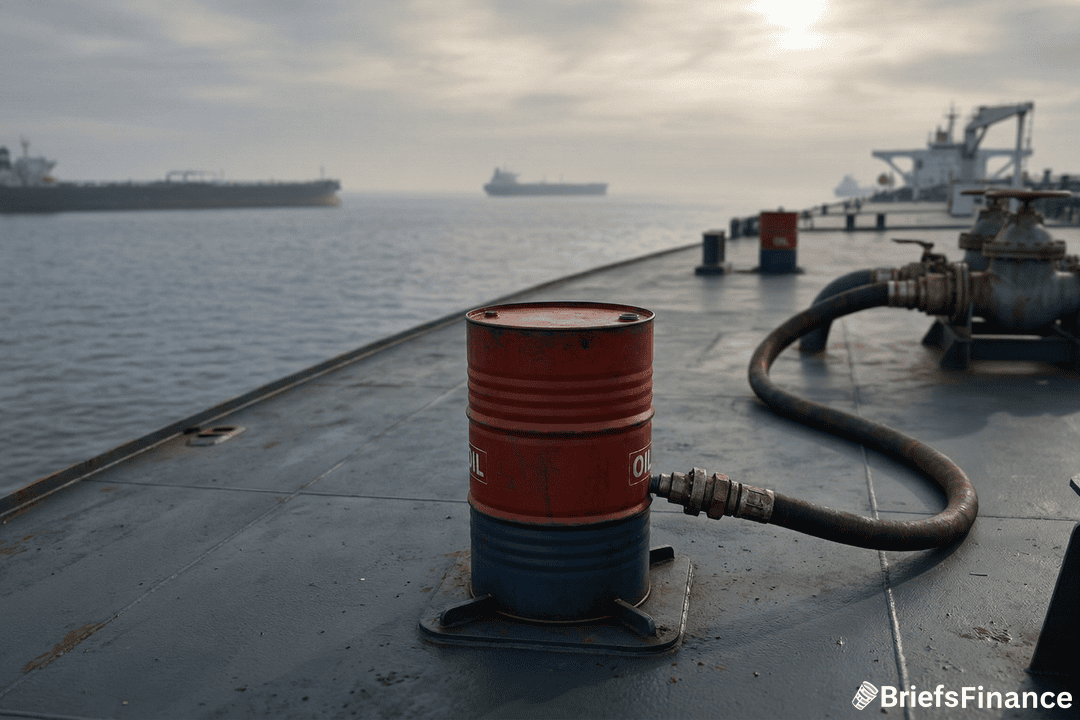
The world's busiest oil passage is still mostly closed. West Texas Intermediate crude is at $96.37 after briefly smashing through $100, with Brent at $94.69.
But those futures prices hide the real panic. In the physical spot market, dated Brent is trading at $131.97 - the price traders actually pay when they need oil right now.
Why the Strait Won't Open
Iran closed the Strait of Hormuz when the bombing campaign started on February 28.
One-fifth of the world's oil flows through that passage - think of it as a single highway connecting the world's biggest oil producers to their buyers.
A two-week ceasefire was agreed, but the UAE's state oil company says the waterway is still largely shut to shipping.
Transit remains restricted and selectively enforced, with no return to open commercial navigation.
Gulf producers have knocked 13 million barrels per day offline. That's not a disruption - that's a wound that hasn't healed.
What $100 Oil Means for the Global Economy
Gas hit $4.02 per gallon nationwide. Diesel reached $5.45 - up $1.80 from a year ago. California is paying over $6 at the pump.
The Energy Information Administration expects Brent to peak at $115 per barrel in the second quarter. Here's what that means for investors: if Brent averages $100 per barrel this year, global economic growth slows from 2.5% to just 1.7%.
That's the difference between healthy expansion and barely moving forward.
What to Watch
Whether the ceasefire holds through the weekend determines the next move for oil. If the Strait stays partially closed through summer, energy prices stay elevated and slow global growth harder than anyone currently expects.