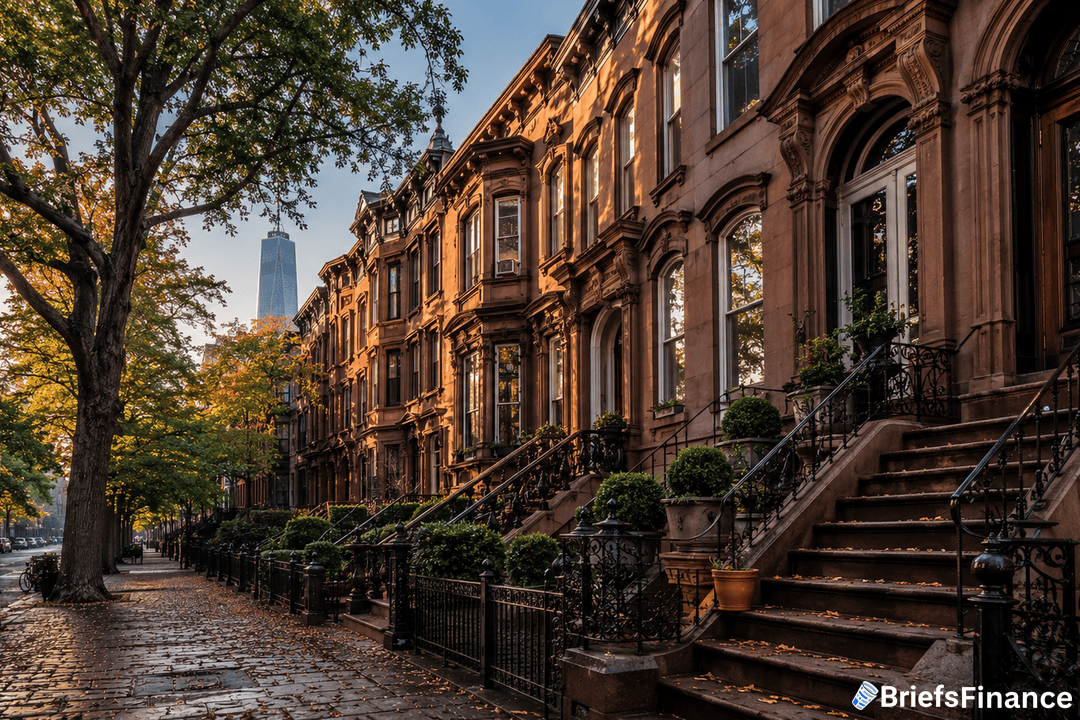
A few months ago, NYC homeowners were staring at a 9.5% property tax hike.
As of Tuesday, it's off the table. So is dipping into city reserves.
How The Gap Got Closed
Mayor Zohran Mamdani's $124 billion budget plan filled a $5.4 billion hole. He did it with a mix of state aid, new revenue, and savings.
Governor Kathy Hochul committed an extra $4 billion in state aid. That brings the total new aid from Albany to nearly $8 billion over two years.
Hochul also rolled out a pied-a-terre tax aimed at non-resident luxury homeowners. The state expects it to bring in around $500 million a year.
The combo of new revenue and savings made the property tax hike unneeded.
We translate budget moves like this into what they actually mean for your money in Market Briefs, every weekday morning. A free investing masterclass comes with the sign-up.
The Political Backstory
Mamdani floated the property tax hike in February. He said it was one of two paths out of the crisis.
The other was a state tax on the wealthy and big firms. Albany pushed back hard on that one.
City Council Speaker Julie Menin said the property tax hike was a non-starter the day it was proposed. Without council approval, Mamdani couldn't have moved forward anyway.
The first budget gap was estimated at $12 billion. Then it dropped to $7 billion.
By this week it was $5.4 billion. More savings and state aid trimmed the gap step by step.
What This Means For NYC
A 9.5% property tax hike hadn't been seriously floated since the Bloomberg years. Killing it lifts a big weight for NYC homeowners and the real estate market.
For Mamdani, this is the first big test of his first 150 days in office. He told voters he could deliver more spending without crushing homeowners.
This budget is the first proof point.
The Democratic Socialist mayor came in promising bigger spending on childcare, transit, and housing. The state aid coming in from Albany is what makes that possible without a tax hike.
Why Investors Should Care
City budgets shape how much it costs to borrow, and New York issues a lot of munis. Munis is short for municipal bonds, which are bonds cities sell to fund spending.
Ratings agencies look closely at how the city plugs gaps like this one. Tapping reserves or hiking taxes too hard can hurt those ratings.
Closing the gap through state aid and savings keeps the city's balance sheet in better shape. That matters for anyone who owns NYC munis, owns real estate in the five boroughs, or just lives in the city.
Hochul said Monday she had "been working very closely with the mayor and his budget team" to help fix what she called a "pretty significant financial mess" he inherited.
She also pointed to state aid for childcare and other areas. The governor referenced extra state education aid and pension changes as more tools the state is using to help.
Worth Noting
The state budget is still being worked out in Albany. If anything shifts there, this city budget could shift too.
The city's reserves are intact for now. That's the line ratings agencies will be watching.
Sign up for the daily newsletter and a free 45-minute investing course will land in your inbox as a bonus.