Pro Login

North Korea Hit Crypto From Two Directions This Week. Investors Lost $280 Million in One Attack Alone.

Published Apr 2, 2026
Share:
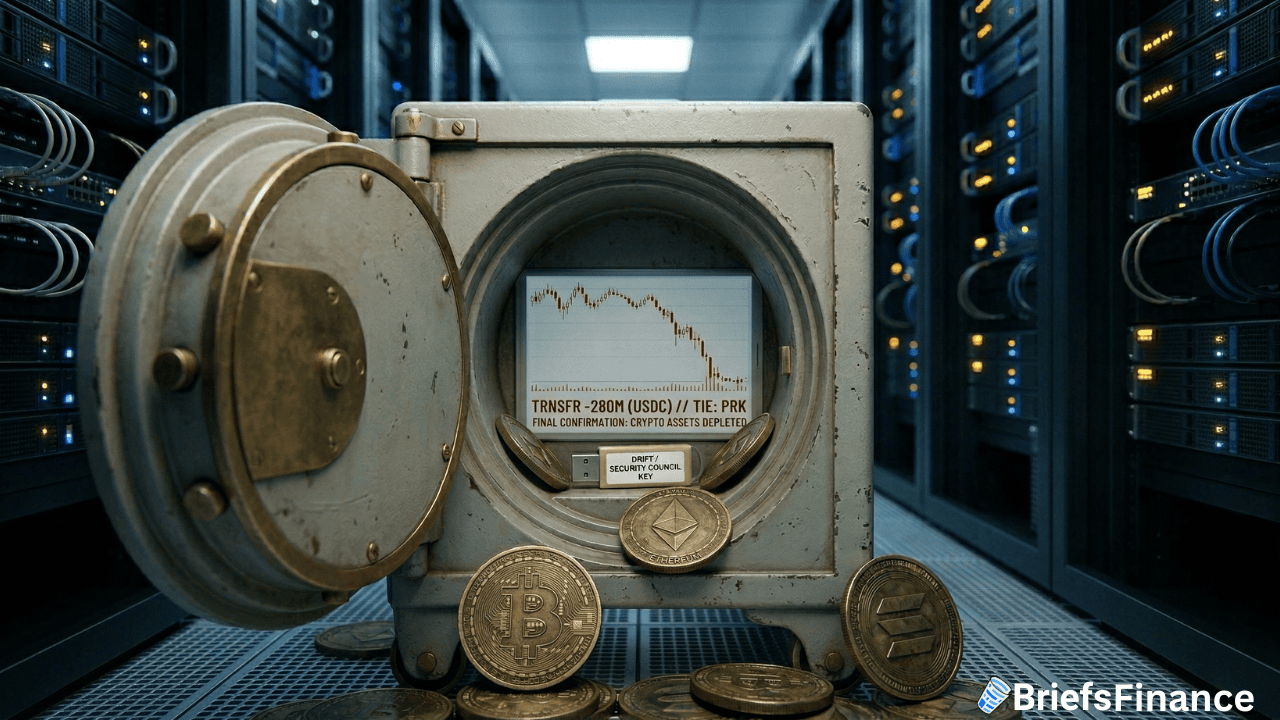
A safe with crypto coins and a screen showing a downward price graph, set in a server room—a scene highlighting investors' concerns over security breaches linked to North Korea's involvement in the crypto market.
Summary:
  • Hackers linked to North Korea drained $280 million from DeFi platform Drift after spending weeks quietly setting up the attack.
  • The same week, suspected Pyongyang-linked hackers planted malicious code inside Axios - a software tool used by thousands of U.S. companies.
  • North Korea has now stolen more than $300 million in crypto this year alone, according to blockchain security firm Elliptic.

North Korea didn't just rob one crypto platform this week. It hit two targets at the same time - a direct heist and a hidden software trap - in what looks like the most aggressive week of state-backed crypto theft in recent memory.

The Drift Heist

Drift - a decentralized finance platform where investors can lend, borrow, and trade crypto - confirmed Wednesday that attackers pulled $280 million off the platform in a single operation.

This wasn't a code exploit. Drift says its smart contracts and core programs were never breached. Instead, the attackers spent weeks working their way into the company's security council - the group that controls admin-level powers - by tricking insiders into approving access they shouldn't have.

They planted two pre-approved transactions on March 23. Then they waited.

On April 1, they fired both transactions, seized admin controls, stripped out withdrawal caps, and moved $280 million before anyone could stop it. Every dollar in Drift's lending, borrowing, vault, and trading features was exposed.

By Thursday morning, blockchain investigators at Elliptic had tied the attack to North Korea. The transaction patterns and laundering methods matched operations Elliptic has tracked from Pyongyang's hackers before.

If confirmed, it would be the 18th North Korean crypto attack Elliptic has flagged this year.

The Software Trap

The Drift heist wasn't the only move. Days earlier, suspected North Korean hackers broke into the account of a developer who maintains Axios - an open-source tool baked into thousands of company websites across health care, finance, and tech.

For about three hours, the attackers pushed out infected updates to every company that downloaded the software during that window. Security firm Huntress counted around 135 infected machines spread across about a dozen organizations - and that's just the early tally.

Google-owned Mandiant confirmed the North Korea connection. Its chief technology officer said the hackers will likely use whatever access they gained to hunt for crypto stored at those companies.

Full recovery could take months.

What to Watch

North Korea has turned crypto theft into a pillar of its economy. Pyongyang's hackers pulled in more than $2 billion from crypto platforms last year alone, and U.S. officials have said roughly half of the country's missile program is bankrolled by that kind of theft.

This week showed investors two things at once - North Korea can hit a platform head-on and slip into the software supply chain at the same time.

The Drift attack looks a lot like last summer's $1.5 billion Bybit breach. Both relied on tricking people rather than breaking code. Both moved fast once the trap was sprung.

Crypto security isn't just a tech problem anymore - It's a national security one.
Disclosure

Get Market Briefs delivered to your inbox every morning for free!

No fluff. No noise. No politics. Just finance news you can read in 5 minutes.

Blogs

April 15, 2026
What Is a Put Option? A Simple Guide for Investors
  • A put option is a contract that gives you the right to sell a stock at a set price before a set date.
  • Investors use put options to protect their portfolio against losses or to profit when they think a stock will drop.
  • The most you can lose when buying a put option is the premium you paid for the contract.
Read More
April 13, 2026
What Is Free Cash Flow? How To Find It & Why It's Important
  • Free cash flow is the cash a company has left after paying its bills and putting money back into the business.
  • Investors use free cash flow to figure out what a company is really worth - and if the stock is a good deal.
  • You can find free cash flow on a company's cash flow report, one of three key reports every public company files.
Read More
April 13, 2026
Non Taxable Income: What It Is and Why Investors Care

Non taxable income is money you earn that the IRS does not tax - like Roth IRA cash, muni bond interest, and certain investment gains. The U.S. tax code taxes workers, investors, and business owners at very different rates. Tools like Roth accounts, muni bonds, and real estate write-offs can help you keep more of what you earn.

Read More
April 11, 2026
Nasdaq Index Fund: A Beginner's Guide to Investing in the Nasdaq 100
  • A Nasdaq index fund lets you invest in the 100 biggest non-bank companies on the stock market all at once.
  • You can access the Nasdaq through index funds, mutual funds, or ETFs like QQQ - each with its own fees, trading rules, and style.
  • Picking the right Nasdaq index fund comes down to three things: who runs it, what is in it, and what it costs.
Read More
April 11, 2026
What Is Wealth? It's Not What Most People Think
  • Wealth is about owning assets that grow and pay you - not just earning a high salary.
  • In a capitalist system, there are two ways to get paid: from your labor and from your capital.
  • Building wealth takes a shift in mindset, a money system, and the habit of investing before you spend.
Read More
April 10, 2026
Micron Stock: The AI Memory Play Most Investors Are Missing
  • Micron (MU) is the only U.S. company that makes HBM chips - the short-term memory layer that AI systems need to run.
  • By early 2026, data centers were using about 70% of all memory chips made in the world, creating an 18-month backlog for new orders.
  • Micron's DRAM - or short-term memory chip - revenue jumped 69% year over year, and the company shifted away from consumer products to focus almost entirely on AI.
Read More
April 10, 2026
What Is Working Capital? What Investors Need To Know
  • Working capital is current assets minus current liabilities - it shows if a business can pay its short-term bills.
  • You find it on a company's balance sheet inside its 10-K report.
  • Changes in working capital show up on the cash flow statement and affect how much cash a business really makes.
Read More
April 9, 2026
What Is a Meme Stock? A Simple Guide for New Investors

You've probably heard the term "meme stock" thrown around on […]

Read More
April 9, 2026
Enterprise Value Formula: What It Is and How to Calculate It
  • Enterprise value (EV) shows what a company is really worth - debt and cash included - not just its stock price
  • The enterprise value formula is: Market Cap + Total Debt - Cash and Cash Equivalents
  • Investors use EV with metrics like EBITDA to compare stocks more fairly than market cap alone
Read More
April 8, 2026
Return on Equity: What It Is and How to Use It
  • Return on equity (ROE) measures how much profit a company earns for every dollar of shareholder equity
  • The formula is simple: net income divided by shareholder equity
  • A higher ROE can signal a company that is good at turning investor money into profit - but it is not the full picture
Read More
1 2 3 17
Share via
Copy link












