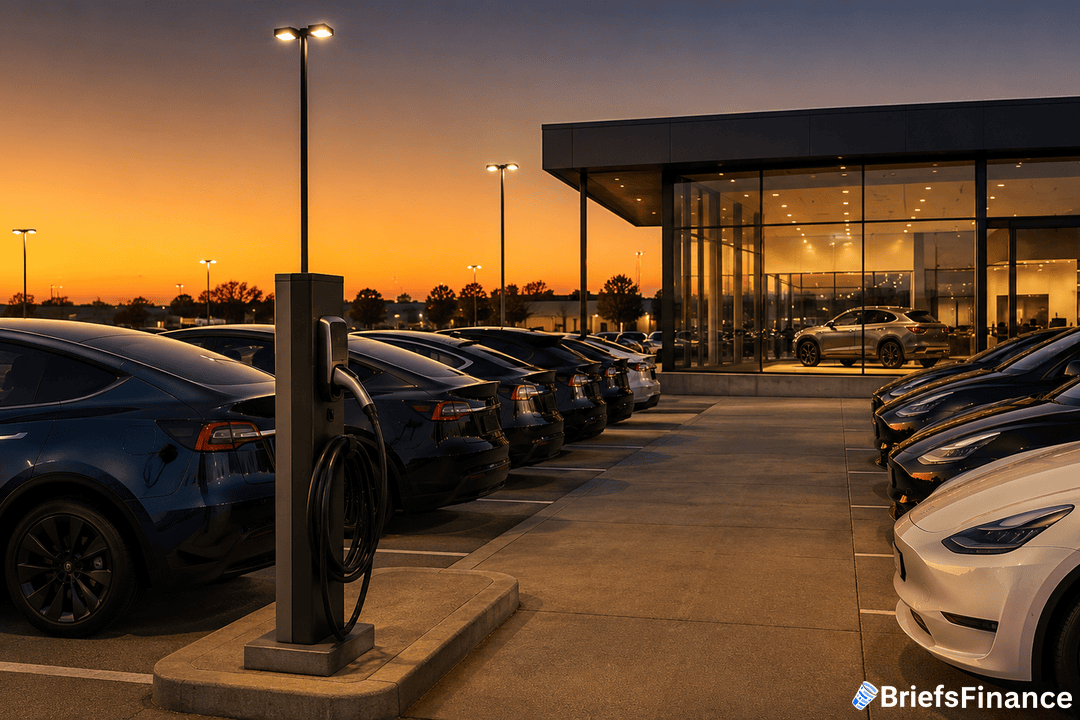
The federal EV tax credit is gone, many states have pulled their incentives, and most automakers are walking back their electric vehicle plans.
EV demand is rising anyway.
What the data shows
In January, 67.1% of new EV buyers at dealerships traded in a gas car, according to Edmunds data shared with CNBC. By April, that share had climbed to 72.1%.
EV loyalty is climbing too, with the share of buyers trading an older EV for a new one rising from 26.2% in January to 35.4% by late April. For used EVs, the jump was even bigger, going from 34.3% to 44.5%.
That's a meaningful shift, especially since most automakers had bet demand would soften once federal support disappeared.
Stories like this - where energy and auto stocks start moving in opposite directions - are what we break down in Market Briefs every morning, plus a free investing masterclass when you join.
Gas prices are doing the work
Gas prices are doing exactly that, with the national average up about 44% from a year ago, per AAA, after the U.S. and Israel attacked Iran on Feb. 28 sent oil climbing.
That's the most likely reason for the shift, according to Ivan Drury, senior director of insights at Edmunds. He says three more months of high gas prices and elevated EV trade-ins will tell us whether this is a real, lasting move.
This isn't 2008, when drivers traded Suburbans for Accords overnight. Today's buyers are mostly people who were already in the market for a new car and decided to go electric instead of gas.
The numbers still don't favor switching
Even for those buyers, the math is tight. The average new vehicle transaction price was about $49,275 in March, per Cox Automotive, and for drivers with a perfectly good gas car, the math usually doesn't work out, according to Erin Keating, executive analyst at Cox.
The used EV market is a different story, thanks to a quirk of the old federal $7,500 credit, which required a U.S.-built car unless the buyer leased.
Those leased EVs are now coming off lease and flooding the used market just as EVs hit some of the steepest depreciation curves in the industry, which is pulling used prices down and pushing used trade-ins up.
New EVs are also still heavily incentivized at dealerships, with low APR offers, cash back, and manufacturer rebates that haven't disappeared with the federal credit.
Even with those discounts, range anxiety and patchy charging infrastructure keep some buyers away, and Keating said many drivers also lack the knowledge of what it actually takes to own and operate an EV.
What to Watch
The next three months will decide whether this is a trend or a blip. If gas prices stay high and EV trade-in shares keep climbing, automakers that pulled back on electric vehicle plans will have a problem.
European demand is the comparison to watch, since gas prices are higher there and the market includes cheaper Chinese EVs that haven't made it into the U.S. yet.
Want this kind of read on the market every day? Sign up for Market Briefs and get a 45-minute investing course as a bonus.