Free NewsletterPro Login

Microsoft Secures Approval for 15 New Data Centers in Wisconsin

A stylized illustration of a cylindrical cup with blue arrows and lines indicating a swirling or rotational motion inside the cup.
Published Jan 26, 2026
Share:
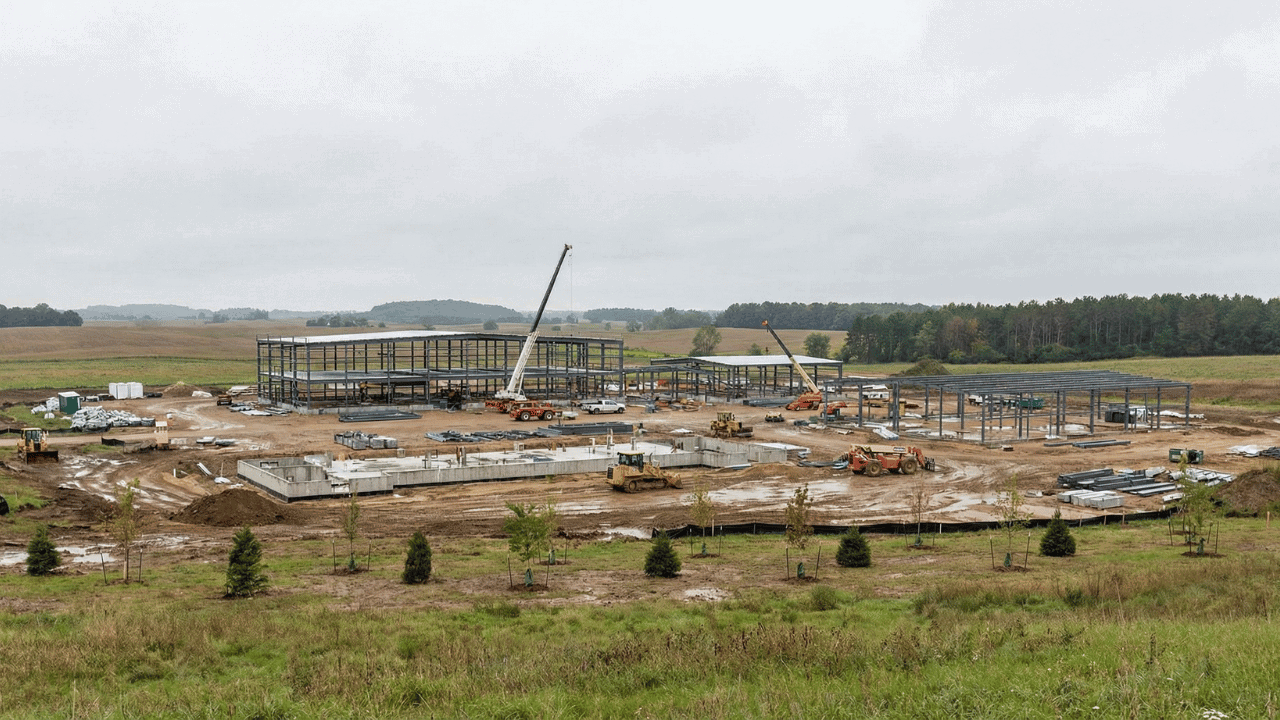
A large construction site with steel frameworks, cranes, and construction vehicles on muddy ground surrounded by fields and trees under an overcast sky.
Summary:

    • Mount Pleasant's village board approved plans for 15 new Microsoft data centers on October 22, 2025.

    • The taxable value of the developments exceeds $13 billion, according to village documentation.

    • The project is expected to create jobs that could last up to 10 years, as stated by village board president David DeGroot.

Approval for Expansion

The village board in Mount Pleasant, Wisconsin, unanimously approved Microsoft's plans to build 15 new data centers.

This decision was made on October 22, 2025, and follows the company's existing site in the area. The approval allows Microsoft to enhance its capacity, which is crucial for supporting revenue from clients like OpenAI.

Economic Impact of the Development

The taxable value of the new developments is significant, exceeding $13 billion. Village board president David DeGroot emphasized the positive implications for local employment.

He stated that the jobs created by this project are expected to last for up to 10 years, which he argued should not be considered temporary. DeGroot reassured local union members about the job security associated with the project.

Details of the Data Center Plans

The new data center project will consist of almost 9 million square feet of building area. This expansion plan also includes three proposed substations to support the facilities.

Microsoft acquired land for the larger of the two lots from the village and private owners in 2023 and 2024. This strategic acquisition allows Microsoft to proceed with its ambitious plans for the site.

Environmental Considerations

Mount Pleasant's community development director, Samuel Schultz, confirmed that the project would use approximately 8.4 million gallons of water annually from the nearby city of Racine.

This water supply is essential for the operations of the new data centers, and the village has ensured that this demand can be met without exhausting local resources.

Community Response and Future Steps

While many local residents and officials have welcomed Microsoft's expansion, some concerns were raised during the public comment period. Six individuals expressed support for the project, while three voiced opposition.

One opponent noted that the jobs created might not be permanent, to which DeGroot responded by emphasizing the longevity of the workforce needed for the construction.

Following the village planning commission's approval, Microsoft can now submit the final civil engineering plans and file for building permits.

This marks a significant step forward in the company's efforts to enhance its data center capabilities in Wisconsin.

Disclosure

Get Market Briefs delivered to your inbox every morning for free!

No fluff. No noise. No politics. Just finance news you can read in 5 minutes.

Blogs

May 30, 2026
Financial Literacy Books That Actually Build Wealth
  • The best financial literacy books don't just teach budgeting, they shift how you think about money.
  • Two classics stand out: The Intelligent Investor for valuing investments, and Rich Dad Poor Dad for the owner's mindset.
  • Reading is only step one. The real wealth comes from acting on what you learn.
Read More
May 30, 2026
What Is a Roth Conversion? A Simple Guide
  • A Roth conversion moves money from a traditional retirement account into a Roth account.
  • You pay taxes on the money now, in exchange for tax-free growth and withdrawals later.
  • It can pay off if you expect higher taxes or more income in the future, but the timing and tax hit matter a lot.
Read More
May 30, 2026
Trailing Stop Loss: How to Protect Your Gains
  • A trailing stop loss is an order that automatically sells a stock if it falls a set percentage from its recent high.
  • As the stock rises, the sell point rises with it, locking in gains while capping losses.
  • It's most useful for active strategies like momentum investing, not for long-term buy-and-hold.
Read More
May 30, 2026
5 Types of Wealth: Why Money Is Only One of Them
  • Real wealth is more than a bank balance. It spans your finances, health, mind, purpose, and freedom.
  • Money is powerful, but it amplifies the life you already have rather than fixing a broken one.
  • True financial wealth means your cash flow covers your expenses, so your money works while you live.
Read More
May 30, 2026
How to Invest in Private Equity: A Beginner's Guide
  • Private equity means investing in companies that aren't listed on the stock market.
  • Traditional private equity is built for experienced, high-net-worth investors with large amounts to invest.
  • New rules have opened more accessible paths, like startup crowdfunding and real estate deals, often starting around $100.
Read More
May 30, 2026
What Is a Call Option? A Simple Guide With Examples
  • A call option gives you the right to buy a stock at a set price by a set date.
  • Investors buy calls when they expect a stock to rise, using less money than buying the shares outright.
  • The most you can lose buying a call is the premium, but time works against you, so it's an advanced tool.
Read More
May 30, 2026
EBITDA Formula: How to Calculate It Step by Step
  • EBITDA stands for Earnings Before Interest, Taxes, Depreciation, and Amortization, a measure of a company's core profit.
  • The formula adds those four items back to net income to show what the underlying business earns.
  • Investors use EBITDA to compare companies and to judge how many times earnings a stock is selling for.
Read More
May 30, 2026
What Is a Stock Option? A Plain-English Guide
  • A stock option is a contract giving you the right, but not the obligation, to buy or sell a stock at a set price by a set date.
  • There are two types: calls (the right to buy) and puts (the right to sell).
  • Options are powerful but risky, so they suit investors who already have the basics down.
Read More
May 30, 2026
Put Option: What It Is and How It Works
  • A put option gives you the right to sell a stock at a set price by a set date.
  • Investors use puts to bet a stock will fall, or as insurance to protect shares they own.
  • The most you can lose buying a put is the premium you paid, which makes it a defined-risk tool.
Read More
May 30, 2026
Operating Margin: What It Is and How to Calculate It
  • Operating margin shows how much profit a company keeps from its core business after paying its running costs.
  • The formula is operating income divided by revenue, shown as a percent.
  • A strong, steady operating margin signals a well-run business that controls its costs.
Read More
1 2 3 22
Share via
Copy link









