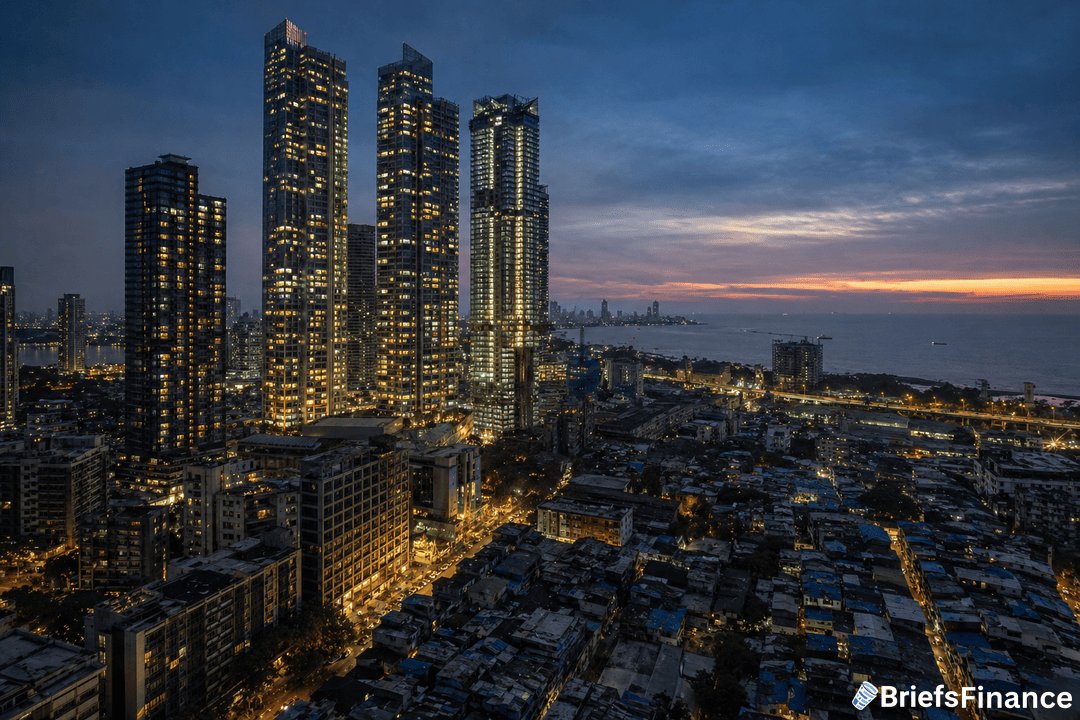
Mumbai office rents climbed 23% last year, while Manhattan rents climbed 3%. That gap is why Wall Street is suddenly stuffing analysts and traders into a city where almost a quarter of the 21 million people still live in slums.
The 41-story Altimus tower in Worli already houses Barclays, BlackRock, KKR, Morgan Stanley and UBS. A few blocks away, taxi driver Ramu Virmale and 3,000 of his neighbors are negotiating with a developer to swap their tin-roof shanties for modern flats.
Why Foreign Money Is Flooding In
India's IPO market raised a record $22 billion last year, while the benchmark NSE Nifty 50 has averaged 19% returns over the past six years.
Prime Minister Narendra Modi has also opened up insurance, pension funds and the nuclear sector to foreign investment, giving global banks fresh reasons to expand on the ground in Mumbai.
JPMorgan's December lease in the Powai suburb covers 2 million square feet and will eventually house 30,000 employees focused on AI risk analytics and cybersecurity. Citigroup and HSBC are hunting for hundreds of thousands of square feet of their own, with some companies facing three to five-year waits for finished buildings.
The Catch For Long-Time Residents
Indian law requires builders to rehouse displaced slum residents in modern apartments, and in return developers get free land for luxury towers and offices.
Virmale and his neighbors want a 500-square-foot flat for each of the 3,000 families on their block. At current Worli prices, a flat that size could be worth 40 to 50 million rupees, which would push many of them past the crorepati threshold of 10 million rupees in net worth.
Not every deal lands cleanly. Some Dharavi residents have refused to move from plots their families have owned since the 1800s, while others worry about where they'll live during the multi-year wait between handover and move-in.
Activists say the rehab system is being misused. Sheela Patel, who runs a nonprofit that surveys Dharavi, says the slum rehabilitation agency was meant to subsidize housing for the poor but is now being used to clear land for luxury development.
Why It Matters For Investors
Real estate developers like Prestige Group are now booking quarterly sales that match what they used to do in a year. Hines, the U.S. investment firm, says its India office has never been busier.
Analysts expect Mumbai to add 350 skyscrapers in the coming years, which is a long runway for builders, brokers, and the global banks underwriting the deals.
Worth Noting
Niranjan Hiranandani, the developer behind much of the boom, says demand will rise far past current expectations - and that 5 million people will need to be rehoused to make it happen.