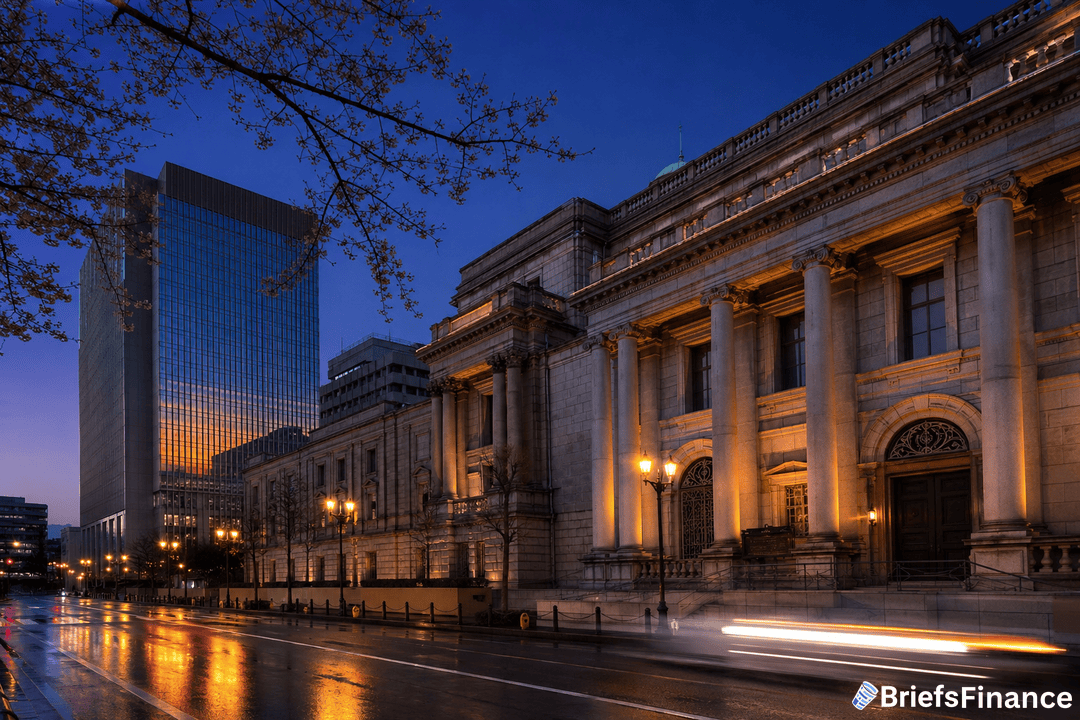
The Bank of Japan was getting ready to raise rates again. Inflation is up, the yen is weak, and prices keep climbing at gas pumps and grocery stores.
Then Japan's own top economic advisory panel stepped in this morning and asked it to pump the brakes.
What The Panel Actually Said
The Council on Economic and Fiscal Policy is the body that helps shape Japan's fiscal and long-term economic policy.
The four private-sector members on the council submitted a statement Monday urging caution.
In plain English, they're worried that small and midsize companies, the ones that rely on bank loans to stay afloat, could get squeezed if rates rise too fast.
Two of those four members are seen as close to Prime Minister Sanae Takaichi, so the message carries some political weight.
Every morning, Market Briefs translates central-bank moves into what they mean for your portfolio, plus you get a free investing masterclass when you join.
Why Smaller Companies Are The Pressure Point
Japan's smaller companies have been quietly stocking up on cash since the Iran war started.
Contracts for commitment lines, which are pre-approved bank loans that companies can tap when they need them, jumped by 2.5 trillion yen in March. That was the biggest one-month jump since May 2020, when COVID-19 froze the economy.
That's the panel's tell. When companies are stockpiling credit as a precaution, raising the cost of borrowing on them at the same time is a hard sell, especially when many of them have thinner cash buffers than the big exporters.
The BOJ's Dilemma
The BOJ held its policy rate at 0.75% in April but signaled a possible hike as soon as June.
The case for raising is simple. Higher oil prices are pushing up inflation, and the weak yen is making imports more expensive, so higher rates would cool both.
The case against is just as simple, because moving too fast would punish the companies the economy is leaning on.
Governor Kazuo Ueda is caught between price stability and corporate stability, and Japan's top panel just put its thumb on the scale.
What To Watch
Three things matter from here. What the BOJ does at its June meeting, whether oil keeps climbing, and whether the yen, which slipped near 156 against the dollar, weakens further.
Each one tilts the next decision. The BOJ has rarely raised rates in modern Japanese history. The next hike, if it comes, will be the most-watched move in global central banking this summer.
If you want a clean read on what global central banks are doing each morning, join Market Briefs. You'll also get a 45-minute investing masterclass thrown in as a free bonus.