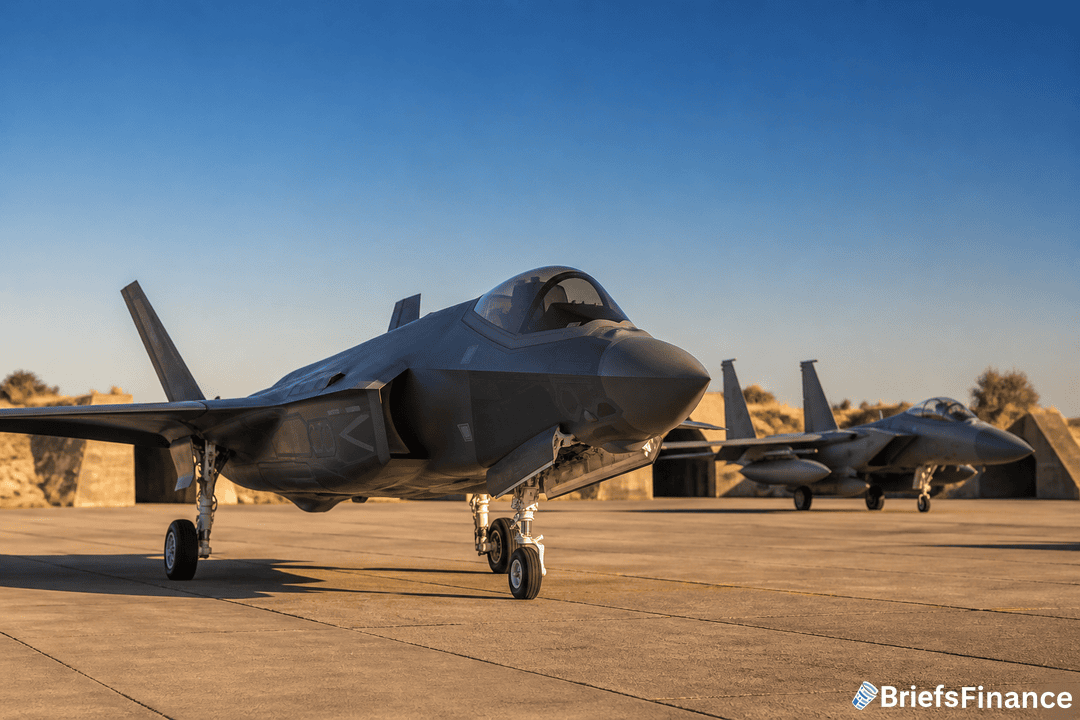
Israel just signed off on the first piece of a 350 billion shekel military spending plan. That works out to roughly $119 billion.
The opening orders are heading to Lockheed Martin and Boeing. The fighter jets are just the start of a much longer rollout.
What Got Approved
Israel's procurement committee greenlit two new combat squadrons over the weekend. One is a fourth F-35 squadron from Lockheed Martin. The other is a second F-15IA squadron from Boeing.
The full plan is meant to set up the military for what officials call a tough decade ahead. It is the largest defense plan Israel has ever rolled out.
Boeing already had a head start. The firm closed an $8.6 billion deal in December for 25 F-15IAs. It also has the option to grow that order to 50 jets if Israel wants them.
Lockheed already runs three F-35 squadrons for Israel. So this fourth squadron is just the next step in a long-running tie-up.
The bottom line: Two of America's biggest defense firms are tied to a long line of orders from one ally.
Why Israel Is Buying Now
Israel says the recent war with Iran changed how it thinks about air power. The country has also been running an air campaign on multiple fronts since the October 2023 Hamas attacks.
Ministry director general Amir Baram said the U.S.-Israel link became more vital during the conflict. He added that air power matters most for the next ten years.
Defense Minister Israel Katz pointed to autonomous flight, new defense systems, and space tech as key goals. He said the lessons from Iran mean Israel has to keep building force.
Think of it as a ten-year deal for the world's best fighter jets. Israel just signed up.
What To Watch
The next step is to lock in the deals with U.S. counterparts. After that, the defense ministry says more orders will follow as the buildout takes shape.
The U.S. and Israel hit Iran with joint airstrikes on February 28. A ceasefire has been in place since April 8.
The U.S. Navy still has a blockade on Iranian ports. Israeli aircraft have also been busy in Gaza against Hamas and in Lebanon against Hezbollah since the October 2023 attacks.
Lockheed Martin shares climbed nearly 2% on the news. Boeing slipped about 1.7%, even though both firms sit inside the same plan.
The split tells you what investors think. Lockheed is locking in jets it already builds at scale. Boeing has more questions to answer about its defense unit.
For investors, this is just the opening slice of a long pipeline. Lockheed and Boeing are first in line, but they will not be the last.
The next round of Israeli orders may go to drone makers, missile firms, or radar shops. Each new piece of the plan tends to lift defense stocks tied to it.
Watch the next few months. Big deals tend to come in waves.