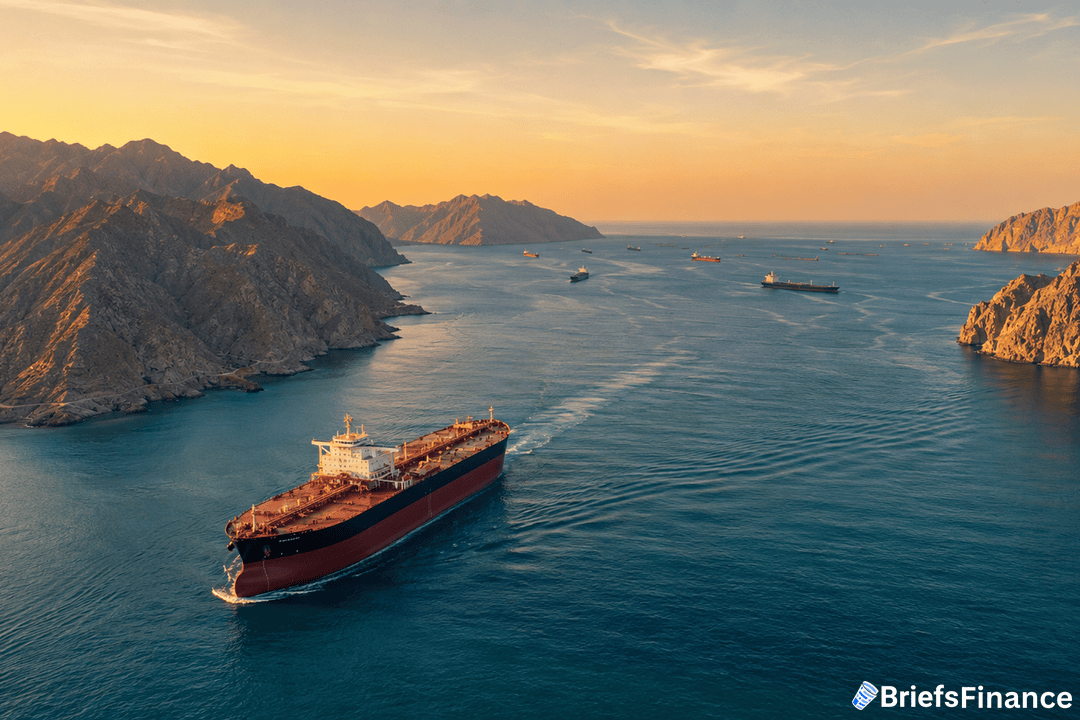
A normal country writes ship insurance in dollars. Iran is trying to write it in Bitcoin.
The program is called Hormuz Safe. Tehran says it could pull in more than $10 billion.
That is exactly why Western governments and shipping firms are nervous.
What Iran Is Selling
Iran's Fars news outlet broke the story. It cited Iran's economy office.
Hormuz Safe will sell online policies to ships in the Gulf and Strait of Hormuz.
Premiums get paid in Bitcoin. The policy covers vessel checks, holds, and seizures.
War damage is not covered. Coverage starts the moment payment hits the blockchain.
A digital note then goes to the ship owner.
The pitch is simple - ship owners get a digital note and a promise of safe passage from the country that runs the choke point.
The catch is that the site that hosts the service, hormuzsafe.ir, does not seem to work outside Iran.
The launch lines up with a new state body. Iran set up the Persian Gulf Strait Authority on Monday to give "real-time updates" on the waterway.
Market Briefs breaks down what moves like this mean for oil, shipping, and your portfolio every weekday morning, with a free investing masterclass when you join.
Why This Looks Like A Toll By Another Name
Iran has been charging up to $2 million per trip from ships trying to cross the strait. The fees began when the war did, in late February.
Calling those fees insurance does two things at once.
One, the story does not break the UN sea-law treaty. That treaty bans tolls on global straits.
Two, it routes payment through crypto. That makes sanctions harder to enforce.
The US, China, and the UN chief have all said no one should pay to use Hormuz. The US State Department says global waterways must stay open.
Why The Plan May Not Actually Work
Ship insurance lives or dies on backup cover. That is what pays out big claims when things blow up.
Iran is cut off from London, Europe, and most of Asia for that kind of cover.
So a Hormuz Safe note may not be honored by ports, banks, or the firms that move cargo.
Bitcoin is the other issue. Its price can swing 20% in a week.
That is a bad fit for a policy that pays out months from now.
The US has also warned ship firms that paying Iran for passage could trigger sanctions.
The plan was first pushed by Babak Zanjani. He is an Iranian dealmaker freed from prison in 2024.
He had been on death row for stealing billions from Iran's oil arm. That ruling was cut after he gave back about $2.1 billion.
Worth Noting
About 20% of the world's oil and gas flow through the Strait of Hormuz in peacetime. So even a half-formed Iran insurance plan tends to move oil and shipping rates.
Iran is selling cover for a route the US Navy is blocking. That tells you where the story is going.
More pressure, not less.
Get a five-minute read on macro moves like this every morning when you sign up for Market Briefs. The daily lands every weekday and comes with a free 45-minute investing masterclass as a bonus.