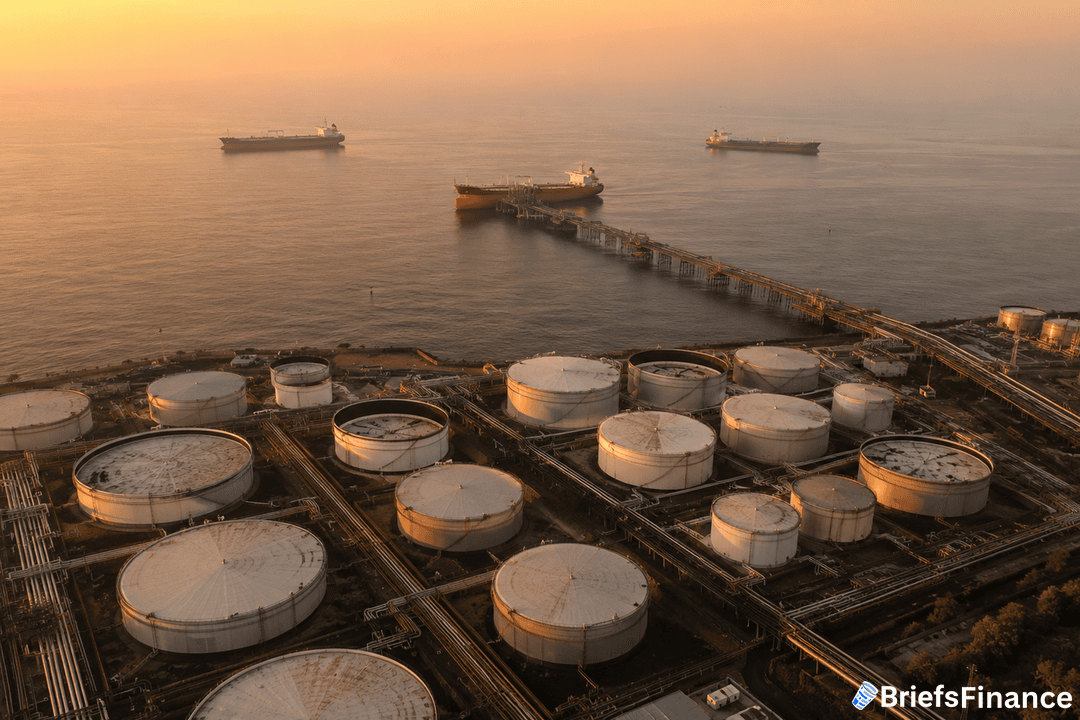
The Hormuz closure was supposed to be a few weeks of pain, but it's now stretched into its third month. India just published the bill.
April's trade gap came in nearly $8 billion wider than March's $20.67 billion deficit, with imports surging much faster than exports.
Higher Oil And Gas Costs Drove The Gap
India usually pulls more than 40% of its crude oil through Hormuz, and with that route closed to most tankers, importers had to source farther away at higher prices.
Oil isn't the only line item hurting, since LNG and cooking gas costs also rose, leaving refineries paying more than they had budgeted for April.
The result was a $28.38 billion trade deficit, the widest reading in years - with exports holding up fine on stronger global goods prices while imports jumped much faster.
Every morning, Market Briefs breaks down what macro shocks like this mean for your portfolio in about five minutes a day, plus a free investing masterclass when you sign up.
The Rupee, Stocks, And Inflation Are Following
The rupee just hit an all-time low against the dollar, while foreign investors have been pulling cash out of Indian stocks.
Wholesale inflation jumped to 8.3% in April, the fastest pace in three and a half years, with fuel and energy prices doing most of the work.
Fitch's research unit BMI now sees India's GDP growing 6.7% in the fiscal year ending March 2027, down from 7.7% the year prior - and most of that cut traces back to the oil shock.
This is the kind of slowdown that doesn't show up in one report - it shows up in the next four, slowly.
What's Driving Imports Higher
India has been buying more crude from Russia and other suppliers outside the Hormuz route, paying more per barrel than under normal conditions.
The country also signed a fresh LPG and strategic oil reserves deal with the UAE, helping cover demand but adding to the import line.
Economists at BMI expect the oil bill to stay high as long as the war drags on, which means the trade deficit could stay wide through the summer.
What To Watch
The longer Hormuz stays mostly closed, the deeper the squeeze on India's current account and the more pressure on the rupee. The trade deficit is the canary - it moves first, and the rest of the economy follows.
If you want a daily read on what global shocks like this mean for stocks, join 350,000+ investors reading Market Briefs - you also get a free 45-minute investing course as a bonus.