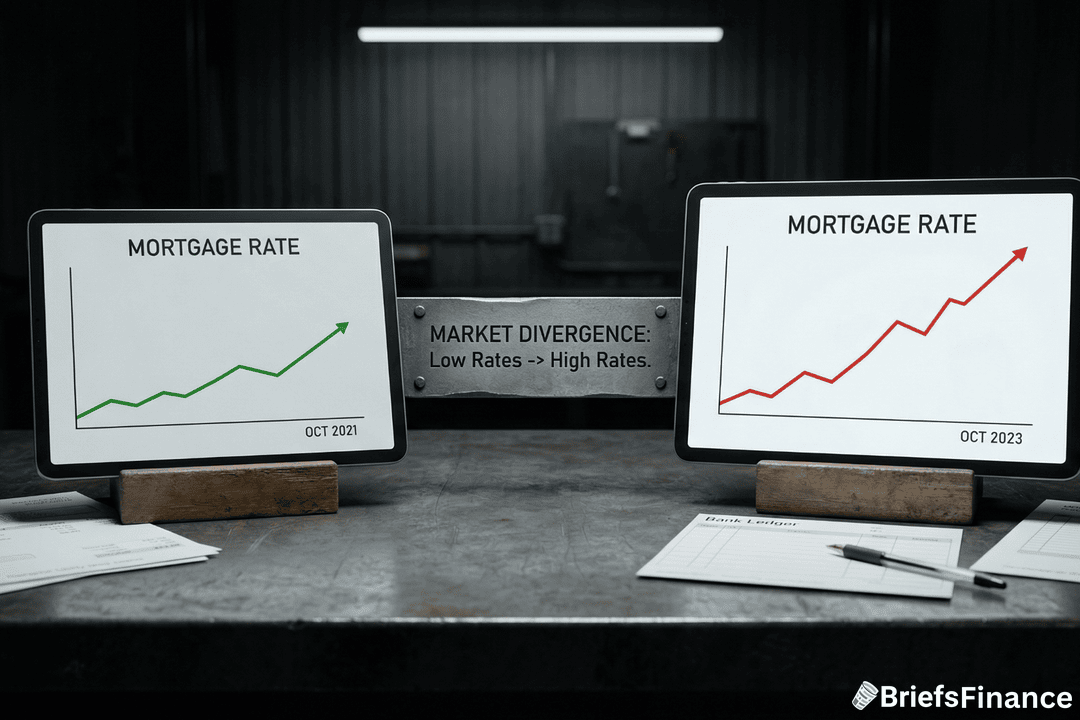
Rates have stayed higher for longer than most investors expected. And the effects are landing very differently depending on where you sit.
If your money is in things that pay you back — rental homes, stocks that pay out, bonds, money market accounts — high rates have been a plus. Your cash earns more just by sitting there.
If you're leaning on credit to close the gap between your pay and your bills, it's the other way around. Every balance costs more.
Every car loan costs more. Every debt with a moving rate costs more each month.
Not a Phase — A Lasting Shift
Mark Zandi, Moody's top economist, put it bluntly. He called the growing gap between rich and poor spending a deep, lasting change — not a blip from rate moves that will fix on its own.
Rich investors are booking fancy trips and eating at nice spots. Lower-income families are cutting back on the basics.
That's not a blip. That's a new way money moves through the economy.
The Asset-Owner Edge
The math isn't hard. Own a rental and your tenants cover your loan while the home gains value.
Hold stocks that pay you out and you get cash no matter what the market does day to day.
Cash in a high-yield savings or money market account earns 4–5% right now. That sounds boring — until you think about it as free money on cash that's just parked.
If you don't own any of those things, none of those perks apply. You just pay more to borrow.
Why It Matters for Spending
Top earners now make up a record share of all spending. That means the economy hangs on their mood more than ever.
A drop in stock prices or a shift in mood among this group could pull back spending faster than a broad slowdown among middle earners. And because their spending feeds company earnings — which feed back into stock prices — any dip could turn into a loop.
What to Watch
Where spending growth sits matters more than the total right now. The engine is running on one part — and that part runs on stock gains.