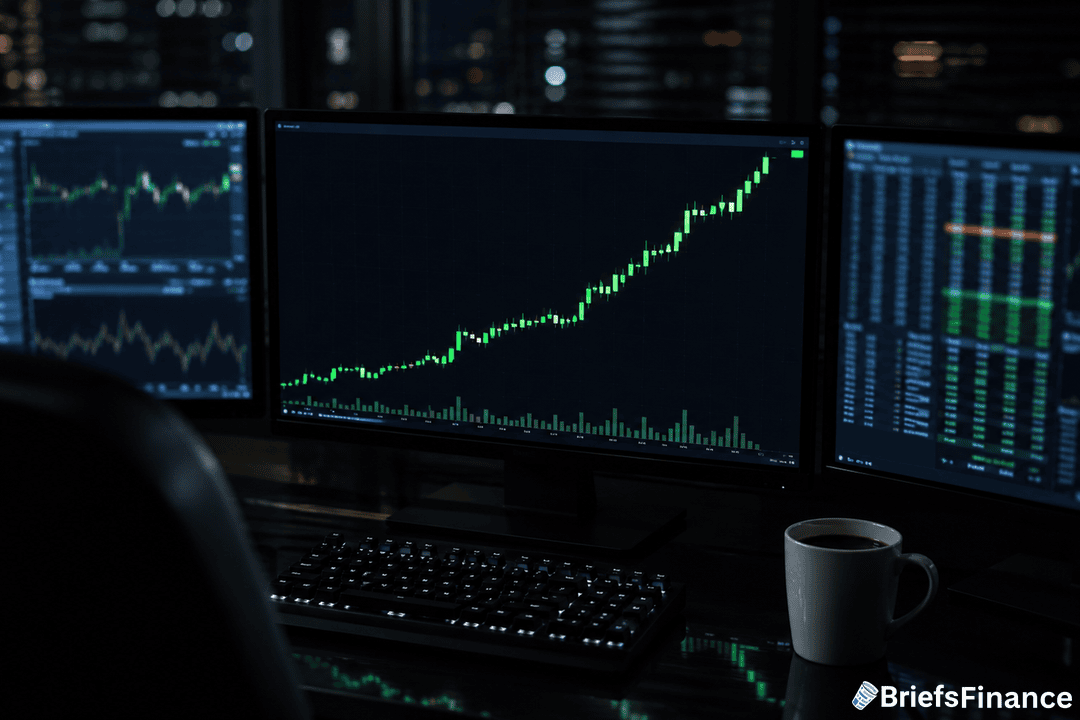
Stocks are rallying so fast it has Wall Street confused, with the S&P 500 climbing 7% in a month and printing new records while the VIX (a gauge of expected market swings) has held below 18 instead of dropping like it usually does.
Goldman Sachs has a name for it: an "up crash."
Goldman's 'Up Crash' Indicator
Goldman analyst Brian Garrett laid it out in a note this week, with the Nasdaq 100 now moving in tandem with the price of its 1-month call option. That pairing has only shown up four times in the last decade.
A call option is a bet that a stock or index will go up. When the index and its call price climb together, traders are usually loading up for more gains rather than fading the rally.
Two forces are driving the setup at once: aggressive call-buying on high-flying tech names, plus broad-market hedging from traders who view the VIX as cheap insurance compared to the volatility priced into individual sectors.
Garrett also flagged how aggressive call buying on high-flying tech names is feeding the move. Tech has done more than its share of the lifting in this rally, with the options data showing traders piling on top of those gains rather than fading them.
An "up crash" isn't a literal crash. It's a rally so steady that traders treat it like one, hedging both directions at once.
The correlation between the Nasdaq 100 and its 1-month call now sits at around 0.4, the highest reading since January 2017. Anything above zero is unusual, since the two normally move in opposite directions.
Every morning, Market Briefs breaks down what signals like this actually mean for your portfolio - in five minutes, plus a free 45-minute investing masterclass when you sign up.
Past Patterns Point To More Gains
In the three previous times this signal flashed, stocks gained an average of 2.7% over the following month, nearly double the 1.5% average monthly return Goldman measured over the same window.
"Equity markets have crashed higher over the last month," Garrett wrote. He pushed back on the idea that the rally is about to unwind, saying the data doesn't back that up.
2017 is the closest historical match, when the VIX touched an all-time low of 8.56 in November and the S&P finished up 20% as the Nasdaq climbed nearly 32%. Investors who stayed long that year got paid through the entire run.
The 'Volmageddon' Precedent
The first quarter of 2018 changed that fast, with the VIX spiking to 50, short-volatility ETFs blowing up, and traders nicknaming the period "Volmageddon."
At least one major short-volatility ETF was forced to wind down in the wake of the chaos.
Goldman's signal is bullish for the next month. What comes after is the harder question.
What To Watch
The VIX has held below 18 for a month. As long as it stays there, the bullish setup Goldman flagged stays intact.
A spike in the VIX would mark the start of the unwind, and given how tightly traders are positioned, it wouldn't take much.
Join Market Briefs for daily news on what Wall Street is actually doing - plus a 45-minute investing course thrown in as a bonus.