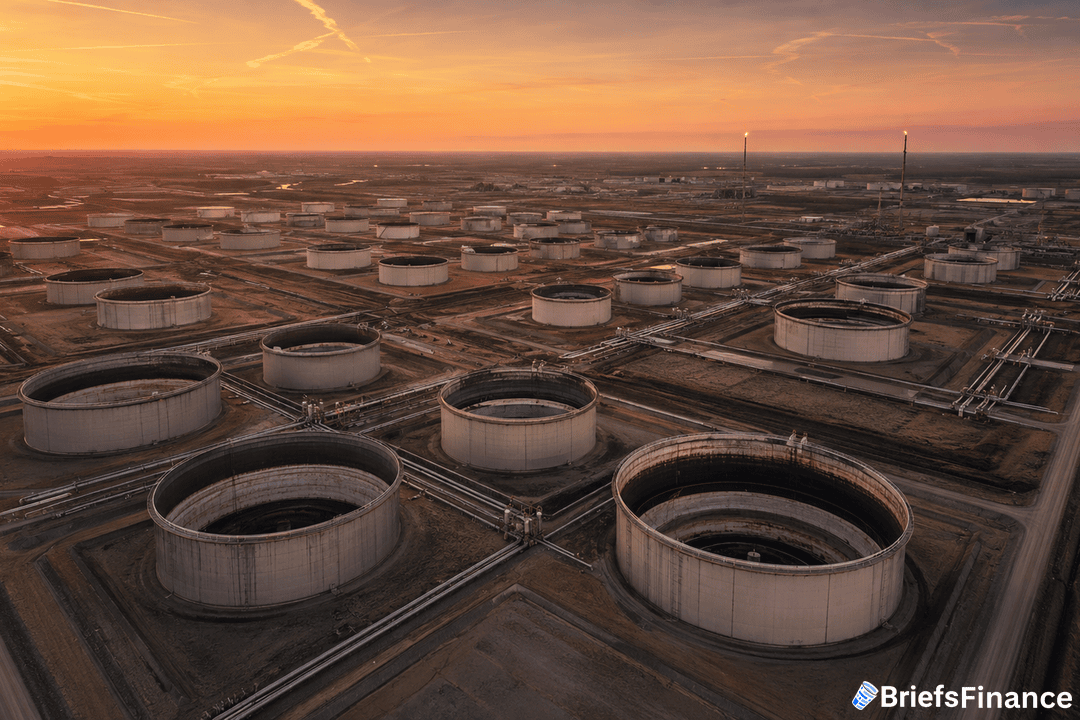
About a quarter of the world's seaborne oil normally moves through the Strait of Hormuz, and it's still effectively closed. The buffer of stockpiles that traders usually lean on is getting drained at the fastest pace ever recorded.
The Buffer Is Shrinking
Stockpiles sat near a decade high at the end of February at just over 8 billion barrels, with UBS pegging them at 7.8 billion by the end of April.
The International Energy Agency says global inventories have been falling at about 4 million barrels a day in March and April, which is the steepest draw on record.
Exxon CEO Darren Woods told investors on the company's earnings call that commercial stockpiles, government reserves, and oil already on tankers softened the hit through the spring.
But that floor isn't endless - Woods said once the buffer runs out, prices do the rest of the work.
Every morning, Market Briefs breaks down what energy moves like this actually mean for your portfolio in five minutes a day, plus a free 45-minute investing masterclass when you join.
The 800 Million Barrel Problem
JPMorgan's head of global commodities strategy, Natasha Kaneva, said the supply chain works like blood pressure - it's not the volume that matters, it's the flow.
Most of the 7.6 billion barrels in storage is already doing work, not sitting on standby for buyers. Only about 800 million barrels can come out without breaking the system, with the rest needed to keep pipelines and tank farms full.
If Hormuz is still closed by September, JPMorgan sees inventories falling to a critical 6.8 billion barrels.
Rapidan Energy's view is even darker - the firm thinks finished fuel stockpiles hit critical levels by July or August, well before the crude buffer runs out.
What The Forecasters Are Saying
The IEA warned that "rapidly shrinking buffers amid continued disruptions" could trigger fresh price spikes ahead of peak summer demand.
Rapidan Energy goes further. It expects prices to climb high enough to crush demand before inventories ever hit the floor, in what the firm called "a severe economic contraction" before the third quarter.
What To Watch
Brent crude is trading around $109 a barrel, with the war having begun on February 28.
The buffer that's supposed to hold prices down until supply comes back is running out first.
If you want this kind of read on what energy markets are doing every morning, join 350,000+ investors reading Market Briefs - you also get a free investing masterclass thrown in.