Free NewsletterPro Login

Galaxy Digital Lost $216 Million Last Quarter. Its AI Data Center Just Came Online

Published Apr 28, 2026
Share:
Summary:
  • Galaxy reported a $216 million Q1 loss as the total crypto market dropped about 20% during the period.
  • The Helios campus delivered its first data hall to CoreWeave in April.
  • Galaxy holds $2.6 billion in cash and stablecoins on its balance sheet.

Crypto market cap fell roughly 20% in the first quarter, and Galaxy Digital's portfolio came down with it. The $216 million net loss was the easy part of the story.

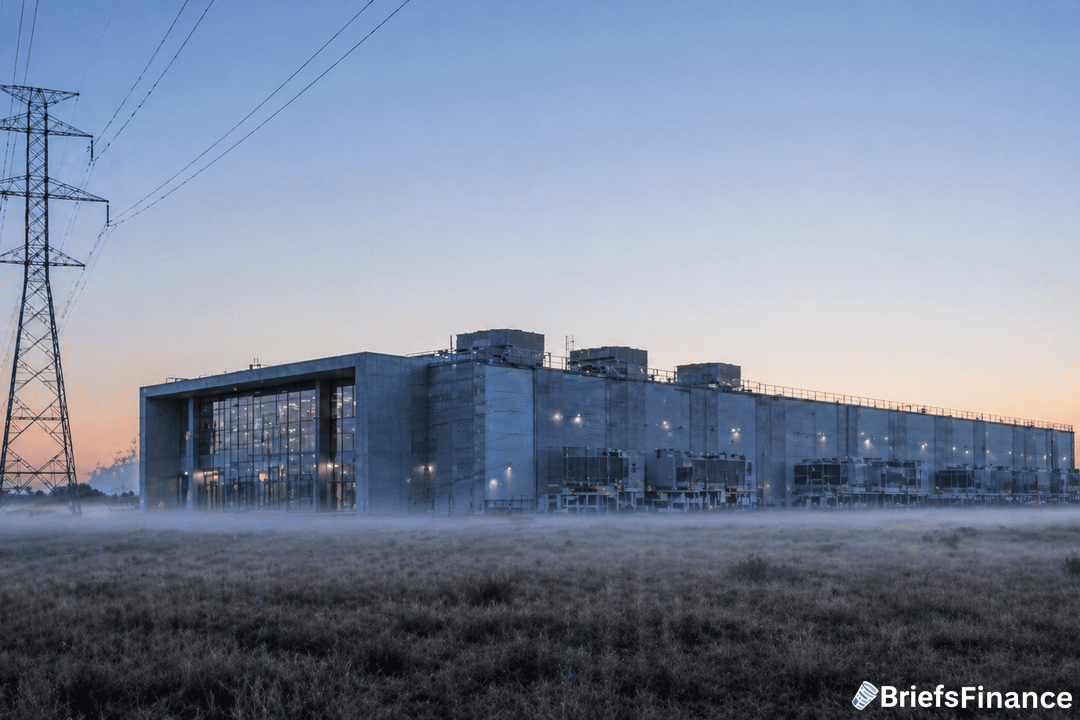
The harder part sits on the other side of the balance sheet, where Galaxy is now turning a single AI data center into its next revenue stream.

The Loss

Galaxy posted a $216 million net loss for the three months ended March 31, an improvement from the $482 million loss the quarter before. Adjusted EBITDA came in at negative $188 million, and adjusted gross loss was $88 million.

Total assets fell 12% to just under $10 billion, while equity dropped to $2.8 billion. The company still holds $2.6 billion in cash and stablecoins, which gives it room to keep building Helios without raising fresh capital right away.

The Toronto Stock Exchange delisting also wrapped during the quarter, leaving Galaxy's shares trading only on Nasdaq.

The Trading Business Held Up

The core digital assets unit posted $49 million in adjusted gross profit, only slightly below the prior quarter, with steady fee income carrying the weight. Trading volumes stayed flat even as crypto activity broadly cooled.

The average loan book shrank 20% to $1.4 billion as clients pulled back on borrowing. Most of the pain landed in Galaxy's treasury and corporate unit, which logged a $140 million adjusted gross loss on unrealized declines in digital assets and investments.

Assets under management sat near $5 billion, down from the prior quarter. Even so, the unit pulled in $69 million of net inflows during the period.

Helios Is The Pivot

In April, Galaxy delivered its first data hall at the Helios campus to CoreWeave, which marked the start of revenue from the project. The hall is the first piece of a far larger build that Galaxy has been planning for months.

Helios also got regulatory approval for an additional 830 megawatts of power, which brings total approved capacity to over 1.6 gigawatts. Most of the demand for that capacity is tied to AI workloads, where high-performance computing customers are paying to lock in long-term power.

Galaxy also disclosed a role supporting staking infrastructure for a BlackRock Ethereum exchange-traded product, while buying back $65 million of its own shares.

What To Watch

CEO Mike Novogratz laid out a $15 billion AI data center expansion plan in Galaxy's first Nasdaq annual report on April 8. Q2 will be the first full quarter Helios contributes revenue, and that number will tell investors whether the pivot can outrun the next crypto swing.

The trading business is still tied to crypto prices. The data center business is tied to AI. That split is the new shape of Galaxy.

Disclosure

Get Market Briefs delivered to your inbox every morning for free!

No fluff. No noise. No politics. Just finance news you can read in 5 minutes.

Blogs

April 28, 2026
Core-Satellite Portfolio: The Best of Both Worlds
  • A core-satellite portfolio splits investments into stable core holdings and higher-risk satellite picks.
  • The core is usually 60% of the portfolio, with satellites at 40%.
  • It blends passive index investing with active opportunity bets.

Read More
April 28, 2026
Bond Ladder Strategy: The Income Plan With Built-In Flexibility
  • A bond ladder is a series of bonds with staggered maturity dates, often one to five years apart.
  • It gives you regular access to cash, predictable income, and protection from rate changes.
  • It works for Treasuries, corporate bonds, municipal bonds, and CDs.
Read More
April 28, 2026
Silver vs Gold Investing: Which One Belongs in Your Portfolio?
  • Gold is the stable store of value, used as crisis insurance during recessions and conflict.
  • Silver is both a precious metal and an industrial metal, with more volatile pricing.
  • Most investors hold a mix in their alternative investment allocation, often 5% to 12% of portfolio.
Read More
April 28, 2026
What Is a Dividend Reinvestment Plan? The Wealth Snowball Explained
  • A dividend reinvestment plan, or DRIP, automatically uses dividend payments to buy more shares.
  • DRIPs power compound growth - dividends buy shares that pay dividends that buy more shares.
  • Most brokerages offer DRIPs free, and many include fractional shares so every penny goes back in.
Read More
April 28, 2026
How Tariffs Affect the Stock Market
  • Tariffs are extra fees on goods imported into a country, and they hit company profit margins.
  • The S&P 500 dropped over 3% in one day after the 2025 tariff announcement.
  • Tariffs reshape trade flows, creating both losers and unexpected winners.
Read More
April 28, 2026
What Is a 13F Filing? The Smart Money Tracker
  • A 13F filing is a quarterly disclosure of stock holdings from large institutional investors.
  • It shows what hedge funds and asset managers bought, sold, and held last quarter.
  • You can find any 13F free on SEC EDGAR.
Read More
April 28, 2026
Debt-to-Equity Ratio: The Number That Tells You If a Company Is Drowning
  • The debt-to-equity ratio compares what a company owes to what shareholders own.
  • The formula is total liabilities divided by total shareholder equity.
  • Lower ratios mean less risk - one of the value markers Warren Buffett looks for.
Read More
April 28, 2026
Non-Financial Analysis of Stocks: The 4-Step Method
  • Non-financial analysis evaluates a company's business, not its financial ratios.
  • It covers four things: business model, CEO, innovation, and moat.
  • It's how investors find companies with long-term staying power.
Read More
April 28, 2026
SEC EDGAR Tutorial: The Free Tool the Pros Use
  • SEC EDGAR is the official free database of public company filings.
  • You can pull 10-Ks, 10-Qs, 8-Ks, and insider trades by ticker or company name.
  • It's the source journalists and analysts use to write their stock stories.
Read More
April 28, 2026
How to Read a 10-Q (Without Losing Your Mind)
  • A 10-Q is a public company's three-month financial update, filed with the SEC.
  • It shows revenue, profits, debt, and cash flow between yearly reports.
  • You can find any company's 10-Q for free on the SEC's EDGAR site.
Read More
1 2 3 18
Share via
Copy link