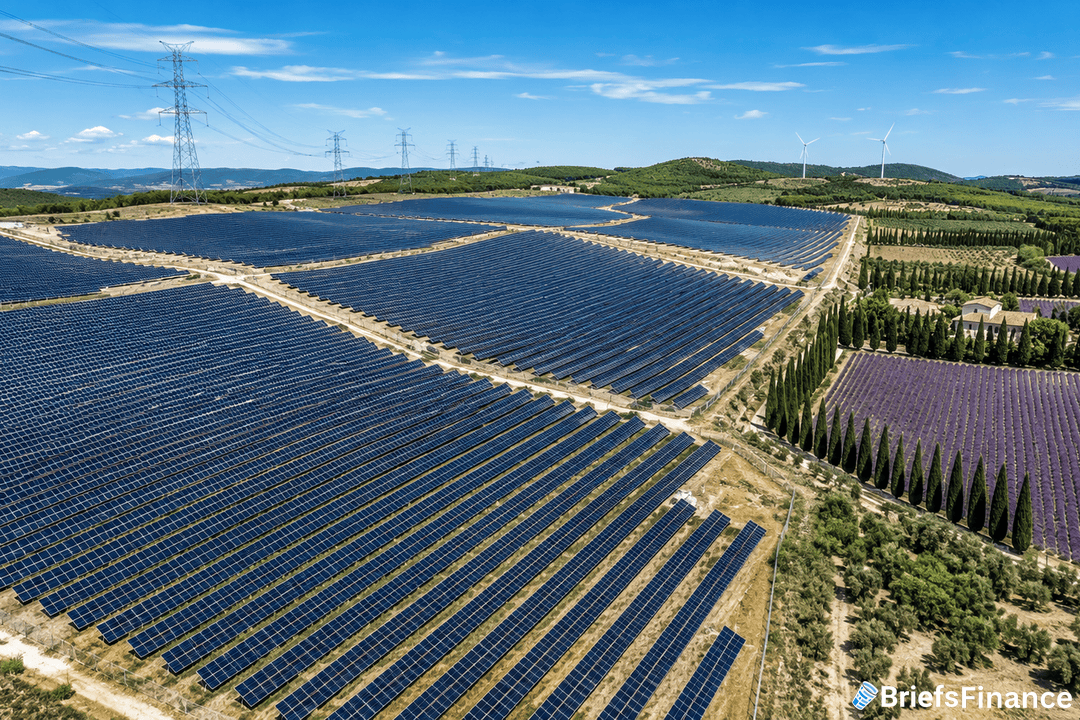
France built so much solar that the grid is now paying customers to take the power.
In April, 90% of days in the French day-ahead market closed at zero or negative prices, with the lowest hour hitting -€479 per megawatt-hour on April 26 - just shy of the regulatory floor of -€500. Early May took it further, hitting -€498.
This is not a glitch. It is the new normal in a country that connected about 6 GW of fresh solar capacity in 2025.
Why Power Is Going Negative
Negative prices happen when there is too much electricity on the grid and not enough demand or storage to absorb it. Producers literally pay buyers to take it off their hands.
France's problem is structural. A big share of that new 6 GW of solar runs under feed-in tariffs - subsidies that pay generators a fixed price no matter what the spot market does - so solar keeps pumping power onto the grid even when prices crash below zero.
Nuclear is the second piece. EDF's reactors used to flex output to match demand, but a new agreement this year between grid operator RTE and EDF, signed off by French regulator CRE, set a minimum output floor for nuclear to protect grid stability.
The result is less flexibility, more oversupply, and a midday market where the price tag is upside down.
Want to follow energy markets without spending an hour a day on it? Market Briefs breaks down the moves in five minutes a day - plus a free investing masterclass when you join.
The Volatility Is Bigger Than The Average
The headline price looks calm, with April's average sitting around €40/MWh.
What is wild is the swing inside each day, with an average daily peak of €111/MWh and an average daily low of -€33/MWh. That €143/MWh spread is roughly three and a half times the day's average price.
In other words, French electricity is cheap on average but priced like a roller coaster. Anyone who can store cheap midday solar and sell it back into the evening peak is sitting on a gold mine.
That is the trade nobody has built fast enough to capture.
What To Watch
France has logged more than 200 hours of negative or zero electricity prices so far in 2026, roughly double the same window last year. Spain's hourly negative-price contracts have more than tripled to 381.
The real bottleneck is storage. Until batteries and other flexibility tools catch up to the new solar, negative prices stay structural, not a one-off.
That gap is also where the next wave of European energy investment is heading, with battery developers racing to lock in sites that can capture the midday-to-evening price swing.
The continent built the power. It has not built the place to put it.
If you want the markets read every weekday morning, join Market Briefs - and get a free 45-minute investing course thrown in.