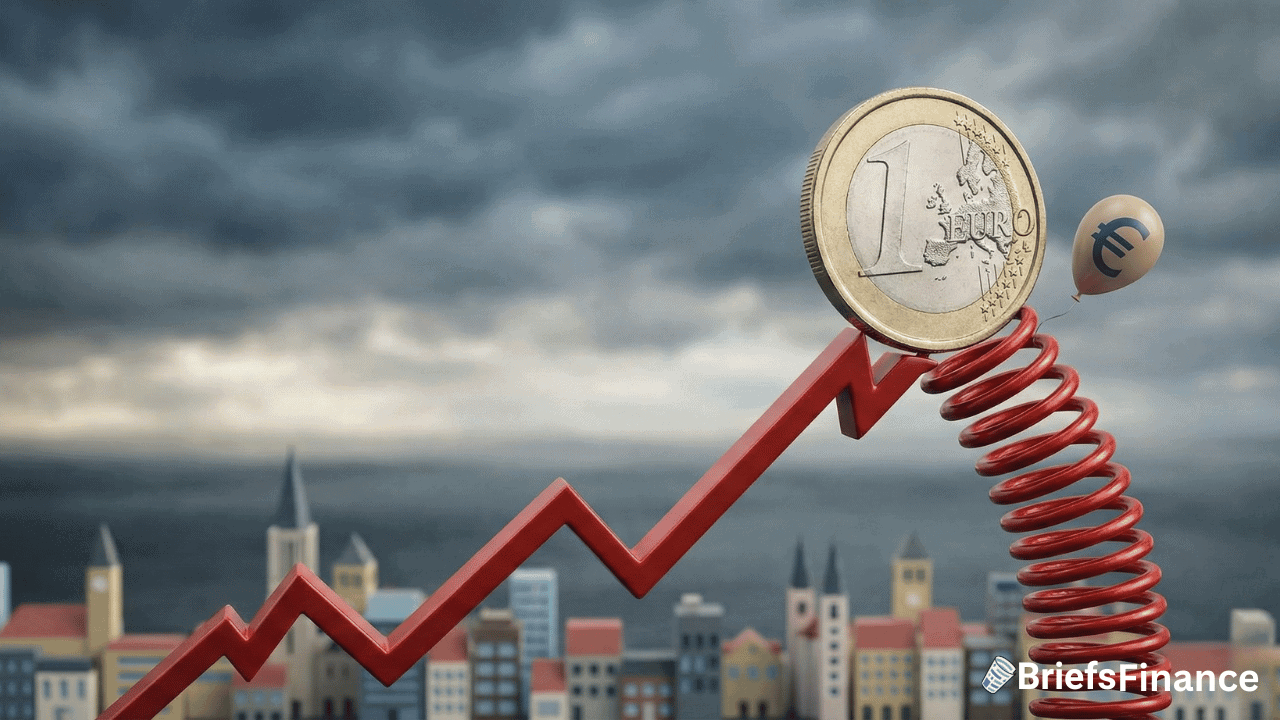
Europe had a clean inflation story heading into March. Then everything changed.
The Data That's Already Outdated
Eurostat's flash estimate showed eurozone inflation rose to 1.9% in February, up from 1.7% in January — an unexpected uptick that already caught economists off guard. Core inflation, which strips out food and energy, climbed to 2.4%. Services inflation ran at 3.4%.
The catch: all of that data was collected before the US and Israel launched strikes on Iran on February 28. The numbers don't capture a single day of the energy shock now unfolding.
Why Europe Has More to Lose
The eurozone is almost entirely dependent on imported oil and gas. That makes it uniquely vulnerable when the Strait of Hormuz — the transit point for 20% of global oil and LNG — gets disrupted.
ING analysts called Europe "the most exposed major economy" to the conflict, noting that in an extended-war scenario, European natural gas prices could spike toward €80–100 per megawatt-hour. European gas prices were already up 50% by Monday. The Euro STOXX 50 fell 3.3% on Tuesday; Germany's DAX dropped to its lowest since December.
The ECB's Impossible Position
ECB Chief Economist Philip Lane told the Financial Times that a prolonged war could push eurozone inflation meaningfully higher while simultaneously weighing on growth — a textbook stagflation setup.
The ECB had been on a rate-cutting path as inflation cooled. Now it faces a scenario where cutting rates feeds inflation, but holding them steady chokes off a fragile recovery.
Europe was almost at the finish line. The timing couldn't be worse.