New Tariff Announcement
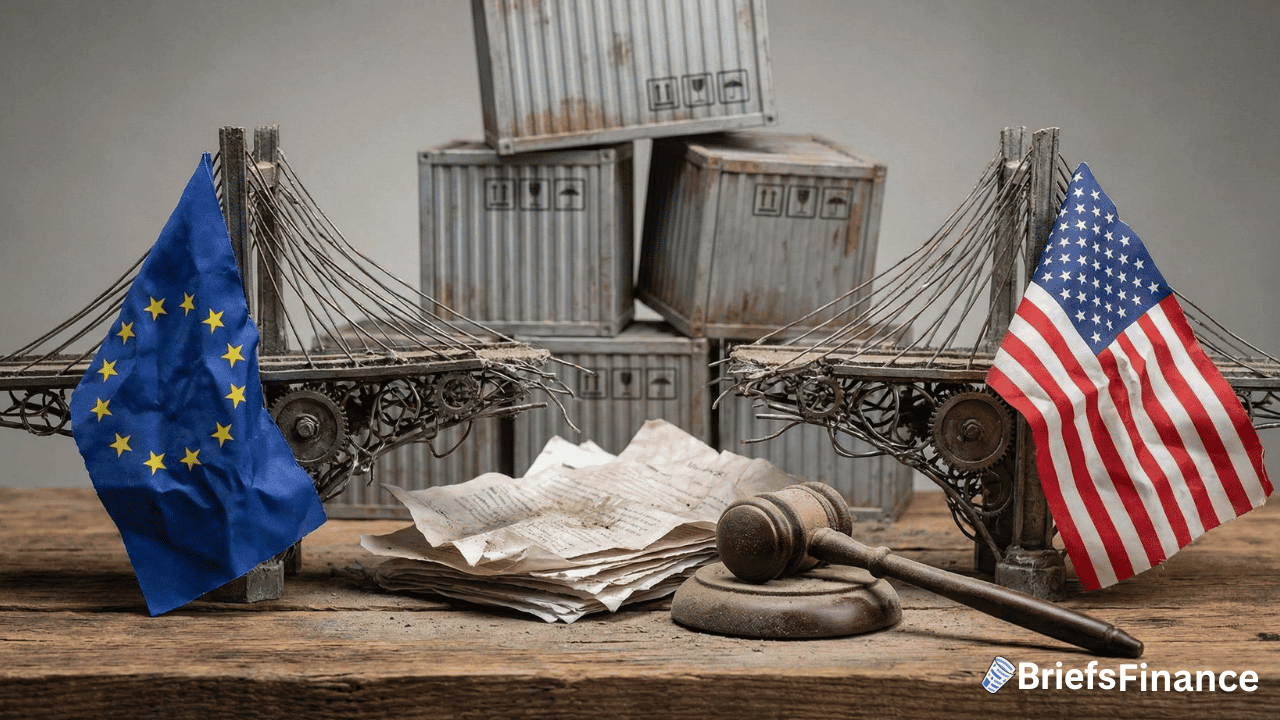
President Donald Trump announced a new global 15% tariff on all imports, effective immediately. This decision follows a recent ruling by the U.S. Supreme Court that struck down his previous global tariffs policy.
Trump initially proposed a 10% levy before increasing it to the maximum allowable 15%, which can remain in place for 150 days without Congressional approval.
European Officials React
European leaders expressed alarm over the new tariff policy. Bernd Lange, the Chairman of the European Parliament's trade committee, criticized the U.S. administration, calling it 'pure tariff chaos.'
He noted that the sudden changes create uncertainty regarding existing trade agreements between the U.S. and Europe.
Lange stated that there are many unanswered questions about whether the new tariffs breach existing deals. He emphasized the need for clarity and legal certainty before proceeding with any further actions.
Emergency Meetings Scheduled
The European Parliament's trade committee plans to hold an emergency meeting to address the implications of the new tariffs.
Lange intends to propose suspending the implementation of the U.S.-EU trade deal until they receive a comprehensive legal assessment and clear commitments from the U.S. regarding the tariffs.
Response from European Leaders
German Chancellor Friedrich Merz indicated there would be a united European response to the tariffs. He mentioned that he would discuss the matter during his upcoming visit to the White House.
Similarly, French Trade Minister Nicolas Forissier urged EU members to adopt a united strategy against the U.S. trade stance and hinted that Brussels could retaliate.
Impact on the U.K. and Trade Relationships
The U.K. government has also expressed concerns about how the new tariff policy will influence its trade deal with the U.S. Currently, the U.K. has a baseline 10% tariff rate, which may change due to the recent announcement.
On a trade-weighted basis, the U.K. is expected to see a 2.1 percentage point increase in its average tariff rate, while the EU faces a 0.8 point rise, according to analysis from Global Trade Alert.
European Central Bank President Christine Lagarde warned that the trans-Atlantic business relationship might suffer due to the uncertainty surrounding the new tariffs.
She stressed the importance of having clarity about future trade relations, stating that uncertainty can disrupt business.
Looking Forward
As the situation evolves, U.S. Trade Representative Jamieson Greer is tasked with reassuring international partners that existing trade deals are still in place. Greer defended the president's tariff stance, stating, "The president's policy was going to continue.
That's why they signed these deals, even while the litigation was pending. We expect our partners to stand by them." However, many European leaders are still seeking clarity on how the new tariffs will affect trade agreements.