Free NewsletterPro Login

Companies Are Hoarding Bitcoin Like Gold - And It's Changing Everything

A stylized illustration of a cylindrical cup with blue arrows and lines indicating a swirling or rotational motion inside the cup.
Published Oct 21, 2025
Share:
Summary:
  • Nearly a quarter of CFOs now plan to add cryptocurrency to their company treasuries within two years, with large companies (over $10 billion in revenue) leading the way at 40% adoption
  • Businesses now hold over 6% of all Bitcoin that exists - a massive 21-fold increase since January 2020 - and they're buying it faster than miners can create new coins
  • Countries like El Salvador and Brazil are adding Bitcoin to their national reserves, treating it like a modern alternative to gold that can't be manipulated by governments

What Happened?

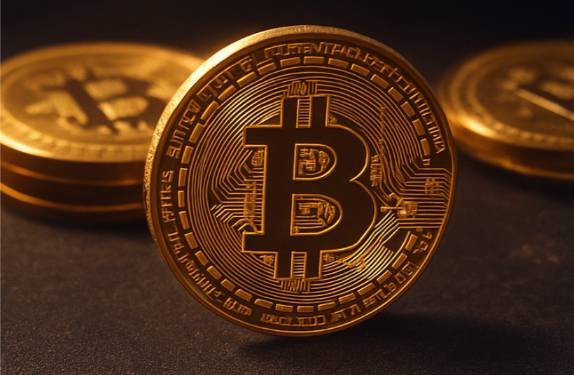
Corporate America is buying Bitcoin - a lot of it. Companies now collectively hold 1.02 million Bitcoin (worth over $100 billion), representing 6.2% of the total supply that will ever exist.

Here's how fast this is happening: Businesses bought an average of 1,755 Bitcoin every single day in 2025. That's more than Bitcoin miners are producing, which means corporate demand is actually outpacing the creation of new supply.

This isn't just tech startups or crypto companies anymore. A Deloitte survey found that 23% of Chief Financial Officers plan to add cryptocurrency to their corporate treasuries within the next two years. For the biggest companies (those with over $10 billion in revenue), that number jumps to 40%.

Even whole countries are getting in on it. El Salvador holds 5,944 Bitcoin worth $560 million, and Brazil is proposing to put up to 5% of its national reserves into Bitcoin. U.S. policymakers have even discussed creating a "Strategic National Bitcoin Stockpile."

Why This Matters

Companies are treating Bitcoin less like a speculative bet and more like digital gold. Just as corporations hold treasury bonds or gold reserves, they're now adding Bitcoin to their balance sheets as a long-term strategic asset.

Why the shift? A few big reasons. First, inflation keeps eating away at cash sitting in bank accounts. Bitcoin's supply is capped at 21 million coins - no government can print more of it, unlike dollars or euros. For CFOs worried about their cash losing value, that fixed supply is attractive.

Second, Bitcoin has gotten more legitimate. Spot Bitcoin ETFs approved in 2024 have pulled in over $50 billion, making it easier for institutional investors to get exposure. The infrastructure has improved too - upgrades like the Lightning Network make Bitcoin more practical for actual business use, from cross-border payments to supply chain tracking.

Third, regulatory clarity is finally emerging. After years of uncertainty, new rules governing crypto (like the 2024 GENIUS Act for stablecoins and 2025 ETF approvals) have given companies more confidence they won't get blindsided by sudden regulatory changes.

Some experts think this is just the beginning. Stelian Balta of HyperChain Capital predicts Bitcoin could actually surpass gold as the world's leading store of value within a decade, potentially hitting $1 million per coin.

The Bottom Line

Corporate and institutional adoption is fundamentally changing Bitcoin's role in the financial system. It's moving from the fringes into mainstream finance as a legitimate reserve asset.

For everyday investors, this matters because institutional buying creates sustained demand that could support higher prices over time. When companies and countries treat Bitcoin like a strategic reserve rather than a short-term trade, it reduces some of the wild volatility the market is known for.

The challenges? About 43% of CFOs still worry about Bitcoin's price swings, and 42% cite accounting headaches as reasons to stay away. But as more major players adopt it, those concerns tend to ease - creating what could become a self-reinforcing cycle of legitimacy and demand.

The big takeaway: Bitcoin isn't just for crypto enthusiasts anymore. It's becoming part of how corporations and even governments think about storing value in an era of inflation and economic uncertainty.

Disclosure

Get Market Briefs delivered to your inbox every morning for free!

No fluff. No noise. No politics. Just finance news you can read in 5 minutes.

Blogs

April 29, 2026
What Is Blockchain? A Plain English Guide For Investors
  • Blockchain is a digital ledger that records every transaction on a public network.
  • Once a transaction is recorded, it cannot be changed or deleted.
  • It is the foundation of Bitcoin, Ethereum, and thousands of other cryptocurrencies.

Read More
April 29, 2026
How To Negotiate Bills: The Script That Saves You Hundreds A Year
  • Most monthly bills are negotiable, even though most Americans never try.
  • A simple phone call with the right script can lower your phone, internet, and utility bills.
  • The key rule is to be nice. Customer service reps have more flexibility than most people realize.
Read More
April 29, 2026
75 15 10 Rule: The Budget That Builds Wealth On Autopilot
  • The 75 15 10 rule is a budgeting plan: spend at most 75% of your income, invest at least 15%, and save at least 10%.
  • It works by making sure you pay yourself before you spend.
  • Once your savings target is hit, you shift the 10% over to investing, becoming a 75/25 plan.
Read More
April 29, 2026
How To Rebalance Portfolio: The Strategy That Forces You To Buy Low And Sell High
  • Rebalancing means adjusting your portfolio back to your target allocation when it drifts too far.
  • The two main methods are time-based (rebalance once a year) and threshold-based (rebalance when allocation drifts more than 5%).
  • If you are still adding money, you can rebalance by directing new money instead of selling.
Read More
April 29, 2026
How To Buy Treasury Bonds: A Beginner's Guide
  • Treasury bonds are loans you make to the U.S. government. They are considered the safest investment in the world.
  • You can buy them at TreasuryDirect.gov directly or through any major brokerage.
  • There are three main types: T-Bills, Treasury Notes, and Treasury Bonds. The longer the term, the higher the interest rate.
Read More
April 29, 2026
Forward Vs Futures Contracts: What's The Real Difference?
  • Both forward and futures contracts are deals to buy or sell something at a set price on a future date.
  • Futures trade on exchanges. Forwards are private deals between two parties.
  • Most regular investors do not use either. They are mostly tools for businesses and big institutions.
Read More
April 29, 2026
Alternative Investments Explained: What They Are And Why They Matter
  • Alternative investments are anything that is not a regular stock or bond.
  • The most common types are precious metals, crypto, real estate, commodities, and collectibles.
  • Most investors should hold 5% to 25% of their portfolio in alternatives, depending on risk tolerance.
Read More
April 29, 2026
How To Buy Bitcoin For Beginners: 3 Simple Ways
  • There are three main ways to buy Bitcoin: directly on an exchange, through a Bitcoin ETF, or through a Bitcoin miner stock.
  • Each has its own pros, cons, and tax setup.
  • Most beginners do best starting small and using dollar cost averaging.
Read More
April 29, 2026
How To Follow Smart Money: The 5 Market Shifts Framework
  • "Smart money" means big investors with deep research teams and fast information.
  • You can follow them by watching for 5 types of market shifts.
  • The goal is to spot where money is moving before it shows up on CNBC.
Read More
April 29, 2026
Insider Trading Meaning: What It Really Is (And Why Some Of It Is Legal)
  • Insider trading means buying or selling a stock based on facts the public does not know yet.
  • Some insider trading is legal. Some is a federal crime that can send people to prison.
  • The SEC tracks every legal insider trade in a public file called Form 4.
Read More
1 2 3 19
Share via
Copy link