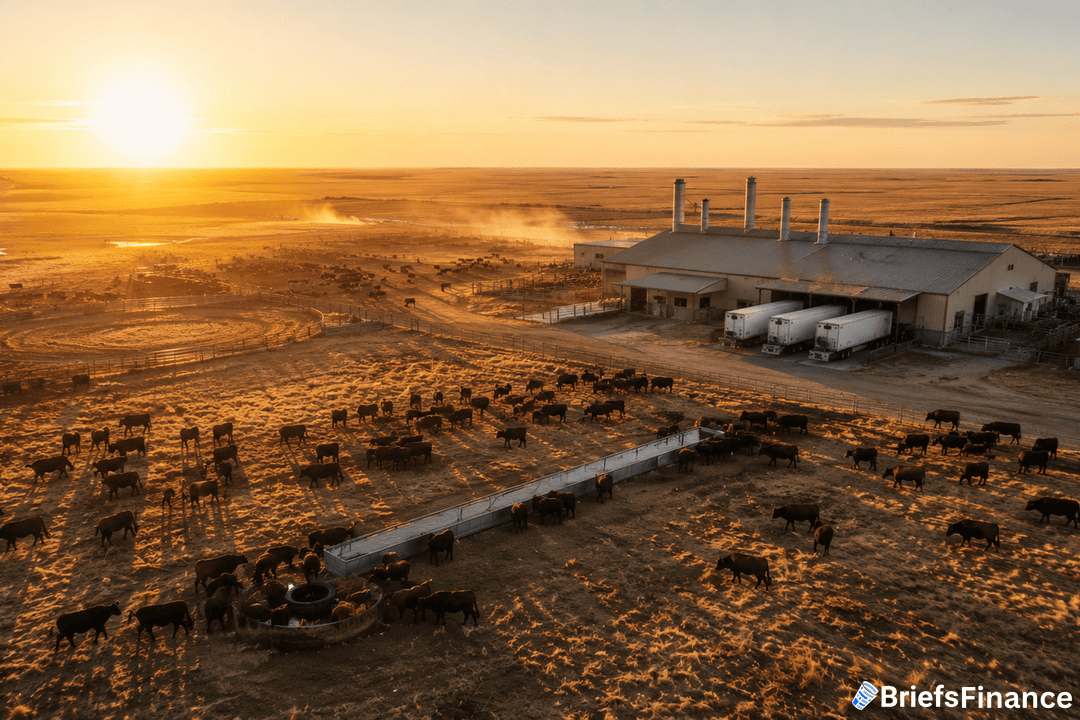
U.S. beef plants spent a year locked out of a $2 billion market. China just unlocked the door.
The U.S. Meat Export Federation said Friday that China's customs agency granted 5-year registration extensions to 425 overdue U.S. beef establishments. Another 77 new plants got fresh 5-year approvals - all coming in the same week Donald Trump and Xi Jinping sat down for trade talks in Beijing.
What Just Got Approved
The renewals cover most U.S. beef plants that lost export rights to China over the past year. Permissions originally issued between March 2020 and April 2021 had lapsed without renewal, cutting off roughly 65% of the once-registered plants.
That's now mostly fixed - 38 establishments are still suspended, including 25 that have been administratively renewed but are not cleared to ship yet.
The week leading up to the announcement had been confusing. Earlier reports suggested the renewals went through during the Trump-Xi meeting, then listings reverted to "expired" on China's customs site with no explanation.
Friday's USMEF update is the clearest signal yet that access is back.
We track moves like this every weekday morning in Market Briefs. Join and you get a free investing masterclass on top of the daily read.
The $1.5 Billion Hole In U.S. Beef
The math behind the impasse hit U.S. cattle producers hard. After the 2020 Phase One trade deal, U.S. beef exports to China grew from about $300 million in 2020 to over $2 billion by 2022, then held around $1.6 billion through 2023 and 2024.
Then the plants got delisted last year, and exports dropped to under $500 million - a $1.5 billion hole compared to peak years.
USMEF CEO Dan Halstrom estimates China market access adds about $150 to $165 per fed animal harvested in the U.S. That number multiplies across the country's cattle herd in a meaningful way.
Beef short plates currently trade around $2.50 a pound. Halstrom thinks they could jump by more than a dollar a pound if access fully comes back.
What To Watch
Plant registration is step one. There are still bigger trade issues underneath - residue testing rules and other non-tariff barriers that have caused additional delistings.
China is also a halo for U.S. beef sales across Japan, Korea, and Taiwan. When China is buying, the whole region's pricing usually firms up. When it isn't, it doesn't.
Major Chinese buyers - Sam's Club, Costco, and other foodservice customers - are already lined up to buy. The commercial demand never went away. What needed to come back was the legal access. Now it has.
Sign up for Market Briefs for the daily read - plus a 45-minute investing course as a sign-up bonus.