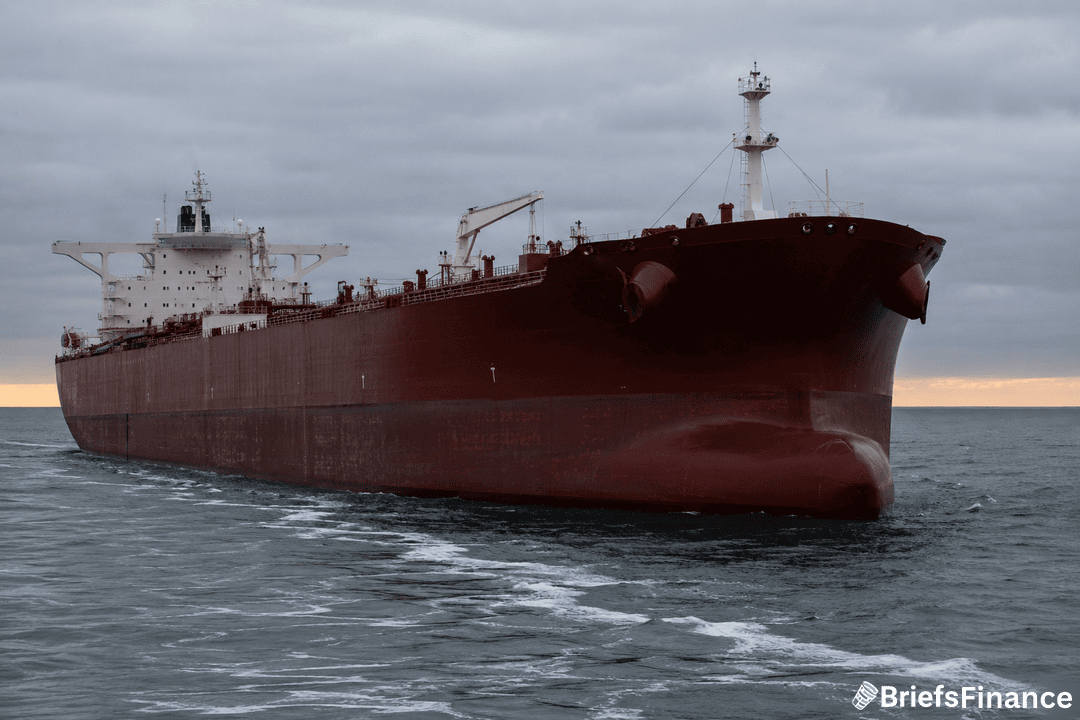
Oil prices do not usually move this fast. They just did.
The EIA reported that Brent crude finished Q1 2026 at $118 a barrel. That is almost double where it started the year. In real terms, it is the biggest quarterly jump in EIA data going back nearly forty years.
For investors, the move is more than a price headline. It is a signal that the whole energy stack is repricing. Fuel, fertilizer, and food tend to follow with a lag.
How We Got Here
The first move was slow and steady. Brent climbed from $61 to $72 between January and late February. Traders priced in the rising risk of conflict in the Middle East.
Then came the trigger. Action on February 28 led to what the EIA calls a "de facto closure" of the Strait of Hormuz. That strait carries about 20 million barrels of oil a day, or roughly 20% of global petroleum flows.
With that route shut, gasoline, jet fuel, and diesel all jumped with crude. The pass-through to refined fuels has been faster than the headline crude move alone. That is what tends to happen during supply shocks.
Diesel Is The Real Story For Investors
Crude grabs the headlines. Diesel is what shows up on receipts. The EIA's April Short-Term Energy Outlook now sees diesel peaking above $5.80 a gallon in April. The agency then sees it settling back to a 2026 average of $4.80 a gallon and $4.11 in 2027.
Diesel is the fuel that moves nearly every box of groceries. It moves every Amazon order and every truck of building supplies. When it spikes, fuel surcharges spread across freight and food in weeks, not months.
The EIA points to lower oil prices in 2026 and 2027 as stocks build. That should pull diesel back down. The April peak is still ahead, though.
Why The 1988 Comparison Matters
The 1988 line is not random. The EIA uses real-terms data so it can compare quarters across decades. The agency had not seen a single-quarter Brent move this large in real terms in nearly forty years.
This is not a normal spike. It is a once-in-a-generation shock to the energy stack. That is why analysts at the EIA and elsewhere are running the same playbooks they pulled out in 2008 and 2022.
Why Investors Care About Hormuz Specifically
The Strait of Hormuz is the single most important oil chokepoint in the world. About one in five barrels of crude moves through it on a normal day. A long disruption forces shippers to reroute, pay for war risk insurance, or skip the route.
That is why a three-week shutdown can push the price curve by months. The cost of every barrel that does flow gets repriced.
What To Watch
The EIA refreshes its forecast every month. The next release will show whether the agency thinks Hormuz traffic is on track to clear up.
Watch for any change in the 2026 average diesel call. A move from $4.80 toward $5.20 would say the supply shock is sticking. A move toward $4.50 would say the worst is fading. The April peak is the test.