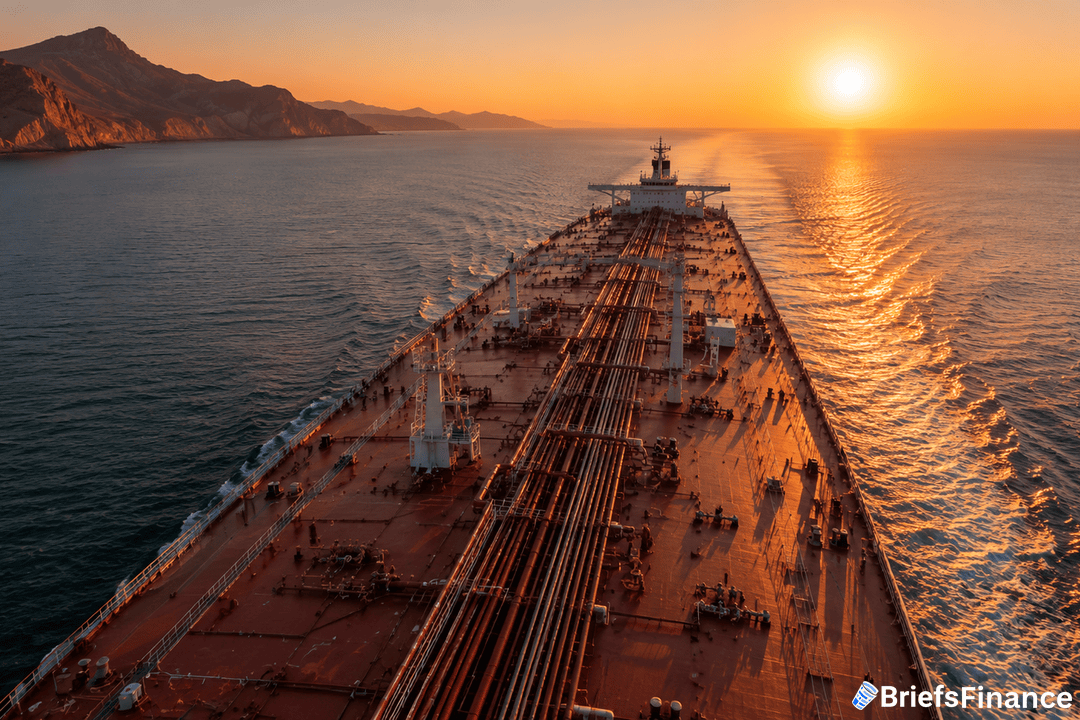
A loaded Iraqi oil tanker cleared the Strait of Hormuz over the weekend.
By Monday, it was turning around.
That single U-turn is the story of what's happening in the world's most important oil chokepoint right now. Almost nothing is getting through that isn't tied to Iran.
What Just Happened
The tanker, called the Agios Fanourios I, was heading to Vietnam carrying Iraqi crude.
As it approached the US naval blockade line on Monday, it stopped and reversed course. No one has officially explained why.
The only commercial ship that cleared the strait on Tuesday morning was a Qatari liquefied natural gas (LNG) carrier called the Mihzem, headed to Pakistan.
Qatar is one of the world's biggest LNG suppliers, and the Mihzem is one of the few non-Iranian ships that has made it through the chokepoint since February.
On Monday, that same ship briefly turned back and switched off its tracking transponder before trying again. Almost every other commercial movement in the strait was an Iranian-linked vessel.
We unpack what energy moves like this mean for your money every morning in Market Briefs, in five minutes a day, plus a free investing masterclass when you join.
How We Got Here
The Strait of Hormuz has been functionally closed since late February, when the US and Israel launched air strikes against Iran that killed supreme leader Ali Khamenei.
The US then formally imposed a naval blockade of Iran on April 13. Since then, US Central Command says it has diverted 62 commercial ships.
Iran has responded by deploying small submarines around the strait, which it calls "invisible guardians."
Trump rejected Iran's latest offer earlier this week, signaling no quick ceasefire is coming.
What This Means For Oil
About 20% of the world's oil supply normally moves through the Strait of Hormuz on any given day.
When traffic gets squeezed there, oil prices everywhere feel it.
Prices have not fully priced in a closed strait. Iranian-linked vessels are still moving, and many ships are switching off their tracking signals to hide their location.
So no one knows how much oil is really flowing.
That uncertainty is the actual risk - the market doesn't know what's real.
A single Iraqi tanker turning around won't move oil prices. The pattern behind it might.
What investors are actually watching is the count: how many ships make it through each day, and how many turn back. Right now most of the answers point in the same direction.
Iraq, Qatar, and the UAE all rely on the strait for their crude and LNG exports. So do most of their customers in Asia. If the chokepoint stays this tight for much longer, those customers will start paying up for alternative supply, and Asian energy importers will be the first to feel it.
Sign up for Market Briefs for the daily market read in five minutes, plus a free 45-minute investing course thrown in when you join.