For years, companies talked about the spending split like it was a phase. Something that would flatten out once the pandemic noise faded.
It hasn't. The divide has grown. And now the biggest brands in the country are building their entire game plan around it.
Two Lanes, One Market
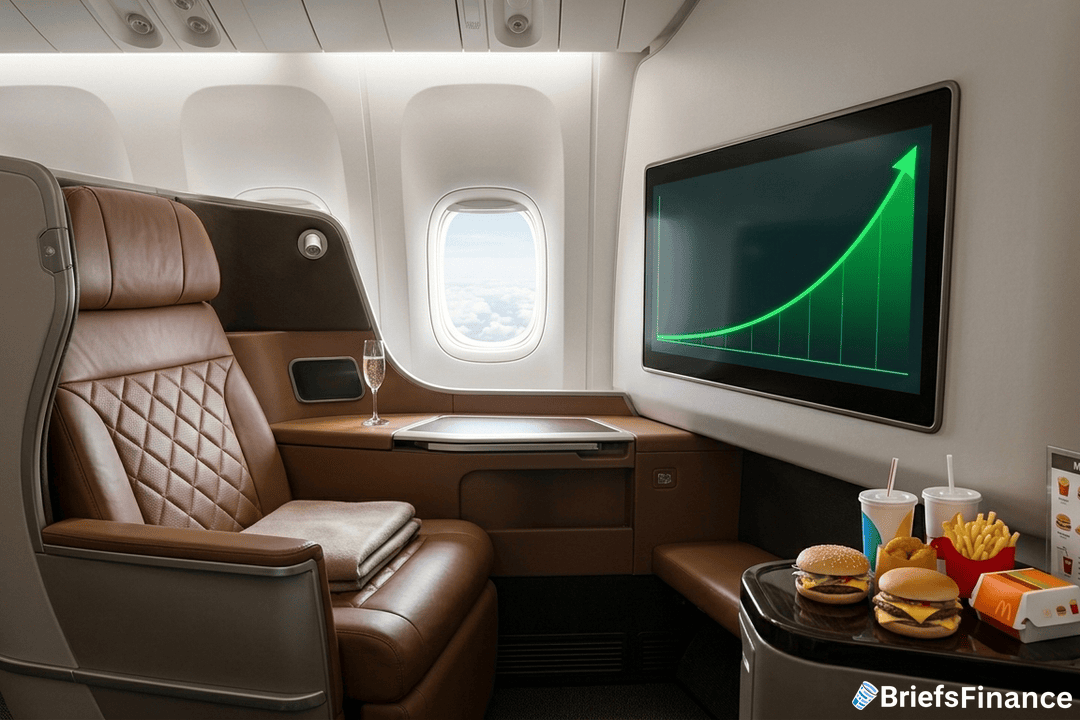
Airlines are adding first-class and business seats faster than they have in years. Wealthy travelers haven't slowed down.
High-end seats keep filling up even as the rest of the economy sends mixed signals.
At the other end, fast food chains are in trouble. Foot traffic from deal-seeking shoppers has dropped, pushing brands to roll out deals, bundles, and bargain menus.
The middle ground — mid-range food spots, mid-price stores, so-so hotel brands — is getting hit from both sides. Shoppers are either trading up or trading down.
How Walmart Figured It Out
Walmart's most recent quarter tells the story. Revenue hit $190.7 billion — a 5.6% jump from a year ago — because the company found a way to reach shoppers across the full income ladder.
Budget buyers come for the low prices. Richer shoppers — who've been leaving pricier stores — come for the mix of value and choice.
Few other brands have cracked the code. Most are stuck picking one lane — and the lane they pick shapes whether they grow or shrink.
What This Means for Investing
When companies pour money into new first-class cabins, new dollar menus, and split price plans, they're betting the gap won't close. Investors should read those bets as signals.
The best-doing sectors right now sit at the top or the very bottom of the spending curve.
Brands that sell to rich buyers hold their prices. Brands that chase deal-seekers gain sales through low costs.
What to Watch
Mid-tier brands face the toughest road. Without a clear lean toward high-end or value, they're stuck where the squeeze is worst.
For investors, the safest plays in retail and travel are the ones that have picked a side.