Free NewsletterPro Login

A Week Ago Europe Was Cutting Rates. Now It Might Hike Them.

A stylized illustration of a cylindrical cup with blue arrows and lines indicating a swirling or rotational motion inside the cup.
Published Mar 6, 2026
Share:
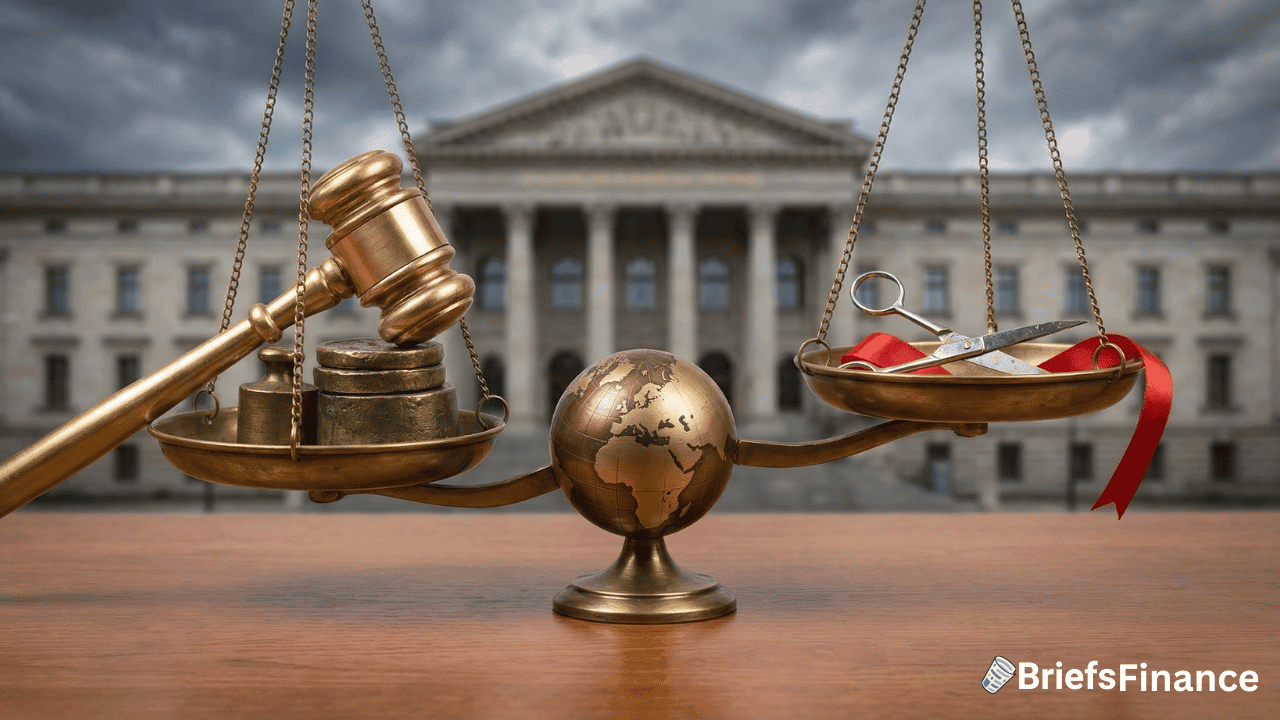
A balance scale with a gavel and stack of coins—symbolizing cutting rates in Europe—on one side, and a red ribbon with scissors on the other, set before a government building.
Summary:

  • Markets flipped from pricing a 55% chance of an ECB rate cut to fully pricing a hike — in seven days.
  • Oil's surge above $90 threatens to push eurozone inflation back above the ECB's 2% target.
  • The ECB meets March 18-19. No one expects a move yet, but the debate has shifted dramatically.

Seven days ago, traders thought the European Central Bank's next move was a rate cut. That was last Friday.

How Fast Things Changed

Bloomberg reported Friday that money markets are now fully pricing an ECB rate hike by September — with a one-in-three chance of a second hike by December. As recently as last Friday, a cut was considered more likely than a hike. Deutsche Bank noted that the probability of a hike by December crossed 63% this week — the first time it's topped 50% all year.

The trigger is oil. Europe imports nearly all of its crude and a significant share of its liquefied natural gas. When Brent crude jumps from $70 to above $93 in a week, it doesn't stay an abstract market story — it shows up in energy bills for households and manufacturers almost immediately.

The ECB's Problem

The ECB had just gotten comfortable. Inflation was sitting at 1.7% in January — below its 2% target — and policymakers were debating whether to ease further. Minutes from the February meeting showed officials were actually worried prices might undershoot the target. That concern evaporated overnight.

ECB board member Isabel Schnabel said Friday that policy remains in a "good place" but that the current environment "creates upside risks to inflation" requiring vigilance. That's central bank language for: we're not moving yet, but we're watching closely.

ING economists called it a "genuine dilemma": an oil shock could push inflation higher, but a weakening growth outlook argues for holding or cutting. The ECB raised rates at a record pace in 2022 after dismissing post-pandemic inflation as temporary. It doesn't want to make that mistake again.

What to Watch

The ECB meets March 18-19. No rate change is expected — but the statement and Lagarde's press conference will be closely watched for any shift in tone. Goldman Sachs says it would only hike in a worst-case scenario where inflation rises 3.6 percentage points by year-end. Oxford Economics thinks the ECB can "look through" the energy spike entirely.

The answer depends almost entirely on how long the war lasts — and nobody knows that yet.

Disclosure

Get Market Briefs delivered to your inbox every morning for free!

No fluff. No noise. No politics. Just finance news you can read in 5 minutes.

Blogs

April 29, 2026
What Is Blockchain? A Plain English Guide For Investors
  • Blockchain is a digital ledger that records every transaction on a public network.
  • Once a transaction is recorded, it cannot be changed or deleted.
  • It is the foundation of Bitcoin, Ethereum, and thousands of other cryptocurrencies.

Read More
April 29, 2026
How To Negotiate Bills: The Script That Saves You Hundreds A Year
  • Most monthly bills are negotiable, even though most Americans never try.
  • A simple phone call with the right script can lower your phone, internet, and utility bills.
  • The key rule is to be nice. Customer service reps have more flexibility than most people realize.
Read More
April 29, 2026
75 15 10 Rule: The Budget That Builds Wealth On Autopilot
  • The 75 15 10 rule is a budgeting plan: spend at most 75% of your income, invest at least 15%, and save at least 10%.
  • It works by making sure you pay yourself before you spend.
  • Once your savings target is hit, you shift the 10% over to investing, becoming a 75/25 plan.
Read More
April 29, 2026
How To Rebalance Portfolio: The Strategy That Forces You To Buy Low And Sell High
  • Rebalancing means adjusting your portfolio back to your target allocation when it drifts too far.
  • The two main methods are time-based (rebalance once a year) and threshold-based (rebalance when allocation drifts more than 5%).
  • If you are still adding money, you can rebalance by directing new money instead of selling.
Read More
April 29, 2026
How To Buy Treasury Bonds: A Beginner's Guide
  • Treasury bonds are loans you make to the U.S. government. They are considered the safest investment in the world.
  • You can buy them at TreasuryDirect.gov directly or through any major brokerage.
  • There are three main types: T-Bills, Treasury Notes, and Treasury Bonds. The longer the term, the higher the interest rate.
Read More
April 29, 2026
Forward Vs Futures Contracts: What's The Real Difference?
  • Both forward and futures contracts are deals to buy or sell something at a set price on a future date.
  • Futures trade on exchanges. Forwards are private deals between two parties.
  • Most regular investors do not use either. They are mostly tools for businesses and big institutions.
Read More
April 29, 2026
Alternative Investments Explained: What They Are And Why They Matter
  • Alternative investments are anything that is not a regular stock or bond.
  • The most common types are precious metals, crypto, real estate, commodities, and collectibles.
  • Most investors should hold 5% to 25% of their portfolio in alternatives, depending on risk tolerance.
Read More
April 29, 2026
How To Buy Bitcoin For Beginners: 3 Simple Ways
  • There are three main ways to buy Bitcoin: directly on an exchange, through a Bitcoin ETF, or through a Bitcoin miner stock.
  • Each has its own pros, cons, and tax setup.
  • Most beginners do best starting small and using dollar cost averaging.
Read More
April 29, 2026
How To Follow Smart Money: The 5 Market Shifts Framework
  • "Smart money" means big investors with deep research teams and fast information.
  • You can follow them by watching for 5 types of market shifts.
  • The goal is to spot where money is moving before it shows up on CNBC.
Read More
April 29, 2026
Insider Trading Meaning: What It Really Is (And Why Some Of It Is Legal)
  • Insider trading means buying or selling a stock based on facts the public does not know yet.
  • Some insider trading is legal. Some is a federal crime that can send people to prison.
  • The SEC tracks every legal insider trade in a public file called Form 4.
Read More
1 2 3 19
Share via
Copy link