Pro Login

Oracle's Credit Risk Just Hit an All-Time High. Analysts Still Say Buy.

Nate Gregory
Published Apr 13, 2026
Share:
Summary:
  • Oracle shares have fallen 24% in 2026 after the company's debt surged to $124.7 billion and free cash flow turned negative at minus $24.7 billion.
  • Revenue rose 22% year over year to $17.2 billion in Q3, with remaining performance obligations up 325% to nearly $553 billion.
  • The company plans to raise $45 billion to $50 billion in new financing this year to fund AI data center construction.

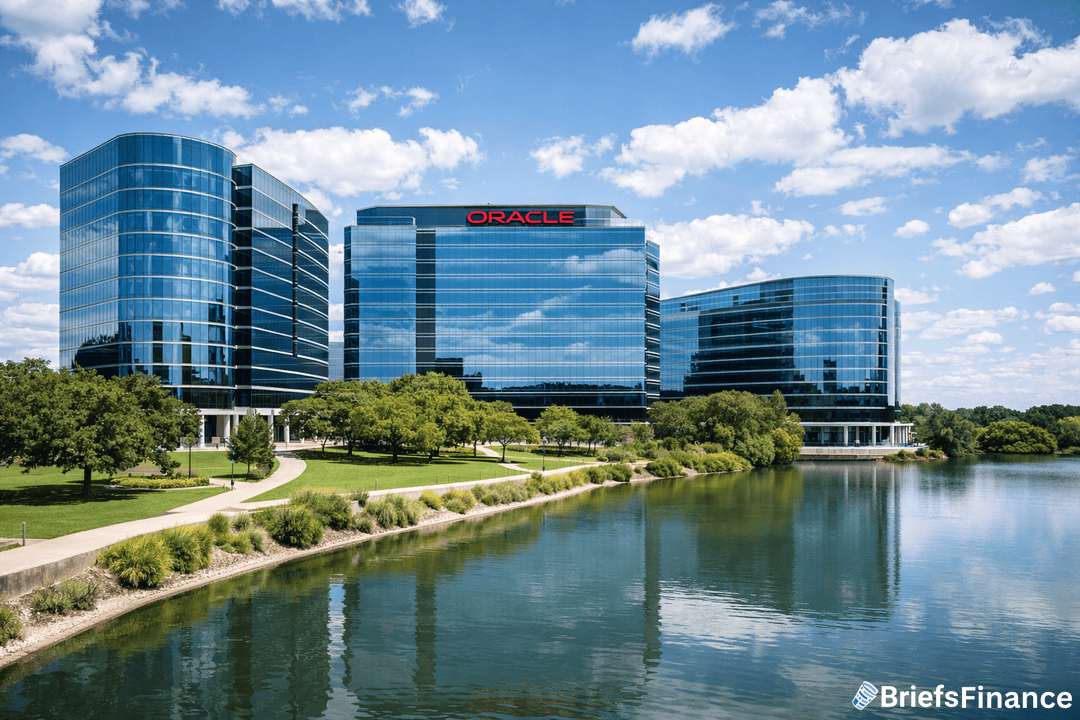
Oracle is spending so much on AI that its credit risk has never been higher - and somehow, analysts still think the stock is a buy.

Shares have dropped 24% in 2026, falling from all-time highs near $345 in late 2025 as the company's balance sheet stretches to pay for a massive AI build-out that has no precedent in Oracle's 47-year history.

The Debt Problem

Oracle's long-term debt has surged to about $124.7 billion, up from $85 billion a year ago, while free cash flow - the money left after a company pays its bills and invests - has turned negative at minus $24.7 billion.

The company plans to raise another $45 billion to $50 billion this year through stock sales and bond offerings to keep building AI data centers. Credit default swaps - contracts that protect against a company failing to pay its debt - have jumped to record levels, signaling that the bond market sees meaningful risk in Oracle's balance sheet.

That level of debt would have been unthinkable for Oracle five years ago, when the company was known for generating steady cash flow and buying back shares. The AI pivot has turned it into one of the most leveraged large-cap tech companies in the market.

For comparison, Microsoft carries about $47 billion in long-term debt with more than $80 billion in cash on hand. Oracle has nearly three times the debt and a fraction of the cash reserves, making its credit profile look more like a heavily leveraged infrastructure company than a traditional software firm.

The Bull Case

The demand side tells a different story. Oracle's remaining performance obligations - contracts for future work that customers have already signed - hit $553 billion in Q3, up 325% from a year ago. Revenue grew 22% to $17.2 billion, and earnings per share rose 24%.

Analysts covering the stock keep a "Buy" rating with an average price target that implies more than 80% upside from where it sits now. Their argument is straightforward - $553 billion in signed contracts is real demand, and Oracle just needs to execute on delivery to grow into the debt over the next several years.

Oracle's cloud infrastructure business has been the main growth engine, with companies lining up for capacity as they build AI systems. The contracts are mostly long-term, stretching three to five years, which gives Oracle revenue visibility that few tech companies can match right now.

The company's biggest clients include major tech firms, government agencies, and healthcare companies that need secure, high-performance cloud infrastructure. Oracle's database business

- still the backbone of its revenue - gives it a built-in customer base that competitors like AWS and Azure cannot easily poach.

What to Watch

Oracle is making a huge bet that AI demand will keep growing fast enough to cover the debt it is taking on. The contracts are there - $553 billion is hard to argue with.

But if AI spending slows, interest rates stay high, or key customers delay their buildouts, all that debt works against Oracle in a hurry. The stock's direction from here depends entirely on whether investors focus on the balance sheet or the backlog.

Disclosure

Get Market Briefs delivered to your inbox every morning for free!

No fluff. No noise. No politics. Just finance news you can read in 5 minutes.

Blogs

April 13, 2026
What Is Free Cash Flow? How To Find It & Why It's Important
  • Free cash flow is the cash a company has left after paying its bills and putting money back into the business.
  • Investors use free cash flow to figure out what a company is really worth - and if the stock is a good deal.
  • You can find free cash flow on a company's cash flow report, one of three key reports every public company files.
Read More
April 13, 2026
Non Taxable Income: What It Is and Why Investors Care

Non taxable income is money you earn that the IRS does not tax - like Roth IRA cash, muni bond interest, and certain investment gains. The U.S. tax code taxes workers, investors, and business owners at very different rates. Tools like Roth accounts, muni bonds, and real estate write-offs can help you keep more of what you earn.

Read More
April 11, 2026
Nasdaq Index Fund: A Beginner's Guide to Investing in the Nasdaq 100
  • A Nasdaq index fund lets you invest in the 100 biggest non-bank companies on the stock market all at once.
  • You can access the Nasdaq through index funds, mutual funds, or ETFs like QQQ - each with its own fees, trading rules, and style.
  • Picking the right Nasdaq index fund comes down to three things: who runs it, what is in it, and what it costs.
Read More
April 11, 2026
What Is Wealth? It's Not What Most People Think
  • Wealth is about owning assets that grow and pay you - not just earning a high salary.
  • In a capitalist system, there are two ways to get paid: from your labor and from your capital.
  • Building wealth takes a shift in mindset, a money system, and the habit of investing before you spend.
Read More
April 10, 2026
Micron Stock: The AI Memory Play Most Investors Are Missing
  • Micron (MU) is the only U.S. company that makes HBM chips - the short-term memory layer that AI systems need to run.
  • By early 2026, data centers were using about 70% of all memory chips made in the world, creating an 18-month backlog for new orders.
  • Micron's DRAM - or short-term memory chip - revenue jumped 69% year over year, and the company shifted away from consumer products to focus almost entirely on AI.
Read More
April 10, 2026
What Is Working Capital? What Investors Need To Know
  • Working capital is current assets minus current liabilities - it shows if a business can pay its short-term bills.
  • You find it on a company's balance sheet inside its 10-K report.
  • Changes in working capital show up on the cash flow statement and affect how much cash a business really makes.
Read More
April 9, 2026
What Is a Meme Stock? A Simple Guide for New Investors

You've probably heard the term "meme stock" thrown around on […]

Read More
April 9, 2026
Enterprise Value Formula: What It Is and How to Calculate It
  • Enterprise value (EV) shows what a company is really worth - debt and cash included - not just its stock price
  • The enterprise value formula is: Market Cap + Total Debt - Cash and Cash Equivalents
  • Investors use EV with metrics like EBITDA to compare stocks more fairly than market cap alone
Read More
April 8, 2026
Return on Equity: What It Is and How to Use It
  • Return on equity (ROE) measures how much profit a company earns for every dollar of shareholder equity
  • The formula is simple: net income divided by shareholder equity
  • A higher ROE can signal a company that is good at turning investor money into profit - but it is not the full picture
Read More
April 4, 2026
Personal Finance Books That Actually Teach You to Build Wealth

Most investors grow up hearing the same financial advice. Study […]

Read More
1 2 3 17
Share via
Copy link











