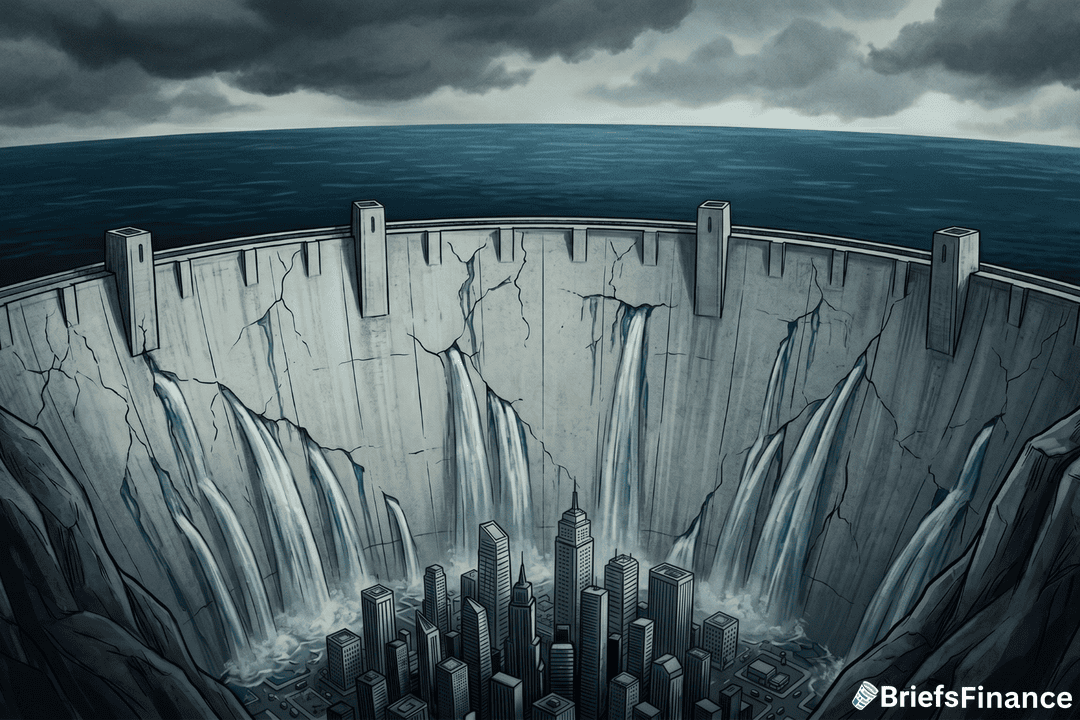
Picture a dam. Now picture a wall of water behind it that is three times bigger than the one last year.
That is commercial real estate - or CRE, the loans and buildings that fund offices, apartments, and warehouses - in 2026. For two years, lenders kept extending loans from the low-rate era instead of taking losses. All those extensions are about to come due at once.
The Math Does Not Work
The loans coming due this year were written when money cost 4.76%. Refinancing today costs 6.24%. That gap looks small on paper. It is brutal in practice.
A $50 million loan that used to cost $2.4 million a year in interest now runs $3.1 million. For buildings with fewer tenants and higher empty space, that extra $700,000 can be the difference between paying the mortgage and handing back the keys.
Apartments are the soft spot. About 60% of apartment loans written in 2021 and 2022 come due in the back half of 2026. That is a huge chunk of old debt priced for a world that no longer exists.
The Slow Burn, Not The Crash
This is not 2008. Nobody is watching a big bank collapse on live TV. What is happening is quieter. And for investors, it is harder to read.
The first half of 2025 saw nearly 150 CRE foreclosures - the highest midyear total since 2014. A foreclosure happens when an owner stops paying and the lender takes the building. Two-thirds of those were apartment loans from 2021 and 2022. That is a trend, not a blip.
Private credit funds have stepped in to fill the gap. More than $137 billion has been raised across 430-plus funds since 2020. A lot of that money is going into mezzanine debt - a higher-risk loan that sits between the main mortgage and the owner's equity - and bridge loans, which are short-term loans meant to buy the owner time.
One analyst put it plainly: "That mezz stuff is where there's pain in the cycle."
What To Watch For The Rest Of 2026
The private credit market is expected to hit $2.6 trillion by 2029. Mezzanine lending alone is projected to grow about 7% a year through 2034. That is the size of the life raft being built for landlords who cannot refinance with a bank.
The question for investors is whether the raft is big enough. A $930 billion wall does not clear itself in one year.
The extensions bought time. They did not erase the bill.