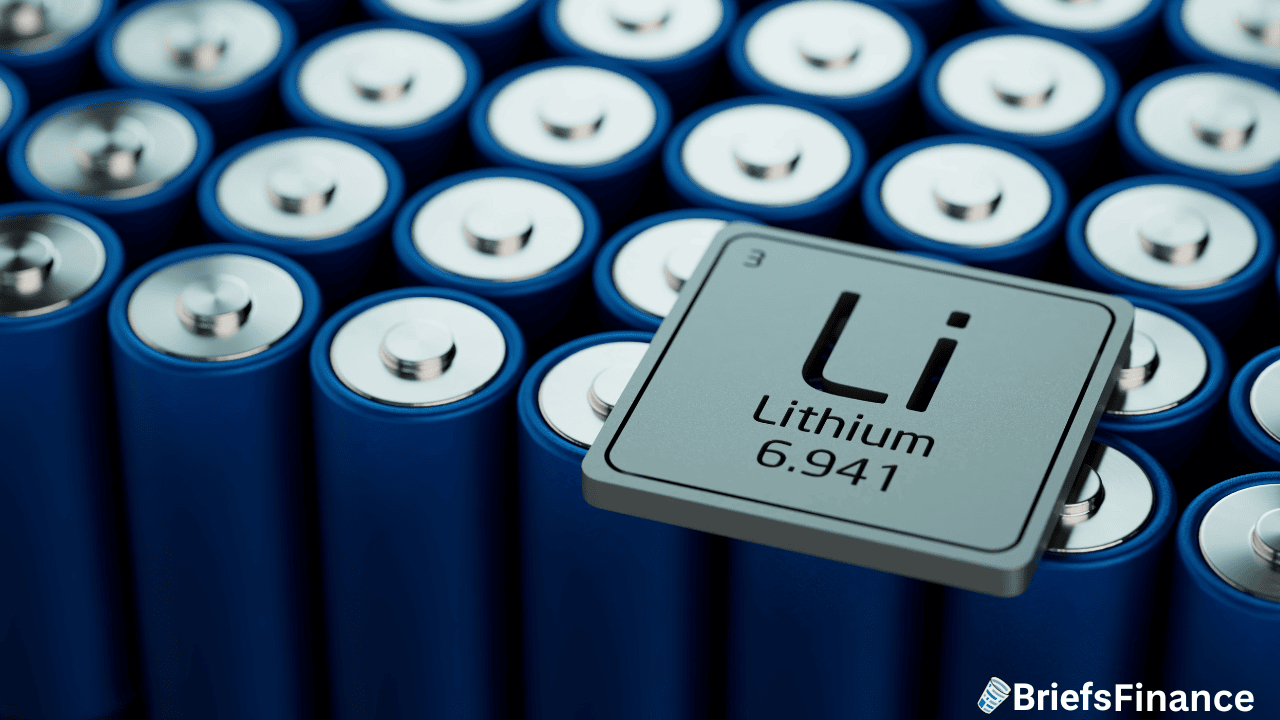
In early 2024, lithium looked unstoppable.
Why? From your iPhone to electric cars, lithium powers the batteries we use every day.
Factories to create batteries were opening across the world, and Lithium prices were skyrocketing as a result.
Then reality hit.
By mid-2024, lithium prices had crashed 80% - falling all the way to $15,000 per ton. Lithium companies began to struggle.
Demand for lithium never actually stopped growing. EVs still account for over 60% of global lithium use as of November 2025.
The International Energy Agency still projects a 30% supply shortage by 2030.
Global EV sales are on track to hit 17+ million units in 2025.
The problem here wasn't demand - it was supply.
Chinese producers flooded the market with lithium in 2023-2024, expecting high prices to continue forever.
When demand slowed even slightly, prices collapsed, and major companies and investors lost money.
And that's exactly where the opportunity begins.
Denis Phares, CEO of Nasdaq-listed Dragonfly Energy, explained it simply: "I think [prices are] pretty low right now... generally the expectation is it'll come back around 20 [thousand], maybe a little higher."
The math is what matters here: At $12,000 per ton, no new lithium mines can open. It doesn't make economic sense.
Producers lose money mining lithium at these prices.
If prices stay this low for another 12-18 months, lithium supply will dry up. And when supply shrinks while demand keeps growing, prices have nowhere to go but up.
The companies still producing profitably at rock-bottom prices? They're the ones positioned to win when this market resets.
That’s what’s happening in lithium right now - demand for lithium is growing and the companies who survived the collapse in 2024, are now positioned to potentially boom.
Let’s break down what happened to the lithium market, what investment opportunities exist for investors, and why all of this matters.
Before you read on: You can skip straight to the stocks and get real data-driven research on each investing opportunity with our Market Briefs Pro report.
Check out our full in-depth report on the investment opportunities in lithium right now by clicking here.
What Changed In The Lithium Market
Not every lithium company survived when prices crashed in 2024.
What separated winners from losers? Execution.
The Winners:
- QuantumScape (QS): Up 211% year-to-date as of November 2025
- American Battery Technology Company (ABAT): Up 348% year-to-date as of November 2025
The Losers:
- Li-Cycle Holdings (LICY): Near bankruptcy, down ~90% as of November 2025
- Piedmont Lithium (PLL): Merged into Elevra, down ~20% overall as of November 2025
The companies that survived focused on hitting milestones, preserving cash, and proving their technology worked before scaling up.
The ones that failed burned through money building facilities before proving the economics made sense.
Why Are Lithium Stocks Down In 2025?
Most lithium stocks struggled in 2025 because of one thing: oversupply.
Here's what happened:
Chinese producers aggressively increased lithium production throughout 2023-2024.
When demand slowed slightly, prices fell from $80,000 per ton to under $15,000.
Lower prices = lower profits. Batteries became cheaper for consumers, but producers spent more money mining lithium than they earned selling it.
So producers slowed production - and prices fell even more.
The bottom line: Lithium stocks fell because oversupply crashed prices. Companies that couldn't adapt went bankrupt or merged.
Companies that executed well are now positioned for the recovery.
Why Lithium Demand Is Still Growing
Despite price struggles, demand for lithium keeps growing.
Asia is driving growth. 60% of the world's population lives in Asia and 40% of all new EVs are now sold in China.
Sales are slower in western markets, but Europe and North America are at 15-20% adoption and rising of EVs.
All of those cars use lithium batteries, and huge populations means more batteries need to be made at scale.
Global EV sales are now projected to hit 17+ million units in 2025.
New demand sources emerged. AI data centers and grid power storage are adding demand that wasn't fully anticipated in 2024.
These data centers use an immense amount of power daily - lithium batteries are being used to help store power.
In addition, battery costs continue falling, making EVs competitive with gas cars even without subsidies in many markets.
The problem? There's too much lithium right now. But if prices stay this low for another 12-18 months, all of the world's current lithium supply will get used.
When supply decreases and demand keeps growing, prices must rise - that’s the opportunity for investors.
When Will Lithium Prices Recover?
Industry experts expect lithium prices to recover to sustainable levels within the next 12-24 months.
Denis Phares, CEO of Dragonfly Energy, shared his outlook: "I think the most sustainable pricing is probably in the 20 to 30 [thousand] range."
He explained why current prices aren't sustainable: "Ultimately the prices have to be high enough so that everybody is making money in the supply chain. But if they're too low, it also gets hard to even get these projects off the ground."
If we're not making more lithium and demand keeps going up, there won't be enough lithium for batteries in the future.
That supply squeeze is what creates the opportunity - especially for companies already producing profitably at current low prices.
The Companies That Survived The Reset
QuantumScape: Solid-State Battery Leader
QuantumScape (QS) is transitioning from a speculative stock into a growth company. They develop lithium solid-state batteries for EVs and computers.
Why solid-state matters: These batteries hold 40% more energy than traditional batteries, last five times longer, and fully charge in 10 minutes instead of hours.
Solid-state batteries were never an "if" but a "when." The technology has immediate applications and is highly valuable.
American Battery Technology Company: The Recycler
While QuantumScape bet on breakthrough technology, American Battery Technology Company (ABAT) took a different path.
ABAT focuses on government-backed domestic recycling and extraction.
This only scratches the surface of the research our market analysts have done on both of these stocks.
If you want more data and actual research, subscribe to Market Briefs Pro.
What Failed In The Lithium Market
Not every company executed well during this reset.
Li-Cycle: The Aggressive Approach
Li-Cycle is also a lithium recycling company, but it took an aggressive approach.
They increased capital spending to build commercial-scale facilities before proving the economics at pilot scale.
The company burned cash faster than they could secure funding.
With no cash to fall back on, the company failed after construction timelines and costs both increased.
By late 2024, Li-Cycle was forced into debt restructuring and most equity value was wiped out. They've since been delisted from American exchanges.
Piedmont Lithium: The Permitting Problem
Piedmont Lithium faced different problems, but the result was similar.
Piedmont controlled a significant lithium deposit in North Carolina. Domestic supply of lithium could power America's future in the industry.
But there were two problems:
- Local resistance in Gaston County, North Carolina stalled the project for years. Permits that looked "imminent" in 2023 remain unissued.
- Financing a $1+ billion hard-rock mine is nearly impossible when lithium trades at $12,000 per ton.
In late 2024, expectations were that lithium demand would drive up prices and push the Gaston County project forward.
That didn't happen.
Piedmont eventually merged into Sayona to form Elevra Lithium Limited. An investment in Piedmont would still be down around 20% overall as of November 2025.
Which Lithium ETF Is Best?
For investors who prefer a passive approach, ETFs offer diversified exposure to the lithium market without picking individual stocks.
Global X Lithium & Battery Tech ETF (LIT)
This ETF offers diversified exposure to miners, battery makers, and EV companies. It's one of the most established lithium ETFs.
Since November 2024, LIT is up over 40% - significantly outperforming the S&P 500's 19% gain during the same period.
Amplify Lithium & Battery Technology ETF (BATT)
BATT provides similar exposure to lithium producers and battery technology companies. It also includes companies across the entire lithium supply chain.
Like LIT, BATT has outperformed the S&P 500 by more than 40% since November 2024.
Which is best? Best is relative, depending on what your investing goals are.
Both ETFs have similar holdings and performance and they both provide broad exposure to the lithium sector without the risk of picking individual stocks.
The main difference is in specific holdings and weighting.
LIT tends to be more established, while BATT may include some smaller, higher-growth names.
For most investors, either ETF could work well for passive exposure to the lithium opportunity.
But as always, do your own due diligence before ever investing a single dime into these etfs or any investment.
What Could Go Wrong: Potential Problems With Lithium
The biggest risk to these lithium investing opportunities is prices.
If lithium stays at $12,000 per ton for years, it will be tough for producers to create more.
There are also execution risks. For instance, QuantumScape is still scaling commercialization and there's no guarantee this will pay off.
Just like with other companies in this space, margins are thin as well. One wrong step could hurt their ability to make money for years.
Technology breakthroughs may also shake up the market.
Innovations always challenge current tech - Sodium-ion batteries or alternative chemistries could reduce lithium demand.
It's unlikely in the next 5 years, but possible over a decade.
Another risk? China.
It controls 80% of lithium refining. Trade wars, export restrictions, or supply chain disruptions could create volatility.
That could hurt supply and damage revenue. Or it could boost demand for domestic producers like ABAT - there's no way of knowing until those events happen.
FAQ: Lithium Investments
Is lithium going to boom? Our market analysts are expecting the lithium market to boom again soon. Demand is exploding - EVs account for over 60% of global lithium use.
The IEA projects a 30% supply shortage by 2030. Prices crashed due to oversupply, but experts expect recovery to $20,000-$30,000 per ton as supply tightens.
What is the best lithium stock to invest in? The best lithium stocks are companies executing well during the price reset.
QuantumScape (up 211% year-to-date) leads in solid-state battery technology.
American Battery Technology Company (up 284%) excels in recycling.
“Best” is of course relative - but there are leaders in the space, and companies who may benefit more from this shift from others.
Why are lithium stocks doing so poorly? Lithium stocks fell because Chinese producers flooded the market with supply in 2023-2024, crashing prices from $80,000 to under $15,000 per ton. Lower prices = lower profits for producers.
However, companies that can produce profitably at low prices are now positioned for recovery.
Which lithium ETF is best? Both Global X Lithium & Battery Tech ETF (LIT) and Amplify Lithium & Battery Technology ETF (BATT) have outperformed the S&P 500 by over 40% since November 2024.
They offer similar diversified exposure to lithium miners, battery makers, and EV companies. Either works well for passive investors.
Once again - always do your research and due diligence before investing. “Best” depends on your risk tolerance and goals, and not every opportunity is good for every investor.
How high will Lithium Americas stock go? Lithium Americas remains volatile. The U.S. government struck a deal for 5% equity in the company, but shares remain extremely volatile.
Until domestic lithium production becomes a national priority, it's difficult to predict. That could take years, and no one knows for sure when prices will stabilize.
What A Lithium Boom Means For Investors
The opportunities in lithium haven't disappeared - this shift is just resetting.
Oversupply is an issue right now, but that won't always be the case.
The reason why is simple: We need more lithium - it powers so much of our tech from common electronics to EVs.
Denis Phares sees the bigger picture: "Now you can get a bigger return on your investment. Folks can make money on mining and processing and that's a good thing. So 20 to 30 or whatever that number is for the industry is not a bad number. I think you will be able to sell a lot of batteries."
It's reasonable to assume companies executing well now will continue to do so, especially as lithium prices rise in the future.
In the end, investors will want to monitor this shift over the next year and a half, as demand and opportunities to profit from lithium grow across the board.
Want deeper analysis on market shifts like this? We covered this lithium one year ago - before QuantumScape was up 211% and ABAT jumped 284%.
Get access to our weekly deep-dive reports on the market shifts creating wealth-building opportunities.