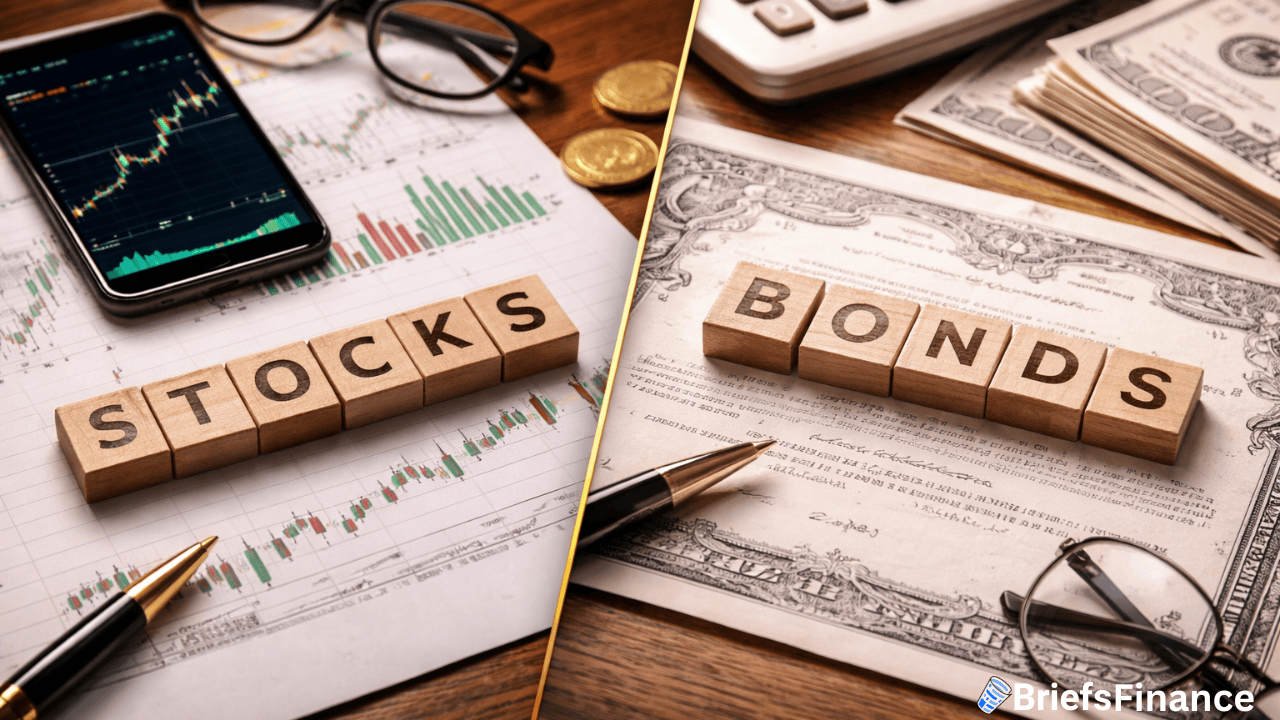
When most people think about Wall Street, they imagine billions of dollars moving from company to company.
And while billions are traded every day, you don’t need millions or even billions of dollars to start investing.
In fact you can get started with $100 or less.
That’s because being an investor and building wealth isn’t as complicated as it may seem.
You just need to know how to get started - and the simple decisions you make today can change your financial future forever.
And by the end of this guide, you'll know exactly how to take that first step.
Let’s break down how to start investing - what you need, the different types of investing, mistakes to avoid, and more.
Stick around until the end: Because once you know how to invest, the next question will be, “What can I invest in?” Market Briefs Pro may be able to fill in the gaps.
Your Investment Mindset Matters
Before you get started as an investor, you need to change the way you think about money.
Why? Many of us have different experiences with money, what it means, and what it is for.
But wealthy people think differently:
- They pay themselves first (invest before spending).
- They see money as a tool, not a goal.
- They focus on building assets, not just earning income.
Poor financial habits:
- Spending everything you earn.
- Saving without investing.
- Waiting until you "have more money" to start.
Your mindset determines your success more than your income level. Someone making $50k who invests 15% will build more wealth than someone making $150k who invests nothing.
Build Your Decade of Sacrifice
Real financial change takes time. If you want to drastically improve your life, commit to 10 years of living below your means and investing aggressively.
This doesn't mean misery. It means choosing delayed gratification.
In 10 years, you'll have freedom most people never experience.
Why You Need to Start Investing (Not Just Saving)
You were probably told growing up that if you want to become wealthy, you need to save money.
Here's the harsh reality: You can never save your way to wealth in today's economy.
Here’s why: In the early 1970s, a single income could buy a home, support a family, fund vacations, and pay for college.
Today, two-income households struggle to achieve the same things.
What changed? Inflation.
Your savings lose value every single year - that $1,000 sitting in your bank account had way more buying power 50 years ago than it does now.
If you just keep saving without investing, you're essentially getting poorer.
The Three Smart Reasons to Save Money
Let’s be clear: You still do need to save money.
But, you don’t need to save money forever. Saving money before you invest though can be helpful.
Simply put - life happens. You get a flat tire or a window breaks. You need to fix it.
But if you don't have anything saved, you may need to dip into your investments to cover the cost, or go into debt.
That takes away from your future wealth.
So before you invest, you need three types of savings:
- Emergency fund - 3-6 months of expenses for unexpected crises.
- Big purchases - That car, vacation, or wedding ring.
- Investment capital - Money specifically earmarked to buy assets.
If you're saving for anything else, you're doing it wrong. Once you've saved your first $2,000 for emergencies, it's time to start investing the rest.
Trading vs. Investing: The Important Differences
When most people think about "the markets," they picture Wolf of Wall Street chaos.
Suits, yelling - yeah, that's trading.
Trading means buying and selling securities on a short turnaround - holding for days, weeks, or maybe a month. Traders chase short-term gains from market swings.
Sounds exciting, right? Here's the problem:
- 97% of day traders lose money in the long run.
- Active traders usually underperform the market by 6.5%.
- Trading can be hazardous to your wealth.
Investing is completely different.
When you invest, you own an asset and let it grow. You're holding for years, not days and looking for stable growth that compounds
That gives your assets the opportunity to capitalize on the growing market rather than trying to time swings.
More often than not: Time in the market beats timing the market.
Active vs. Passive Investing: Which Path Is Right for You?
Once you decide to invest (not trade), you face another choice: active or passive investing.
Passive Investing
Passive investing means putting your money in stable, low-maintenance etfs or index funds that grow consistently.
These index funds and ETFs usually track major markets like the S&P 500, but there’s also niche ETFs that track industries like tech.
Pros:
- Minimal time commitment (set it and forget it).
- Lower risk through instant diversification.
- Perfect if you're working full-time and don't want to research stocks.
Best for: Beginners, busy professionals, anyone who wants steady growth without stress.
Active Investing
Active investing means picking individual stocks, analyzing companies, and actively managing your portfolio.
Pros:
- Higher potential returns.
- You learn real financial skills.
- More control over your investments.
Cons:
- More time-consuming (5-10 hours per week).
- Higher risk if one company tanks.
- Requires research and ongoing monitoring.
Best for: People who enjoy research, have time to analyze companies, and want to potentially beat index returns
There's no right or wrong path - just the right answer for your situation.
How to Start Investing: The Actual Steps
So now that you have the right mindset, you’ve set up your financial base with some savings, and you know your options, how do you actually start investing?
Let’s break down simple and common steps to get you started:
Step 1: Open a Brokerage Account
You can't invest without an account. A brokerage account is where you'll buy stocks, ETFs, and other investments.
What to look for:
- Low or no fees.
- Easy-to-use app or website.
- Good customer support.
- Educational resources for beginners.
Step 2: Fund Your Account
Once you have your account, start investing with what you can afford.
Even $100 is enough to begin.
How? Most brokerages will allow you to purchase fractional shares of a stock or ETF.
Can’t buy a full share of McDonald’s? No worries - you can purchase part of a share.
This means that you can literally start investing with $1.
Now, $1 won’t make you wealthy. But it can get you started.
If you want to actually use your income to build wealth effectively, you need a system.
Here's a simple framework called the 75-15-10 plan:
- 75% of your income = living expenses.
- 15% = investments.
- 10% = savings.
If 15% feels impossible right now, start with 5%. The key is starting and building the habit.
Pro tip: Set up automatic transfers. Pay yourself first by moving investment money into your brokerage account the day you get paid, before you can spend it.
Step 3: Choose Your First Investment
Now you’ll need to start putting in the real work.
Decide if you want to be an active or passive investor.
That involves asking yourself, “Do I want to pick individual stocks or are ETFs more my thing?”
The reality: You can choose both - but most investors typically lean one way or the other.
Committing is the first step to building wealth though. So choose your strategy and start investing based on your goals and risk tolerance.
Then submit. Congratulations—you're officially an investor.
Step 4: Keep Going (Dollar-Cost Averaging)
The biggest mistake beginners make? Investing once and stopping.
Creating a system can help - but when exactly do you invest?
Many investors choose Dollar-cost averaging (DCA) once they know the ETFs or stocks they want to invest in.
What’s that? DCA means investing a fixed amount at regular intervals - weekly, biweekly, or monthly - regardless of market conditions.
Example: You invest $200 every month into an S&P 500 fund.
Some months the market is high, so you buy fewer shares. Other months it's low, so you buy more shares.
Over time, you get a better average price.
This strategy removes emotion from investing. You're not trying to "time the market.”
How to Start Investing With Little Money
Once again: you don't need thousands of dollars to start investing and build wealth.
All you need is consistency.
Here's how to invest when you're starting with almost nothing:
Start With What You Have
If you had to invest $100 today, where would you start? Pick one your path and buy $100 worth.
Invest Your Raises
Every time you get a raise, increase your investment contribution by the same percentage (or more). This prevents lifestyle inflation.
Cut One Expense
Find one subscription, dining habit, or impulse purchase you can eliminate. Redirect that money to investing. Even $50/month becomes $600/year plus growth.
Sell Stuff You Don't Use
Old electronics, clothes, furniture - turn clutter into investment capital.
The amount doesn't matter nearly as much as the habit. Someone who invests $100/month consistently for 30 years will beat someone who invests $1,000 once and quits.
Common Beginner Mistakes (And How to Avoid Them)
Mistake 1: Waiting for the "Perfect Time"
There's never a perfect time. The market is always at all-time highs, recovering from a crash, or somewhere in between. Starting is what’s important.
Mistake 2: Checking Your Portfolio Daily
Investing is long-term, so daily fluctuations are not where your focus should be. Check quarterly, rebalance annually, and otherwise ignore the noise.
Mistake 3: Panic Selling During Downturns
The market will drop 10%, 20%, sometimes 50%. This happens over time, but emotions will still be high, which is normal.
Selling during crashes locks in losses.
Learning when to Buy during crashes is where many investors make their money.
Mistake 4: Not Having an Emergency Fund
Never invest money you might need in the next 6-12 months. Build that emergency fund first.
Mistake 5: Following Hot Tips
Your coworker's stock pick, Reddit hype, or influencer recommendations are not research. Do your own analysis.
The Bottom Line: Get Started Today
Wealth isn’t built through saving money - it’s built through hard work and consistent investing.
The good news: You can start investing today with under $100.
The (semi) bad news: Investing isn’t about getting rich quick - and building wealth won’t happen overnight.
Investing takes time - so the earlier you start, the more time your money has to compound and grow.
So get started with what you have today - choose your path, pick your strategy, and stay focused on the future.
Once you get started to invest - what do you actually invest in?
Our market analysts are researching individual stock market opportunities every week in Market Briefs Pro.
What’s that? Our investment reports give you all of the data you need to make smarter investment decisions.
Learn more and subscribe to Market Briefs Pro.