Free NewsletterPro Login

About Market Briefs

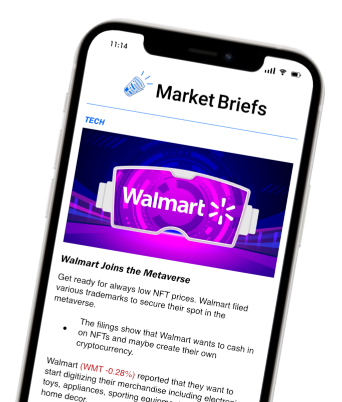
Market Briefs Newsletter Sample Financial Newsletter

With just five minutes over your morning cup of coffee, Market Briefs can get you completely up to speed with a daily newsletter that breaks down all of the top financial news from across the country, into an easy-to-read, digestible format.

Designed specifically for regular investors, you will find all of the relevant information you need to make savvy moves with your money!

What Is Market Briefs?

Market Briefs is a daily newsletter designed to keep regular investors informed and ready to make better investment decisions with better news. It covers news stories across real estate, crypto, stock and the global economy so there's something for everyone.

The best part? Market Briefs is free and can be read in 5 minutes or less.

Who Is The CEO Of Market Briefs?

Jaspreet Singh is the CEO of Briefs Media, LLC which owns Market Briefs, Briefs Academy, and Market Briefs Pro. You can learn more information about Briefs Media here.

What You'll Find In Market Briefs

Market Briefs is the ideal place for retail investors to learn all about what's happening in the economy, stock market news, real estate changes, cryptocurrency updates, and the global economy.

100,000's of retail investors are currently signed up to receive our Market Briefs, conveniently delivered to their inbox morning after morning.

The best part?

Market Briefs is completely free. Readers will never have to pay a dime to stay on top of the latest financial news – which is exactly as it should be. Financial education should be accessible to everyone regardless of the size of their portfolio.

Instead, you are only charged if you opt in for one of our sponsored products that keep this newsletter free for all.

At Market Briefs, we only promote brands and products that we believe will benefit our Briefers, so everything you read, from the content to the sponsors, is thoughtfully added, and reviewed.

This is how we keep our newsletter open for everyone to enjoy and learn from, but there’s no pressure for you to ever sign up unless you feel it’s the right move for you.

Why We Created Market Briefs As A Free Financial Newsletter

Much like the mission for The Minority Mindset, founder and CEO of Briefs Media, Jaspreet Singh, wanted to fill a gap that he saw in the market.

Financial news is, many times, geared toward the sophisticated institutional investor, but most regular people can’t understand the intricacies of what’s happening. Not to mention, the quantity of financial news is overwhelming!

There are over 5,000 news stories published every single day - most investors don't have time to read and analyze them all.

That’s where we come in! 

Read LESS News

The goal for Market Briefs is to create a simple newsletter that allows investors to be more aware of what's going on in the financial world without overcomplicating the news and without putting our Briefers to sleep.

Now, hundreds of thousands of people flock to their inboxes every morning, eager and ready to receive their financial news from their morning Market Briefs.

Are you ready to start making wiser financial decisions that stem from an educated standpoint, but you don’t have hours to comb through the Wall Street Journal, Yahoo Finance, CNBC, and Bloomberg to get the news?

Market Briefs is the financial newsletter you need if you only have a few minutes to learn more about the financial sector as a retail investor.

Become a Briefer today to start getting all of the news you need to make savvier decisions regarding your portfolio and investments!

Join us on:

Blogs

September 14, 2026
When Will RAM Prices Go Down? Inside the Memory Shortage
  • There is no certain date. RAM prices depend on supply and demand, and new memory factories take years to build.
  • This article covers the forces behind the shortage, including demand from AI data centers and earlier production cuts by memory makers.
  • Phones, laptops and other devices that use memory can cost more while a shortage lasts.
Read More
September 11, 2026
How Is the Economy Doing? Washington Says It's Fixed, but the Numbers Don't Agree
  • Treasury Secretary Scott Bessent says the economy is fixed because lower earners' incomes are now rising faster than top earners'.
  • The Atlanta Fed and Bank of America show different numbers, and Hilton, Marriott, and McDonald's can't agree on what they're seeing either.
  • Whichever side is right, the economy is built to make investors rich, and inflation is how it does it.
Read More
September 10, 2026
US National Debt Hits $40 Trillion: Why the Economy Hasn't Collapsed Yet
  • The US national debt crossed $40 trillion in 2026 and is growing faster than the economy. The debt to GDP ratio now sits at 125%, the highest outside the pandemic and higher than World War II.
  • On September 9, 2026, Treasury Secretary Scott Bessent rolled out an emergency plan for the government to lend money to itself. Ray Dalio now says the dollar has roughly three years before real pain.
  • Empires rarely default. They debase. Since 1971, median household income grew about 8x while houses grew 17x and the S&P 500 grew 360x, so investors got richer while workers fell behind.
Read More
September 9, 2026
Your 401k Is Fueling the AI Bubble
  • About $10 trillion of 401k money sits in a $77 trillion stock market, mostly through target date funds and S&P 500 funds. Roughly 30% of every S&P 500 dollar lands in five AI-heavy tech stocks.
  • Four bubble signals run hotter today than before the 2000 crash: top-ten concentration, tech's share of the index, the Buffett Indicator, and how much of the market index funds own.
  • You only lock in an AI bubble loss if you sell. The 2022, 2020, 2008, and 2000 crashes were all buying windows for long-term investors, and the US-China AI race means government money could keep flowing in.
Read More
September 9, 2026
What Is Wealth Preservation? How To Protect Your Money From Anything
  • Wealth preservation is an investing strategy built around keeping the money you've already made instead of chasing growth.
  • It leans on assets that hold steady when markets fall - gold, Treasury bonds, and companies that keep earning through wars, crashes, and pandemics.
  • The tradeoff is real: you give up some upside, and the two key numbers to check are maximum drawdown and correlation to the market.
Read More
September 8, 2026
Why Is Everything So Expensive? Why Prices May Never Come Back Down
  • Everything feels expensive because years of price rises stack on top of each other. A lower inflation rate means prices are rising more slowly, not falling.
  • How far your paycheck goes depends on both prices and your pay.
  • The Federal Reserve aims for 2 percent inflation over the longer run, so some steady rise in prices is part of its plan.
Read More
September 7, 2026
US Housing Market: Why Renting Can Cost Less Than Buying
  • Renting can cost less each month than buying a comparable home, depending on local prices, mortgage rates, taxes, insurance and maintenance.
  • The monthly cost of owning depends on the price and the mortgage rate together, so when both are high it can run well above rent for a similar home.
  • No one can promise whether or when home prices will fall, so compare the costs where you live before deciding.
Read More
September 4, 2026
An Interest Rate Hike in 2026? The Fed Just Broke Its Own Script
  • The Federal Reserve spent a year signaling cheaper money, and its new chairman just warned that an interest rate hike may be coming instead.
  • The Fed is stuck between high inflation and a weak job market, and fixing one makes the other worse.
  • Higher rates also reprice roughly a third of America's $40 trillion national debt this year, which is why Washington wants cuts so badly.
Read More
September 3, 2026
5 Passive Income Ideas That Pay You Whether You Work or Not
  • School teaches one formula: work, earn, spend. Stop working and the money stops, so the wheel never ends.
  • Five assets pay you without your labor - dividends, rent, interest, royalties, and the things you already own.
  • $80,000 a year of cash flow takes about $1 million invested at 8%, or roughly 20 years of $1,000 a month.
Read More
September 2, 2026
The Best Way to Invest 10k: Three Options To Transform 10K into 10 Million
  • Passive investing in stocks or real estate targets around 10% a year, and time in the market matters more than the price you get in at.
  • Active investing means putting your time in alongside your money, which raises the target to roughly 20% a year and raises the risk of losing it all.
  • Investing in yourself has no ceiling, because a new skill can create a new income that no market return can match.
Read More