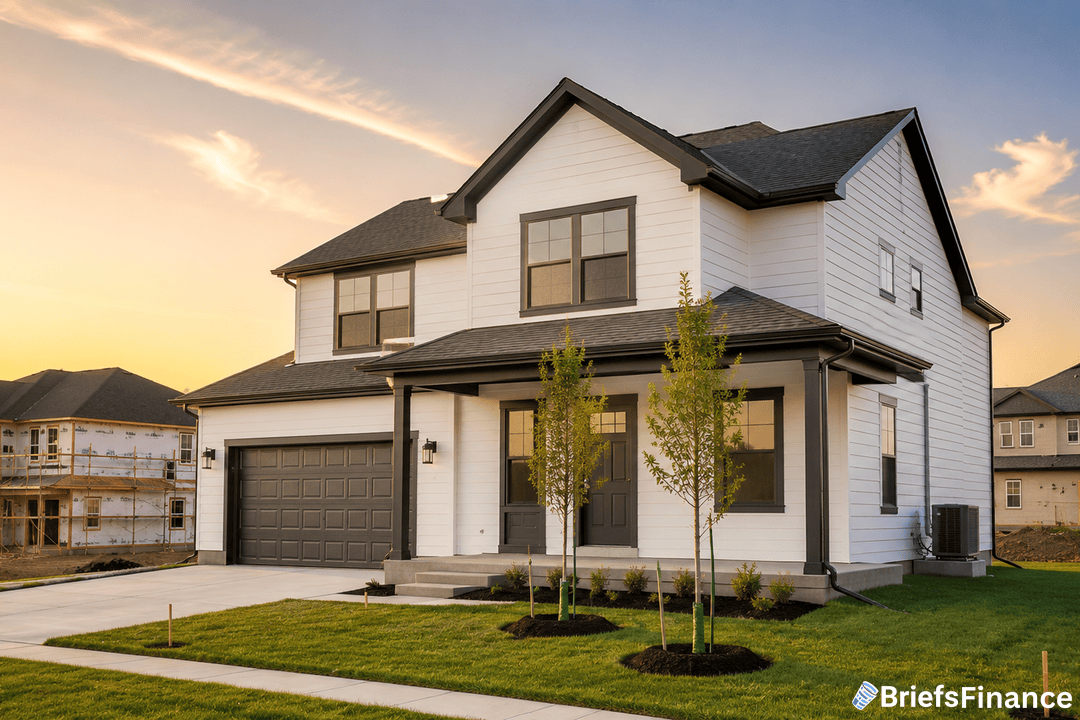
Buying new costs more upfront. That's the trade-off everyone knows about, and the one no one talks about is what happens once you actually move in.
A new Realtor.com report says new-construction homes are quietly saving buyers tens of thousands of dollars over the long run.
Where The Savings Come From
Realtor.com compared a 1,750-square-foot home built in 2025 with one built in 2005. The newer home saves the buyer an average of $25,335 over the first 10 years of ownership.
Most of that money shows up in two places. Utility bills are lower thanks to better insulation and more efficient HVAC systems, while repair bills are lower because the roof, water heater, and AC are all brand new instead of nearing replacement age.
The math leans on building code changes. Newer homes have to meet stricter rules on energy use, and the systems inside them last longer before they need to be swapped out.
For investors who think about housing as part of their portfolio, Market Briefs breaks down moves like this every morning in five minutes - and a free investing masterclass comes with the sign-up.
Where The Savings Are Biggest
The map matters more than the average. New England wins by a wide margin, with Massachusetts leading the country at nearly $39,000 in savings over 10 years, driven by cold winters and stricter state energy codes.
Southern states sit at the other end. Arkansas, South Carolina, Kentucky, Florida, and Texas all save less, mostly because milder winters mean smaller heating bills to start with.
Sixteen metro areas already cross the break-even line, meaning long-run savings fully cover the higher upfront price. The list includes San Diego, Salt Lake City, Salem Oregon, Madison Wisconsin, and Seaford Delaware.
There's also a financing piece, since Realtor.com estimates new-home buyers are getting mortgage rates about one percentage point lower than buyers of existing homes - potentially worth more than $30,000 in interest savings over a decade.
Worth Noting
Builders are also sweetening the deal with price cuts, cash credits, and rate buydowns to clear inventory sitting on their books. For buyers willing to look past the sticker price, the math has flipped in their favor, and the savings come from real costs - not promises.
If you want this kind of read on housing and your money every morning, join 350,000+ investors at Market Briefs - signing up gets you the newsletter plus a free 45-minute investing course.