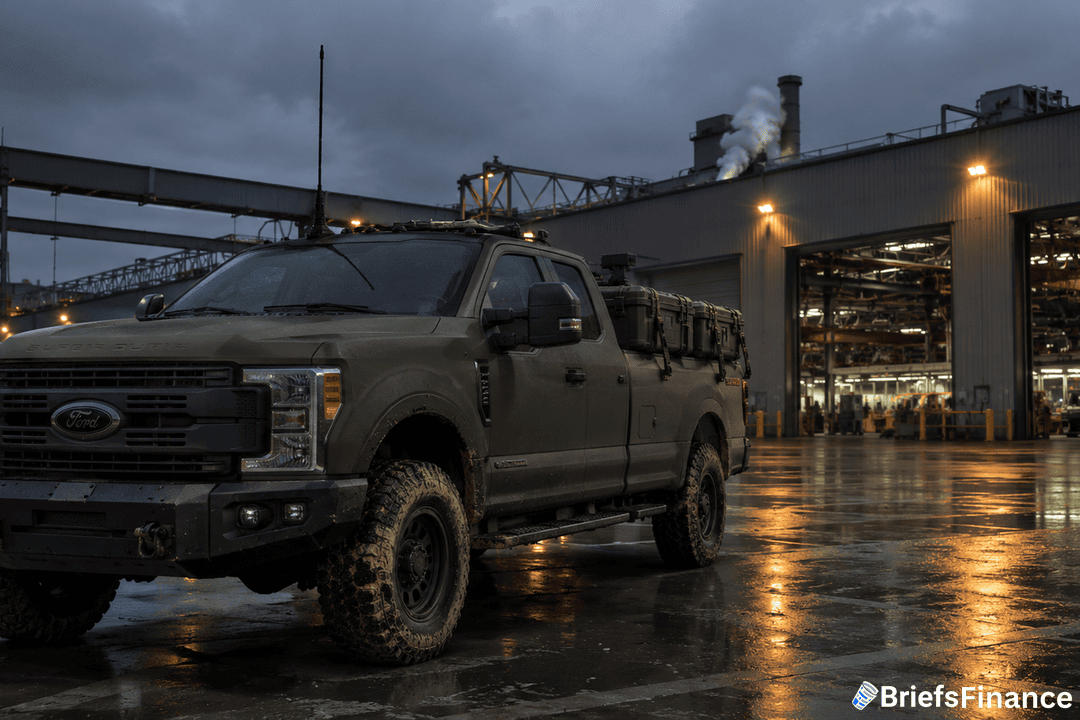
Ford is back in serious defense supply talks for the first time since World War II. The automaker said Monday it has been negotiating for the past year with defense departments across North America and Europe about converting F-Series pickups for military use, and supplying software for armed forces.
What Ford Is Offering
Ford CEO Jim Farley told analysts on the company's April 29 earnings call that Ford is in "early discussions, the US government on some defense-related projects," and on Monday the automaker filled in more detail in a blog post.
Ford has offered to retool its F-Series pickups, including the larger Super Duty line, for military use, with the discussions also covering software platforms for armed forces.
Talks began last year, and Ford called them "productive" - though no deal has been signed yet.
Why it matters: The F-Series has been America's best-selling vehicle for 44 consecutive years, which means Ford has the scale, factory base, and supply chain to push out military-grade pickups quickly if a contract lands.
We unpack defense and industrial moves like this every weekday in Market Briefs - five minutes a day, plus a free investing masterclass when you join.
The Pentagon's Industrial Push
The Pentagon has approached major US automakers, including Ford and General Motors, about helping expand military supplies - the first time since World War II that big US carmakers have been asked to contribute directly to America's munition stock.
Driving the move: support for Ukraine, the ongoing war with Iran, and aging US military stockpiles that the administration wants to refill faster than dedicated defense contractors can manage on their own.
Pulling commercial automakers into the supply chain gives the Pentagon access to factories that already build hundreds of thousands of vehicles a year, instead of leaning only on smaller specialized suppliers with longer lead times.
What's At Stake For Ford
A defense contract would be a meaningful new revenue line for Ford, which has spent the past two years working through losses in its Model E electric-vehicle division even as its core gas-powered truck business has held up.
It would also mark a real change in how the Pentagon thinks about its industrial base, pulling commercial automakers into defense work instead of treating them as a separate sector - a shift dedicated defense contractors are likely watching closely.
During World War II, Ford famously turned its plants over to make bombers, jeeps, and tanks, which is part of why a return to military production carries symbolic weight in Washington today.
What To Watch
Ford has said the talks are productive, but there's still no signed agreement on either side of the Atlantic, and General Motors is reportedly in similar early-stage discussions with US officials.
The next question is whether productive turns into signed, and how big the first contract is if it does.
If you want stories like this delivered every weekday morning, join Market Briefs and you'll get a free 45-minute investing course thrown in as a bonus.