President Trump wrapped two days of talks with Xi Jinping in Beijing on Friday.
By Sunday, the White House had a list of wins from the trip. Beijing did not sign off on all of them.
Two Readouts, One Summit
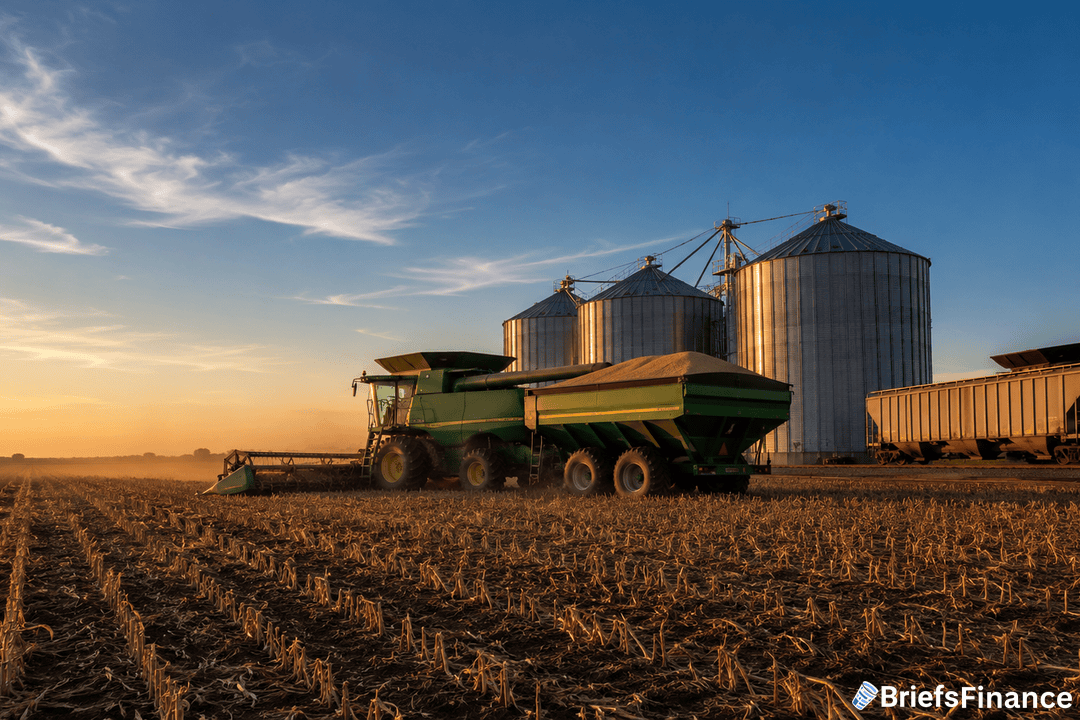
The U.S. side said China agreed to buy at least $17 billion in U.S. farm goods every year through 2028.
That builds on a deal from last October. In that one, China agreed to take 25 million metric tons of U.S. soybeans every year for three years.
China's Commerce Ministry did not put a dollar number on anything. It did not name soybeans either.
The Chinese version just said both sides agreed to push farm trade.
The U.S. side also said China is reopening to U.S. beef and poultry. Beijing did not back that part up.
The two readouts also matched on one thing: both noted plans to set up boards of trade and investment to keep talks moving.
Every morning, Market Briefs breaks down moves like this in five minutes - and a free investing masterclass comes with the signup.
The Rare Earths Gap
The U.S. side said China promised to help with shortages of rare earth minerals.
The list named yttrium, scandium, neodymium and indium. These minerals sit inside phones, cars and missiles.
Beijing controls most of that supply chain.
China's readout did not mention rare earths at all.
Both sides did agree on a few items. China will buy 200 Boeing planes, the U.S. said.
The Boeing piece comes with strings. Beijing only broadly noted the buy.
It said the U.S. would keep up the supply of engines and parts.
China has spent years building its own jet. It still leans on Western parts to fly.
China also said cutting tariffs is part of the plan. The U.S. side did not mention tariffs at all.
What To Watch
The summit was "underwhelming," but ties should improve "incrementally" as long as Trump is president.
That is the read from Jacob Shapiro of The Bespoke Group, who spoke on CNBC's "Squawk Box Asia."
He added that Beijing will "say what they need to say to make things nice for the next couple of years," while preparing for the next U.S. president, who is likely to take a harsher stance on China.
Shapiro also said he does not see Trump passing the baton to anyone in the U.S. who wants to meaningfully improve ties with Beijing.
Wharton finance professor Jeremy Siegel was even more blunt. He called the Trump-Xi meeting "a very big disappointment" on CNBC's "Closing Bell."
Both readouts also nodded to the September meeting in the U.S. as the next set piece between the two leaders.
Shipping data will tell the real story before then.
Soybean cargo, rare earth flows and Boeing orders over the next few months will say more than any joint statement.
Sign up for Market Briefs and get the daily newsletter plus a 45-minute investing course thrown in for free.