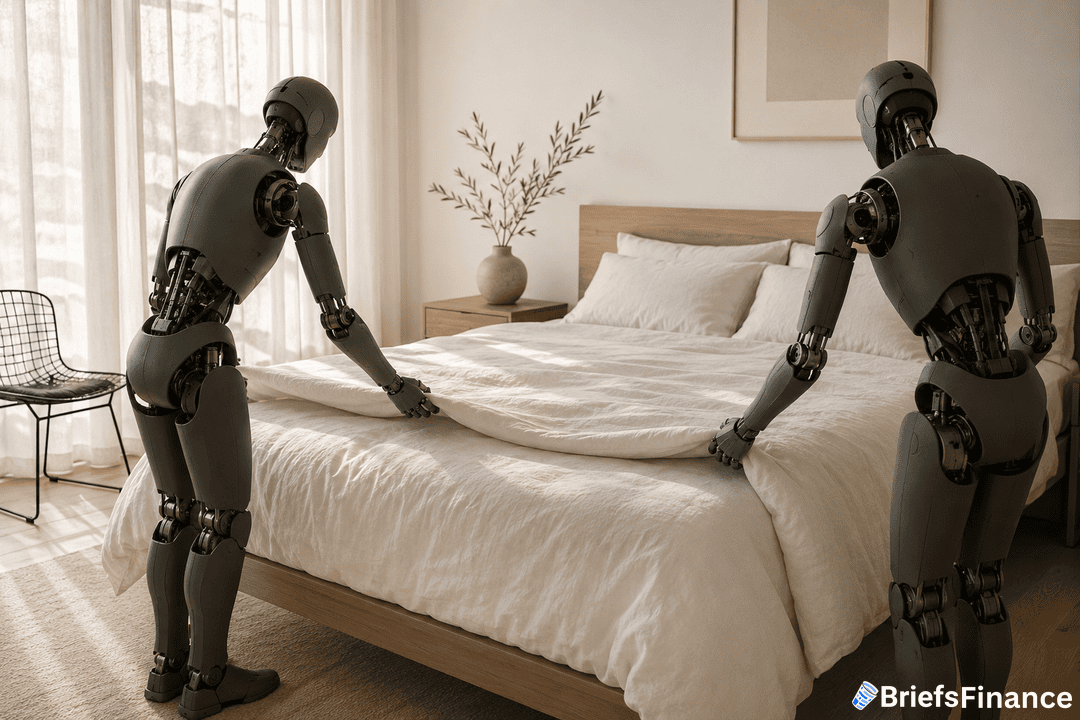
Most multi-robot systems get robots to cooperate by giving them a shared brain, where one central planner tells each robot what to do and when.
Figure AI just released a video of two humanoids that don't have one, and they're folding a comforter together anyway.
What's Actually New Here
Figure AI posted a video on Friday showing two F.03 humanoid robots reset a staged bedroom in under two minutes.
The robots open doors, hang clothes, push a chair under a desk, take out the trash, and lift and smooth a comforter onto a bed.
They're running a model called Helix-02. It's a single learned vision-language-action policy that takes raw camera pixels and turns them directly into motor actions.
There is no central coordinator and no message passing between the two robots, which is what makes the demo unusual.
Each robot reads the room with its own cameras and figures out what its partner is doing the way two people fold a sheet, by watching each other.
For the kind of weekday read on AI moves like this delivered in five minutes, Market Briefs has you covered every morning - and joining comes with a free investing masterclass thrown in.
Why It's A Bigger Deal Than It Looks
Folding a comforter is hard for the same reason rigid robots have always struggled in homes.
The fabric has no fixed shape, no obvious grip point, and no clean handoff between two helpers, which makes coordination tricky.
Each robot has to commit to a contact point, predict what the other is about to do, and update both predictions dozens of times a second as the fabric folds, drapes, and slides.
Figure says the whole sequence runs in two minutes, which is thousands of correct decisions per robot.
CEO Brett Adcock posted the video on X with the line, "Honestly, they're better at it than most humans."
What To Watch
The demo is curated video, not benchmarked data, since Figure hasn't published task success rates across many random rooms or clear failure modes.
That's the next thing investors and analysts watching the humanoid space will look for, especially as more companies move beyond single-skill demos.
Tesla's Optimus and others are chasing similar ground, and Wall Street has yet to see clean comparison numbers across companies.
The promise of humanoids in the home is closer than most people thought a year ago, even if real revenue is still some way off.
If you want a clear daily read on AI breakthroughs and what they mean for your portfolio, join 350,000+ investors reading Market Briefs - your sign-up unlocks a 45-minute investing masterclass on the side.