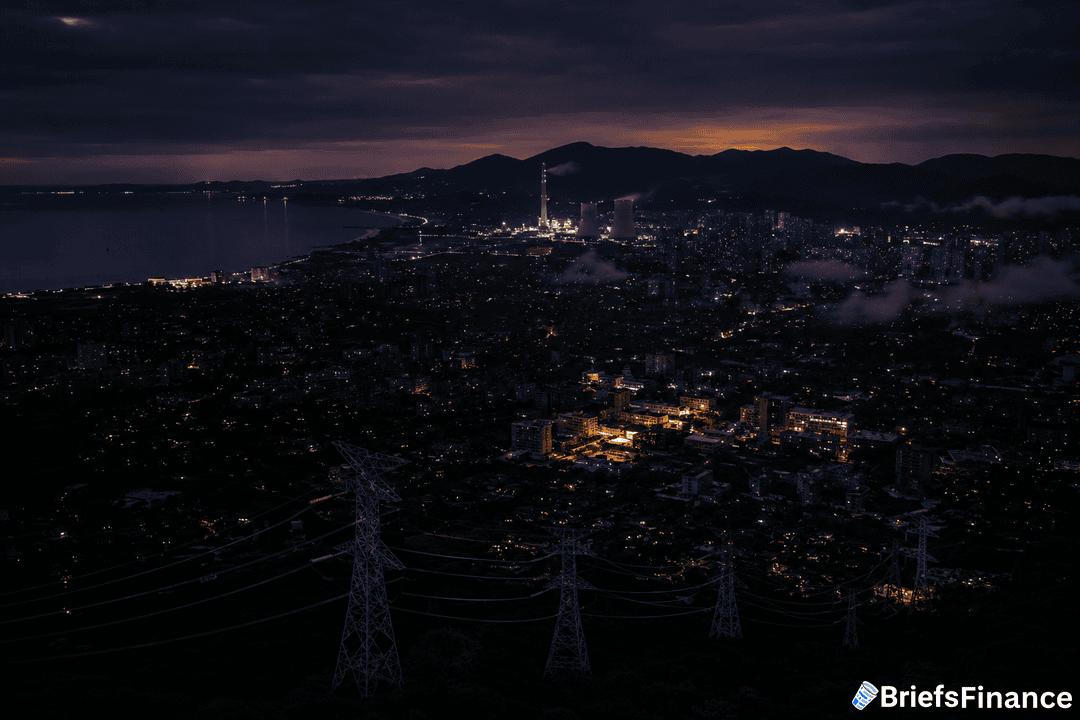
Venezuela had 35 major grid failures in the first three months of 2026. The long-term norm is 3 to 5 per year.
That is the gap new leader Delcy Rodriguez took on when she replaced Nicolas Maduro in January. A $100 billion U.S.-backed plan is meant to close it.
Right now, the firms that would fix the grid don't trust they will get paid to do the work.
Inside The Numbers
Venezuela has 36,000 megawatts of installed power, but less than 13,000 is now in use. Fuel-fired plants are running at about 13% of what they're rated to make.
Demand peaked at 14,700 megawatts last year. That puts the system at least 1,500 megawatts short before the next plant trips offline.
People in cities like Maracaibo go without power for up to 10 hours a day. The plants that need steady power, mostly oil and gas, are running on fumes.
The grid had its last big build-out in the early 2010s. Few of those new plants got the parts and care they needed. Most have not had a full fix in 10 years.
Suppliers Are Skeptical
Big gear makers like Siemens Energy, GE Vernova, and Mitsubishi Power met with leaders in Caracas in April to talk through grid repairs. The meetings did not go the way the team in Caracas hoped.
The biggest sticking point was simple. How, exactly, do they get paid?
Venezuela has a long history of stiffing its suppliers. Plants built under the Chavez era left billions in unpaid bills. Some of the same firms now being courted are still owed money from a decade ago.
One leader told Reuters they came back from Caracas "very skeptical."
What Could Unlock The Money
Power expert Miguel Lara says the grid needs at least $15 billion just for a three-year fix. That number is the floor, not the ceiling.
Some firms have asked to be paid from U.S. Treasury accounts that hold the money from Venezuelan oil sales. Rodriguez's team has so far said no to prepaid spare parts and early repairs.
The Paraguana Refining Center is one of the biggest in the world, with 955,000 barrels of daily capacity. It has had several blackouts this year. State oil firm PDVSA has not been able to restart its main gasoline units since.
Other firms, like Spain's Repsol, are now sourcing their own power gear. They aren't waiting for the grid.
What To Watch
The $100 billion plan is sitting in front of suppliers, U.S. and Venezuelan officials, and Treasury staff. Without payment terms they trust, it stays a wishlist.
The grid meant to power Venezuela's comeback is still 35 failures and counting into the year.
For investors with stakes in oil and gas firms doing work in the country, the math is simple. No grid means no output. No output means no cash flow. The longer the deal stays stuck, the more the comeback story slips.
Watch the next round of talks in Caracas this summer. That's when the U.S. Treasury, the Rodriguez team, and the gear makers either land a payment plan or push the rebuild into 2027.