The world's largest automaker just took a big hit, and the bigger story is what it's doing differently to plan for the next one. Toyota reported a 49% drop in fourth-quarter operating profit on Friday as U.S. tariffs and rising pressure from Chinese rivals squeezed margins faster than the company could adjust.
The Numbers
Operating profit came in at 569.4 billion yen, missing forecasts by close to 30%, while revenue of 12.6 trillion yen landed right where Wall Street had penciled it in.
Vehicle sales for the quarter slipped to 2.29 million from 2.36 million a year ago, and operating profit has now fallen for four straight quarters.
Net income was actually higher year over year at 817.2 billion yen, helped by items below the operating line.
The Quiet Signal In The Forecast
Toyota cut its operating income outlook for the year ending March 2027 by more than 20%, down to 3 trillion yen, while sales revenue guidance ticked up just a hair.
The bigger tell is in how Toyota is now thinking about the yen. Instead of using its usual monthly average to forecast currency, the company switched to a six-month average and locked in 150 yen to the dollar.
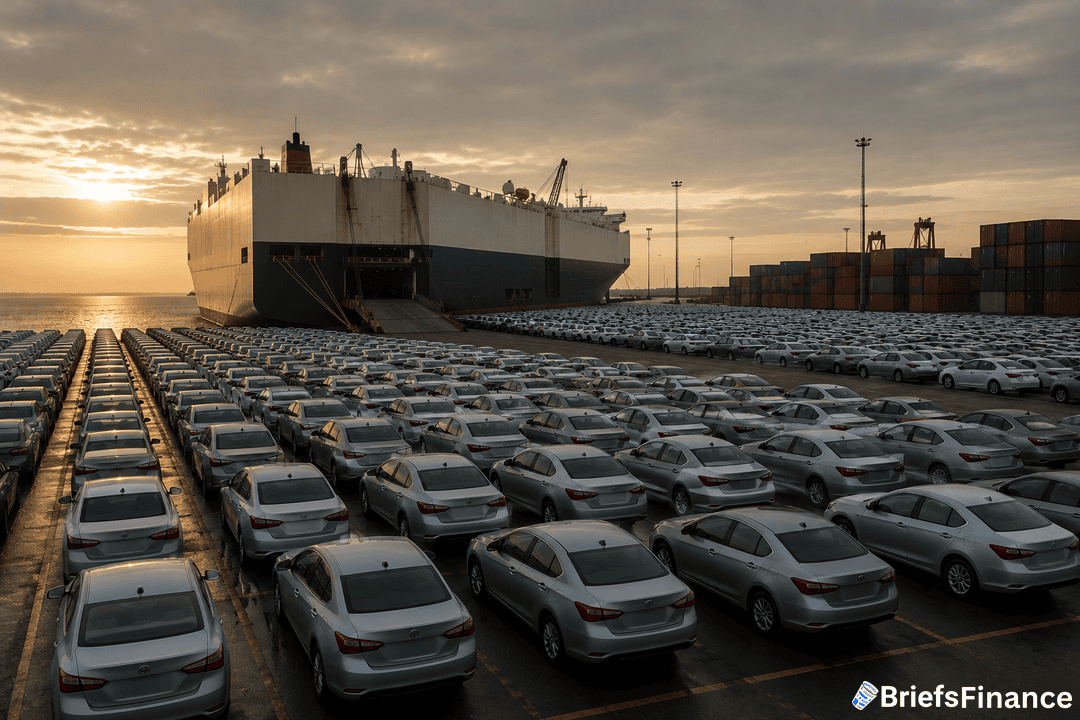
Think of it as a giant cargo ship steering through a storm. Toyota is widening its turning radius to keep from getting whipped around by week-to-week swings.
The company also said its breakeven volume, which is the number of cars it has to sell just to cover costs, has moved up, with tariffs and heavy spending on people and future products doing most of the lifting.
Where The Real Pressure Is Coming From
Toyota is fighting on two fronts at once.
In the U.S., tariffs are eating into the math on every car shipped from Japan, and that bite gets sharper any time the dollar weakens against the yen.
In China, sales have slowed as homegrown EV brands keep cutting prices and pulling buyers away from foreign automakers, including from Toyota's once-dominant lineup.
Add in record R&D spending tied partly to certification fixes, and the breakeven line that used to be easy to clear is now sitting closer to the top of the page.
A May report from Price Target Research also flagged a slow downtrend in how productively Toyota uses its assets over the past decade, which is the kind of long-term issue that doesn't fix in one quarter.
What To Watch
Toyota said in March it would put $1 billion into two U.S. plants this year, part of a planned $10 billion U.S. investment over five years aimed at moving more production inside the tariff wall.
The company also said it expects growth in battery EVs in China, Europe, and North America, even as the rest of the year looks heavier on costs from the Middle East conflict and inflation.
Shares fell 2.18% in Tokyo on Friday, and the world's biggest automaker is still profitable - just running a much harder race than it did a year ago.