For decades, the wires inside computer chips have been copper.
Nvidia just put $3.2 billion behind a different bet: glass. The chip giant is partnering with 175-year-old Corning on three new optical fiber factories in North Carolina and Texas. The plants are dedicated entirely to Nvidia's AI rack-scale systems.
Wall Street loved it. Corning popped 12% on the news. Nvidia rose about 6%.
The Deal On Paper
Nvidia gets the right to invest up to $3.2 billion in Corning. That breaks down as:
- Warrants to buy up to 15 million shares at $180 each, above Tuesday's $162.10 close but below the price after the pop
- A pre-funded warrant for another 3 million shares worth around $500 million
The factories will create at least 3,000 jobs. They will 10x Corning's U.S. optical manufacturing capacity. Other financial terms weren't disclosed.
Why Nvidia Wants Glass
Nvidia's AI server racks, like the upcoming Vera Rubin system, hold roughly 5,000 copper cables that move data between chips. Copper works. But it's hot, slow, and energy-hungry next to the alternative.
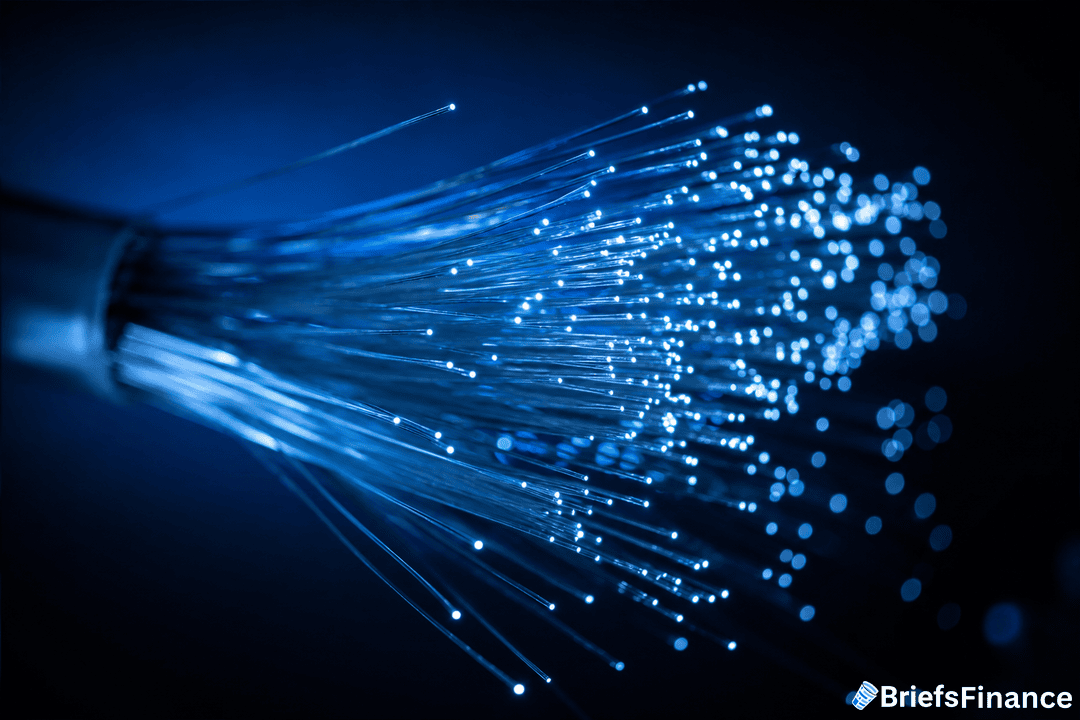
Corning makes that alternative: fiber-optic cables, the bendable glass strands that move data as photons instead of electrons. CEO Wendell Weeks told CNBC in January that fiber can use up to 20 times less power than copper to move the same data.
Multiply that across the hundreds of thousands of GPUs going into AI data centers, and the math gets ugly for copper.
The technology is called co-packaged optics. It means putting the light-conversion process right next to the compute chip. Nvidia CEO Jensen Huang called it essential for the AI build-out at last year's GTC conference.
Corning's Big AI Pivot
Corning is most famous for making the glass on Apple's iPhone screens. But optical communications is now its biggest and fastest-growing business. The stock is up over 300% in the past year because of it.
In January, Meta committed up to $6 billion as flagship customer for Corning's optical cable plant in Hickory, North Carolina. That expansion is set to add about 1,000 jobs. The Nvidia deal is the second mega-anchor in five months.
Nvidia also spent $4 billion in March on Coherent and Lumentum. Both firms build the lasers that convert data between light and electricity. The whole co-packaged optics stack is being assembled in real time.
Corning invented optical fiber for long-range communication in 1970. It has shipped millions of miles of cables to the AI data centers run by every major hyperscaler.
Now those same cables are moving inside the server rack itself. That's a much bigger market than long-range fiber. It is also one Corning has not had to itself before.
What To Watch
Nvidia stock has slowed lately. Investors are spreading bets across other AI infrastructure names like Intel, Micron, and Corning itself.
This deal links Nvidia's growth more tightly to the companies riding alongside it. Glass also has to win the head-to-head with copper at scale.
Broadcom and Marvell already sell similar co-packaged optics products. Intel is building its own. So Corning is not the only fiber player Nvidia could have picked.
The next AI build-out won't be one stock. It's becoming an ecosystem.