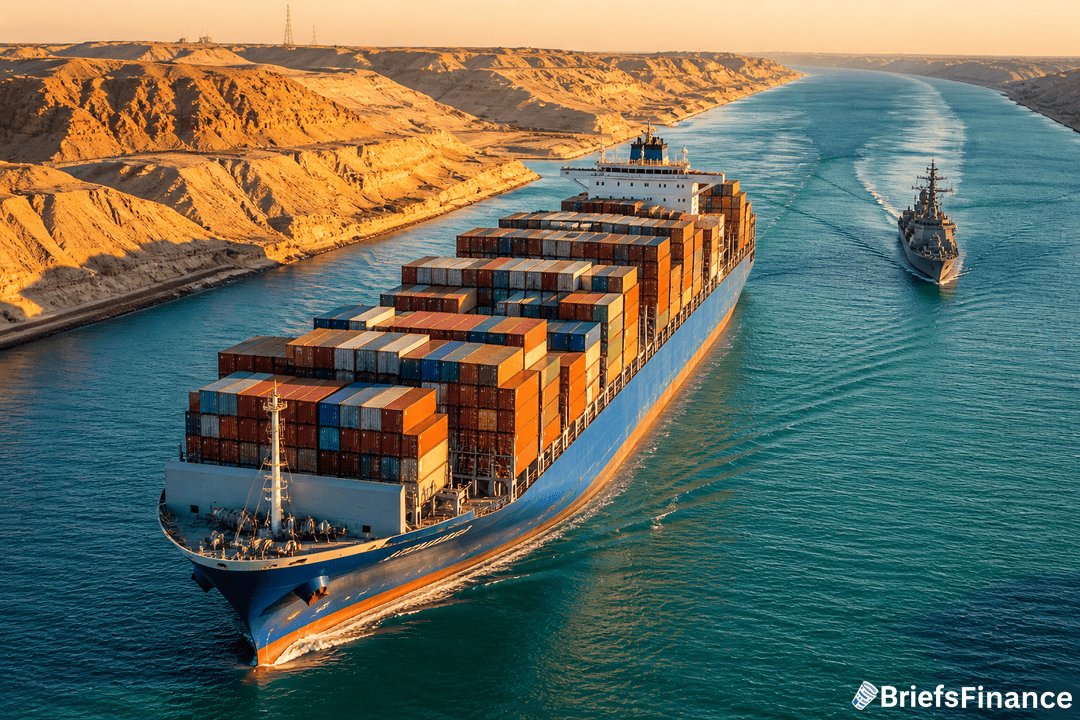
The Strait of Hormuz has been a parking lot since February, with about 20% of the world's oil normally moving through it and almost none crossing since the war with Iran started. One Maersk ship just changed that.
The transit is the first big sign that the U.S. plan to reopen the strait is starting to work. It's also a stress test of how far Iran is willing to go.
What Happened
The Alliance Fairfax, a U.S.-flagged Maersk vessel, completed the trip through the strait Monday with the U.S. Navy guarding the route. The ship had been stranded at sea since Feb. 28, the day the U.S. and Israeli-led war against Iran started, and all crew members made it through safe.
U.S. Central Command said two U.S.-flagged ships crossed the strait Monday, with Navy guided-missile destroyers now operating in the area. The transit is the first real proof that Trump's "Project Freedom" plan to clear the strait is operational.
Stranded ships now have a path home, even if a narrow one. Maersk operates the Alliance Fairfax through Farrell Lines, a subsidiary of Maersk Line Limited.
Why The Strait Matters
The Strait of Hormuz is a narrow waterway that connects the Persian Gulf to the Gulf of Oman, and it carries roughly a fifth of the world's oil and a big slice of its liquefied natural gas. When ships can't cross, the world's energy market feels it almost immediately.
Think of the strait as a single hallway connecting the world's busiest oil supply room to everyone else's house. Closing it doesn't just slow oil. It backs up the rest of the world's trade with it.
What's Still On The Table
A ceasefire between the U.S. and Iran looked close to falling apart Tuesday after Iran sent drones and missiles into the United Arab Emirates, while Washington said it sank Iranian boats in the strait. Oil prices slid as investors digested the mixed signals.
Trump told Fox News that Iran would be "blown off the face of the earth" if it targeted U.S. ships protecting commercial traffic. Iran's foreign minister Abbas Araghchi pushed back, saying recent events show there's "no military solution to a political crisis."
Araghchi added that Pakistan has been helping move talks forward, and warned that the U.S. should "be wary of being dragged back into quagmire by ill-wishers."
What To Watch
Maersk posts first-quarter results Thursday, and the shipping giant is often used as a read on the health of global trade. Its commentary on freight rates and customer demand will get extra scrutiny.
Two ships through is not a fixed strait. It's a start.