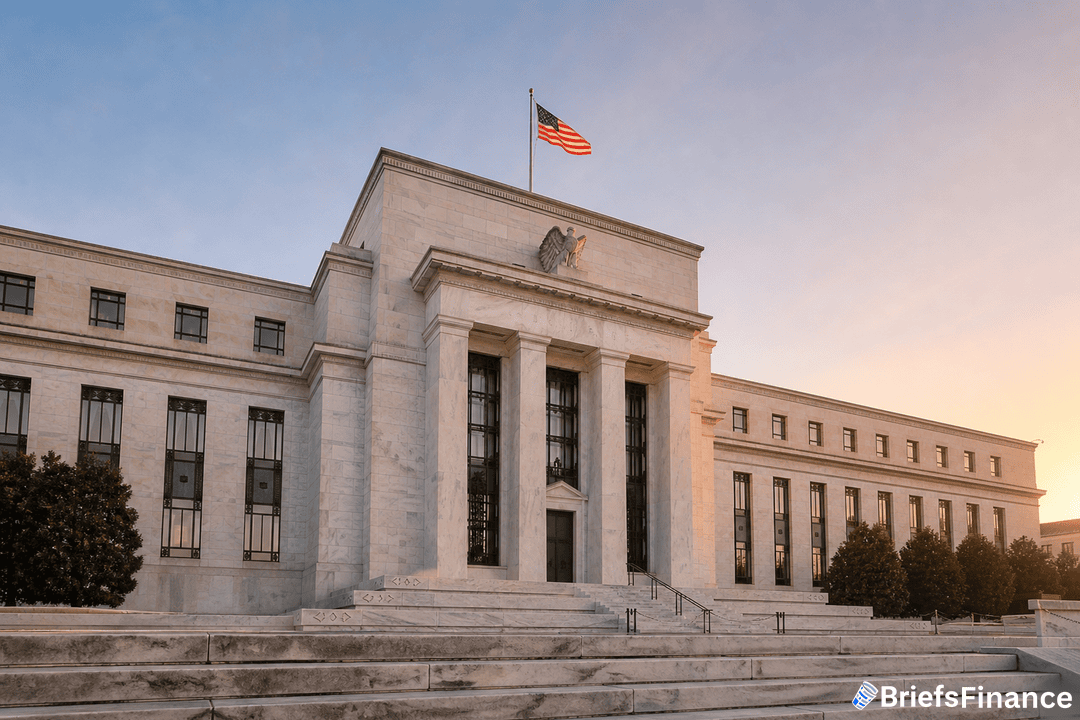
Fed Chair nominee Kevin Warsh has a plan to keep the central bank independent, but it involves making the central bank less independent in certain ways.
At least, that's how a few former Fed officials are reading it.
Warsh's Two-Track Plan
In Senate responses following his April 21 confirmation hearing, Warsh said the Fed should be "strictly independent" when it comes to monetary policy (the Fed's core job of setting interest rates), but he's open to working with Congress and the Trump administration on what he calls "non-monetary matters."
He's also floated a new Fed/Treasury accord that could govern the Fed's balance sheet, though he hasn't said exactly what that would look like.
Six former Fed officials told CNBC the comments are unclear at best and worrying at worst, while Warsh declined to comment.
Why It Matters For Markets
The first test case is about to land in Warsh's lap if he's confirmed.
Treasury Secretary Scott Bessent recently said several Persian Gulf countries have asked for dollar swap lines (short-term deals where the Fed gives dollars to a foreign central bank in exchange for that country's currency, usually during crises), including the UAE.
The Treasury could provide those swap lines on its own, like it just did for Argentina, but what's unclear is whether Bessent expects the Fed to step in too.
Swap lines aren't small, either. During the 2008 crisis they ballooned the Fed's balance sheet by almost $600 billion (about a quarter of its total), while during COVID they peaked at $450 billion.
What Bond Markets Could Read
If Treasury can pressure the Fed to buy specific assets, or hand out swap lines to political allies, bond markets could read it as a loss of Fed independence.
One former Fed official, speaking anonymously to CNBC, said the Fed's balance sheet could become "an arm of foreign aid," while another said the Fed could "lose control of its balance sheet."
Bessent has called the Fed's expanded balance sheet a "gain of function" experiment that should be reined in, and Warsh resigned from the Fed in 2011 over a similar concern.
Former Richmond Fed President Jeffrey Lacker told CNBC he could welcome a Fed/Treasury accord that focused the Fed on monetary policy, but he could also picture "a less constructive agreement that lets the Treasury use the Fed's balance sheet to bypass Congress."
Former Boston Fed President Eric Rosengren put it another way: "the flexibility that monetary policy provides is hamstrung" if the Fed has to ask Treasury before acting in a crisis. JP Morgan's Michael Feroli noted in a Friday report that most Fed officials see balance sheet policy as just rate policy "by other means" when rates are pinned near zero.
Worth Watching
Warsh's confirmation isn't just about interest rates anymore, since the bigger question is whether the Fed's role gets quietly redrawn.
Warsh did hint at his own line in the sand at his confirmation hearing: "Presidents want lower rates, but Fed independence up to the Fed."
The UAE swap line could be the first answer.