A missile strike in Saudi Arabia is going to show up on your next Best Buy receipt.
That's the supply chain math.
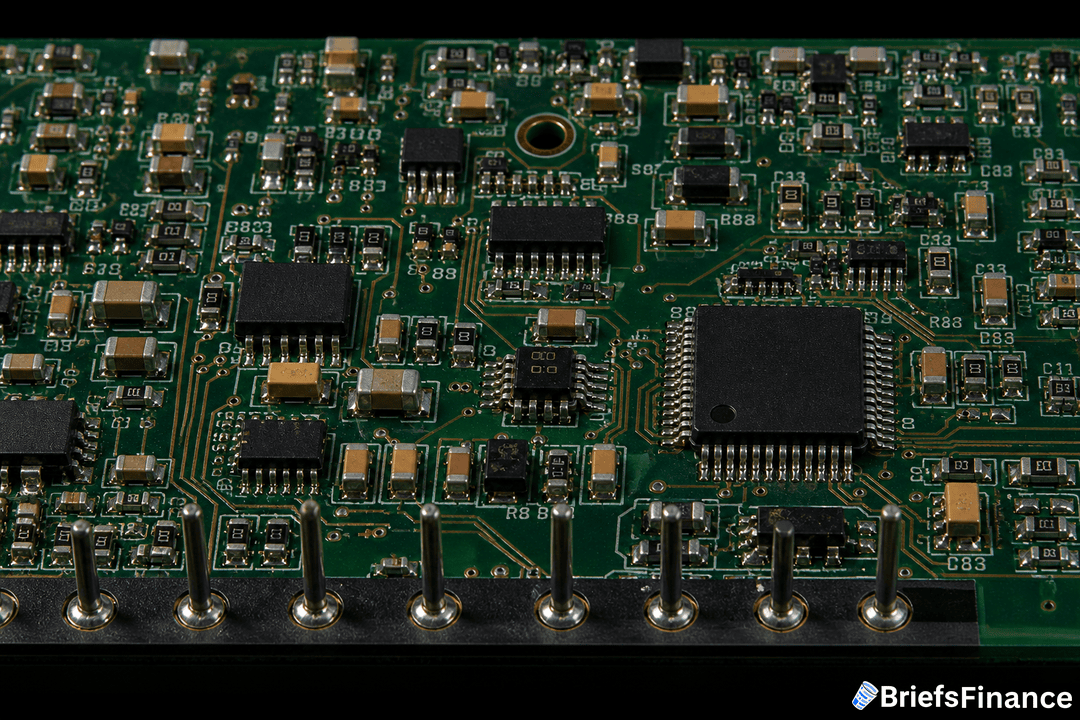
In early April, an Iranian missile hit the Jubail petrochemical complex, knocking out production of a resin used in printed circuit boards - the part inside almost every electronic device that connects everything else.
Within weeks, PCB prices spiked as much as 40%.
Why The Number Matters
PCBs sit inside laptops, smartphones, cars, dishwashers, and AI servers.
When the price of the part inside everything jumps, the price of everything follows, and the only question is how long it takes to hit the shelf.
Goldman Sachs flagged the 40% spike in April alone, with copper foil - one of the largest cost inputs in a PCB - up roughly 30% so far this year.
Lead times for some specialty chemicals have stretched from three weeks to as long as 15.
Memory and storage chips are getting hit too, with Ben Bajarin, CEO of Creative Strategies, saying the cost squeeze is showing up across most components inside a typical device, not just circuit boards.
When The Bill Hits Consumers
The pass-through to retail prices won't be instant. Galen Zeng, a semiconductor supply chain analyst at IDC, said most shoppers won't see the change at Best Buy or Amazon overnight, but he expects it within months.
Wedbush analyst Dan Ives is more specific, calling "summer and fall" the window when shoppers start to feel it.
Ives also flagged the shortage risk: "If it stays at the current rate, we can see shortages into the Fall on certain products."
That timing matters because back-to-school and early holiday shopping are when electronics demand peaks, and if higher costs hit the shelf while demand is rising, retailers have less reason to discount.
What's Driving The Squeeze
The disruption is bigger than just one factory, with Iran's strike on Jubail in April part of an ongoing conflict that has also disrupted shipping routes in and out of the Gulf, compounding delays for raw materials.
The tech industry was already in a PCB squeeze before the war. AI servers use significantly more PCB capacity than older hardware, with data center demand pulling supply away from consumer products.
PCB demand had been rising rapidly even before the war because of AI servers, leaving little slack in the system to absorb a sudden supply shock.
Consumer electronics makers are "competing for a shrinking pool" of supply, Zeng said, as AI and high-performance computing pull resources away.
Zeng called it a "structural, multi-year upcycle driven by AI demand," meaning the Iran conflict didn't start the squeeze - it tightened the timeline.
What To Watch
For now, the cost is being absorbed by manufacturers and component suppliers further down the chain, and how long that holds depends on how the broader conflict plays out.
Companies are negotiating supply contracts and absorbing some of the cost.
Margins can absorb a hit, but they can't absorb 40% in a month indefinitely, with higher prices and possible shortages as the next stop.
Goldman Sachs and Wedbush both expect the impact to show up over the summer and into fall, right when consumer electronics demand typically picks up for back-to-school and the start of holiday shopping.