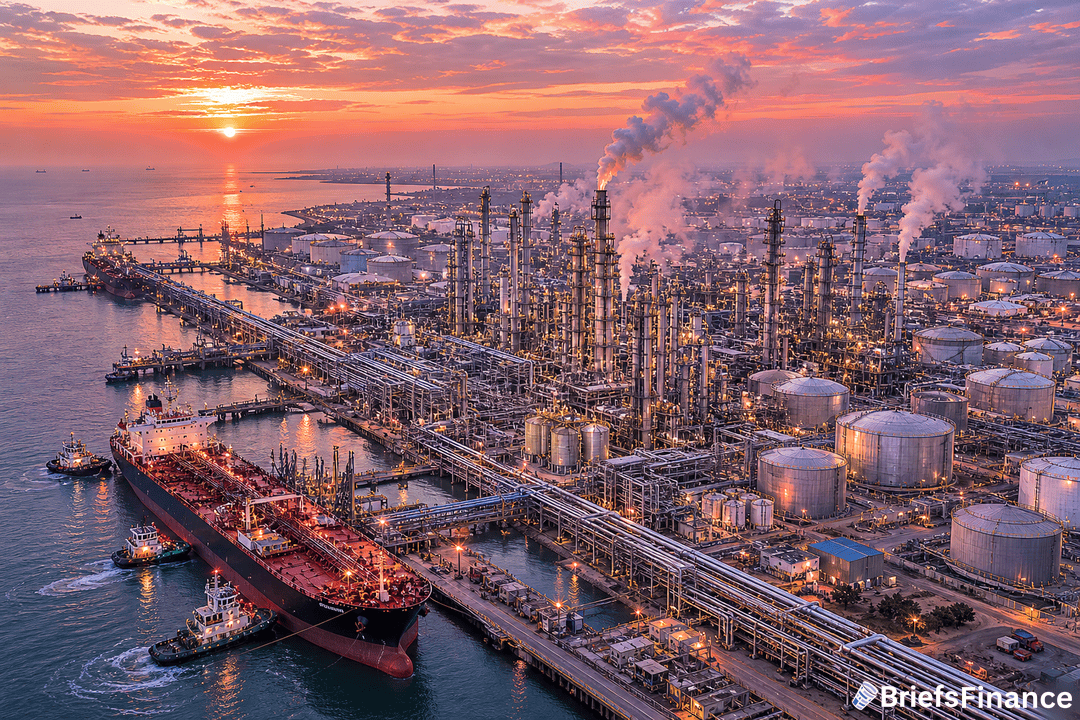
The petrodollar runs on a simple rule: oil gets priced and paid in dollars, and that rule has been the backbone of US financial power since 1974.
Two stories from this past month say the rule is bending in places it has not bent before.
India's 60-Million-Barrel Yuan Pivot
Indian refiners bought about 60 million barrels of Russian crude in March per Bloomberg and Watcher.guru, with a significant share of those barrels settling in Chinese yuan and UAE dirhams instead of US dollars.
Indian Oil Corporation went further by making direct yuan payments for two to three Russian cargoes, eliminating any dollar conversion in the middle.
That is the largest single-month volume of non-dollar oil settlement India has ever pushed through, with the mechanism running through special overseas accounts where Indian rupees deposit and then convert into dirhams or yuan. For some cargoes, the rupee step gets cut out entirely.
Russia prefers yuan over rupees because yuan converts to rubles in one step and buys Chinese goods directly, which gives it more international purchasing power than rupees.
Iran's Yuan-Only Hormuz Toll
The Strait of Hormuz handles roughly 20% of the world's oil supply on a normal day, making it one of the most important pieces of oil infrastructure on the planet.
Since the US-Iran conflict that started in late February, Iran has effectively controlled the strait, and a senior Iranian official told CNN that Tehran wants tankers passing through to settle their cargo in yuan.
Per Iranian parliament reporting, those transit tolls have hit roughly $2 million per voyage, and Iran's legislature is drafting formal legislation to lock the policy in. At least two vessels have already paid yuan-denominated tolls, brokered by a Chinese maritime services firm.
Ships from Malaysia, China, Egypt, South Korea, and India have moved through the corridor under the new system, per Lloyd's List and Al Jazeera reporting.
What Makes This Different
Past de-dollarization moves were mostly bilateral, like China-Russia trade in yuan and rubles or Brazil-China yuan-real settlements - big in headlines but small in volume.
The March 2026 oil flows are different in scale and in geography, with India sitting as the world's third-largest oil importer and the Strait of Hormuz being where roughly a fifth of global oil flows under normal conditions.
When 60 million barrels of crude trade outside the dollar in a single month, the petrodollar system is no longer being challenged in theory. It is being challenged in practice.
The petrodollar system itself dates to 1974, when Henry Kissinger and Saudi Crown Prince Fahd struck a deal that priced OPEC oil in dollars in exchange for US military protection. By 1975, every OPEC member had agreed to dollar-denominated pricing, and the recycled "petrodollars" funded a huge share of US Treasury demand for the next 50 years.
David Lubin, a senior research fellow at Chatham House, told Watcher.guru that "this growing sense that the dollar is being weaponized is one reason why dollar dominance is coming under increasing question."
What To Watch
Whether non-dollar oil settlement keeps running after the US sanctions waiver expires April 11, since wartime exceptions have a way of becoming peacetime infrastructure once the rails get built.