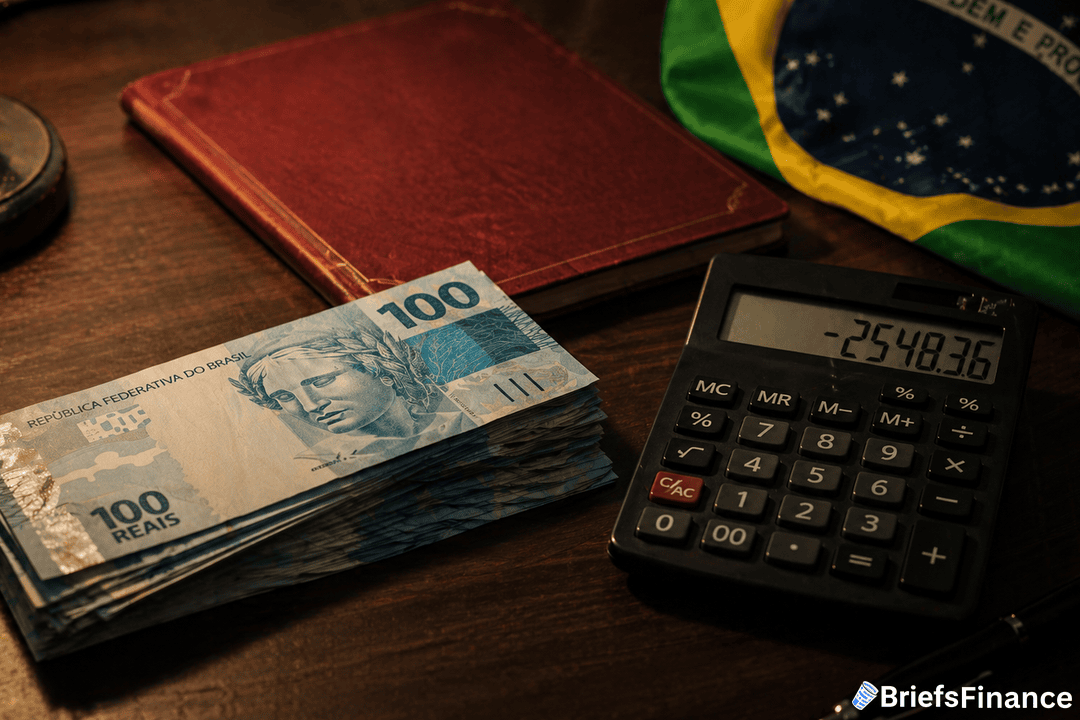
Brazil's central bank cut interest rates this week, even as fresh data showed the country's deficit blowing out to its widest in years.
The shortfall is now near 10% of GDP, and the bill keeps growing.
The Numbers
Brazil's Central Bank reported Thursday that the nominal public sector deficit hit 9.41% of GDP for the 12 months ending in March, nearly a full point higher than the prior reading.
Combined, federal, state, and city governments are running 1.21 trillion reais short, which works out to about $244 billion in the hole.
The primary deficit, which strips out interest payments and is what the IMF watches most closely, hit 1.06% of GDP in the same period.
President Luiz Inácio Lula da Silva had committed to a zero primary deficit for 2026 under the country's fiscal plan, and that target now looks out of reach.
Why It Matters For Investors
Higher public spending puts more pressure on the central bank to keep borrowing costs high, which is why Brazil's Selic rate sits at 14.50% per year even after a 0.25 point cut on Wednesday.
That's still one of the highest real rates in the world, and it's choking off credit and investment inside Brazil.
Gross public debt climbed 0.9 points to 80.1% of GDP, and the World Bank thinks it could reach 95% by year-end, which would be an extreme reading for an emerging economy.
For context, the U.S. ratio sits in the 120% range, but the U.S. borrows in its own reserve currency. Brazil doesn't have that luxury.
Why Growth Is Slowing
Latin America's biggest economy grew just 2.3% in 2025, down from 3.4% the year before, and the central bank now sees growth slowing to 1.6% this year.
The slowdown is being driven by high rates at home and a tougher external picture, with the U.S.-Iran war pushing oil prices up and U.S. tariff tensions cutting into export demand.
Brazilian assets have been mixed, with the real holding up against the dollar but stocks lagging as foreign investors stay cautious on the fiscal picture.
That gap between currency and equity flows is unusual, and it tells you that bond markets are pricing in real fiscal stress even as commodity prices help the trade balance.
What To Watch
October's presidential election adds another layer of uncertainty, with Lula facing right-wing Senator Flávio Bolsonaro, who has made debt and public spending the centerpiece of his campaign.
Lula's team has expanded social programs paid for by tax hikes on top earners, while Bolsonaro is pitching structural fiscal reform.
That choice is now front and center for foreign investors, with global funds watching the polls almost as closely as the deficit data itself.
A second Lula term would likely mean more spending and slower fiscal repair. A Bolsonaro win could mean faster reform, but also more political noise.
For Brazilian bonds, the spread over U.S. Treasuries has widened in recent weeks, and the next move worth tracking is whether the central bank pauses cuts at its June meeting if deficit data keeps getting worse.
Petrobras and Vale, the country's two biggest market caps, have held up well thanks to oil and iron ore prices, but the broader Bovespa is lagging most major emerging market indexes year to date.