The robot that vacuums your living room may finally have a real plant behind it.
1X is the firm that makes the Neo home robot. It just opened a U.S. plant. It also said it plans to build 10,000 home robots this year.
That's a number this field has talked about for a decade. No one has hit it yet at the home level.
What Neo Is And What It Costs
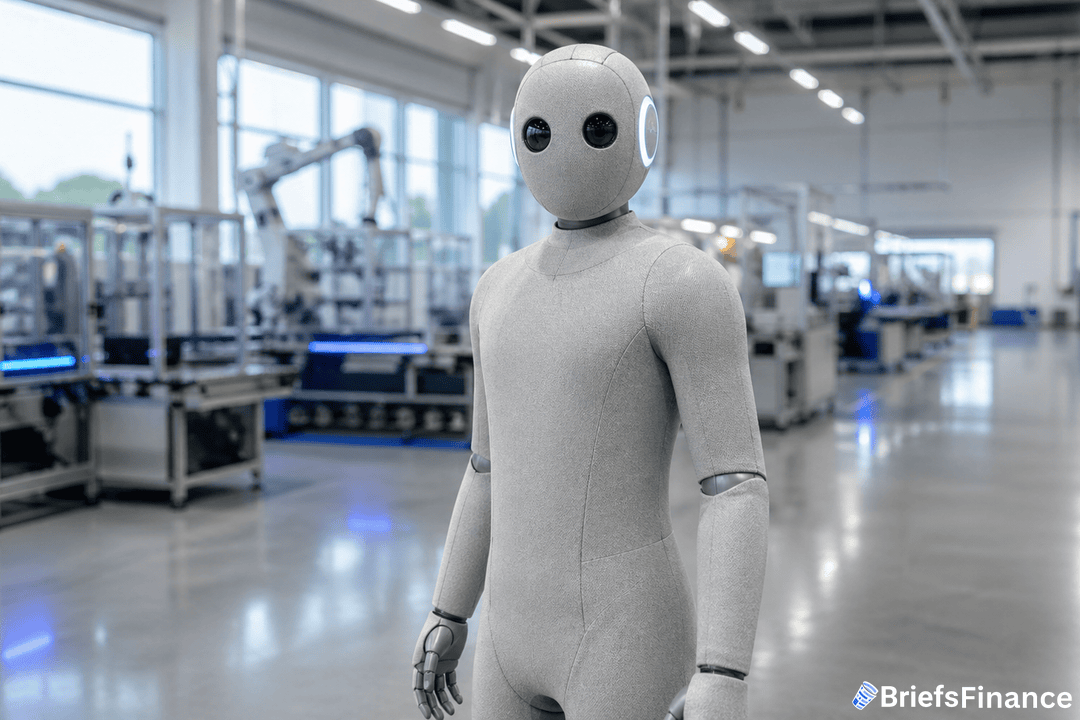
Neo stands about five-foot-six.
It wears a one-piece knit suit, so it looks more like a roommate than a forklift. The suit is made on Japanese knit machines. The robot has round eyes and oval ears that light up when it listens.
The robot lists for $20,000. That's about the price of a used SUV.
Compared to paying a person to do the same chores year after year, the math gets less wild fast.
The pitch is simple. Neo is a home helper. It can fold laundry. It can load the dishwasher. It can grab things from the next room.
That's the kind of work people already pay other people to do.
The cost just shifts. It moves from a monthly bill to a one-time piece of hardware.
Why The U.S. Plant Matters
1X had been building its robots in Moss, Norway.
The new U.S. plant changes the math. It puts the firm closer to its biggest customer base.
It also pulls the supply chain away from any future tariff drama on goods built in Europe.
CEO Bernt Børnich has framed in-house, scalable building as the firm's edge. The new U.S. site is meant to prove that out.
The firm builds its motors and parts in-house, too. That gives it more control on cost and more speed when it tweaks designs.
The Money Behind The Push
1X already has demand lined up.
The firm struck a deal with EQT in late 2025. EQT is a big private equity firm. The deal is to ship up to 10,000 humanoids to EQT's firms by 2030.
Those go to plants, warehouses, and shipping sites. They don't go to homes.
That gives 1X a useful split. Plants and warehouses pay full price for the early units. The home model can scale down in cost over time.
It's the same playbook that worked for early electric cars.
The home rollout starts in the U.S. in 2026. Europe and Asia come next.
Worth Noting
The humanoid market is loud right now.
Tesla, Figure, Agility, and a few Chinese firms are all chasing the same future. Most are still measured in the hundreds of units a year, not the thousands.
That's why a 10,000-unit target stands out so much.
The home market is also a much harder sell than plant work. Shoppers want robots that just work. Plant buyers can deal with a few quirks.
The U.S. plant pivot also says something about the field as a whole. The cost of robot motors and parts has fallen fast in the last few years. AI software has caught up enough to handle real home tasks. Both shifts make a 10,000-unit run plausible for the first time.
It still won't be smooth. Early home rollouts almost never are.
If 1X really ships 10,000 home robots in 2026, it stops being a science fair. It starts being a category.