A forward contract is the same idea, but it is a custom private deal between two parties. Futures are easier to trade and exit. Forwards are more flexible but riskier. Most beginners do not need either.
Both forward and futures contracts have a confusing name. They are both about the future. They both lock in a price. They both involve buying or selling something later.
So what is actually different? Quite a bit, once you look closer. Here is the breakdown in plain English. (If terms like "expiration date" or "leverage" are new to you, our glossary of 77+ stock market terms is a quick reference to keep open.)
What A Futures Contract Is And How It Works
A futures contract is an agreement to buy or sell something at a set price on a set future date. Both sides have to follow through.
(For a separate beginner-level deep dive, our piece on stock futures covers the basics from a different angle.)
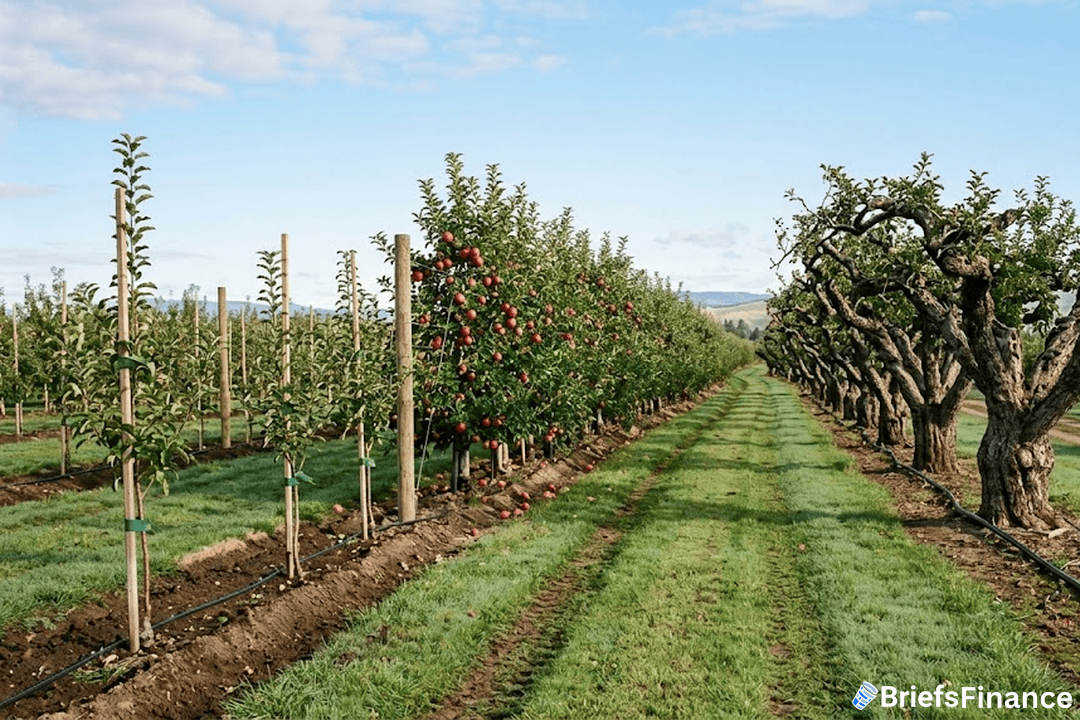
Futures started in farming. A corn farmer planting in spring wants to lock in a price for harvest in fall. A cereal company wants to lock in the cost of corn for production. They make a deal. The farmer agrees to sell at $5 per bushel in September.
The company agrees to buy at that price. No matter what happens to corn prices in between, both sides have a fixed deal.
Today you can trade futures on almost anything: oil, gold, wheat, the S&P 500, currencies, interest rates, even crypto. (For why a market like copper actually has a futures market - and what drives those prices - that piece is a good companion read.) Each futures contract is standardized. That means each one specifies:
- The asset (crude oil, for example)
- The quantity (1,000 barrels)
- The delivery date (December 2025)
- The price
Let's say crude oil is at $75 per barrel today. You think it is going to $85 next month. You buy one futures contract at $75. That contract represents 1,000 barrels.
If oil hits $85, the seller has to deliver oil at $75. You profit $10 per barrel times 1,000 barrels, which is $10,000. If oil drops to $65, you still have to buy at $75. You lose $10,000. Most retail traders never plan to take physical delivery of 1,000 barrels of oil.
They close out their position before the contract expires by taking the opposite trade.
What A Forward Contract Is And How It Works
A forward contract is the same basic idea. It is an agreement to buy or sell something at a set price on a future date. The difference is that forwards are private deals.
They are not standardized. They do not trade on an exchange. Two parties negotiate the contract directly and make their own terms.
A real example: a U.S. company knows it will receive 10 million euros from a customer in six months. The company is worried the euro will weaken against the dollar.
So it enters a forward contract with a bank to sell 10 million euros at today's exchange rate, six months from now.
The exchange rate is locked in. Currency risk is eliminated. Pension funds, big corporations, and banks use forwards all the time. Individual investors almost never do.
Forward Vs Futures Contracts: The Key Differences
Let's walk through each one.
Customization. Futures are off-the-shelf. You buy the standard size, the standard date, the standard asset. Forwards are tailor-made. You and the other party can agree to any quantity, any date, any price. Trading. Futures trade on exchanges.
You can buy and sell easily, often with one click.
Forwards are private agreements. You cannot easily transfer them or get out early. Counterparty risk. With futures, the exchange is in the middle. It guarantees both sides. If one party defaults, the exchange covers it.
With forwards, you are trusting the other side will hold up their end. If they default, you may have a problem. Settlement.
Futures settle daily. Gains and losses get marked-to-market every single day. If you are losing money, you may need to deposit more cash to cover it. Forwards settle only when the contract expires.
Regulation. Futures are heavily regulated by the CFTC. Forwards are private and have less oversight.
Leverage And Margin In Futures Contracts
This part is critical with futures. They are highly leveraged. You do not pay the full value of the contract upfront. You post a fraction of it as collateral, called margin.
A crude oil futures contract worth $75,000 might only require $5,000 in margin. That is about 6.7% of the contract value. That creates massive leverage. If oil moves from $75 to $80, that is a 6.7% move in oil. But for you, that is a $5,000 profit on $5,000 in margin - a 100% return.
The flip side is brutal. If oil moves from $75 to $70, you have lost 100% of your margin. If it keeps dropping, you get a margin call - a demand to deposit more money or your position gets liquidated.
(Compare that to traditional active vs passive investing, where the worst case for a long-term holder is usually time, not total wipeout.)
Why Forward And Futures Contracts Both Exist
Futures and forwards both serve two main purposes. Hedging. Businesses use them to lock in prices and reduce risk. An airline might buy jet fuel futures to protect against rising oil prices. A wheat farmer might sell wheat futures to protect against falling prices.
This is the original purpose. Companies also hedge against tariffs and other policy moves that can shift commodity prices overnight. Speculation. Traders use them to bet on price movements without owning the underlying asset.
This is riskier, but it provides liquidity to the market and makes it easier for hedgers to find counterparties.
Why Most Investors Don't Use Forward Or Futures Contracts
Futures are not for casual investors. Here is why:
- Extreme leverage means you can lose more than your initial investment
- Daily settlement means losses are realized fast, sometimes triggering margin calls
- Complexity - you need to understand contract specs, expiration dates, and rollover
- Wild volatility - commodity prices swing on weather, geopolitics, and economic data
Inflation, recessions, and the kind of market crash psychology that wrecks regular investors all hit futures traders 10x harder because of the leverage.
Forwards are even less practical for individuals. They require negotiating with a counterparty, usually a bank. Minimum sizes are very large.
They lack the liquidity of exchange-traded products. For most people who want commodity exposure, the smarter path is a commodity ETF or a stock in a related industry. Want gold exposure?
Buy a gold ETF or a gold miner. (Our complete guide to gold investing breaks down which path fits which investor.) Want oil exposure? Buy an oil ETF or an energy company. Either path is more like a regular ETF or mutual fund than a futures contract.
When A Futures Contract Could Make Sense
There are a few scenarios where futures might fit.
- You run a business that actually needs to hedge commodity price risk
- You are an experienced trader with significant capital and risk management systems
- You are using a commodity ETF that uses futures, like USO for oil, with eyes open to its complexity
For forwards, the answer is almost always no for individuals. The main reason to understand them is to know they exist and to understand how big companies manage risk.
When you read that a company "hedged its currency exposure," they likely used a forward contract. If you are interested in derivatives for hedging or speculation, options are usually a better starting point than futures or forwards.
Our guide to options trading walks through what they are. And if you want to use a derivative specifically to protect a position, our breakdown of put options is a good place to start.
For most regular investors, the better path is to skip derivatives entirely, focus on long-term fundamentals like discounted cash flow when valuing stocks, and develop the investing mindset of a long-term owner.
That approach beats derivative trading for the vast majority of people. Even when it comes to picking individual companies, our piece on the best stocks to buy now is built around a long-term, research-driven approach - not leveraged bets.
Forward Vs Futures Contracts: The Bottom Line
Forward vs futures contracts boils down to this. Futures are standardized, exchange-traded, and easy to enter and exit. Forwards are custom, private, and used mainly by corporations and big institutions. Both are powerful tools.
Both can hurt you fast if you do not understand the leverage involved. For most regular investors, neither one belongs in the toolkit. Stick to ETFs and stocks that give you the exposure you want. Save futures and forwards for the day you have a specific risk you actually need to hedge.