The most telling number in General Dynamics' Wednesday earnings report wasn't the revenue beat or the EPS beat - it was the orders.
The defense contractor pulled in $26.6 billion in new bookings during the quarter, which is twice what it actually delivered in revenue.
The Headline Numbers
GD reported $13.5 billion in Q1 revenue, up 10.3% from a year earlier and ahead of the $12.71 billion Wall Street was looking for.
Diluted EPS - profit per share of stock - came in at $4.10, up 12% year over year and well past the $3.68 analysts had penciled in.
Operating earnings hit $1.4 billion, with an operating margin of 10.5%. The stock jumped about 7% in premarket trading and held those gains through the open.
Marine Systems Carried The Quarter
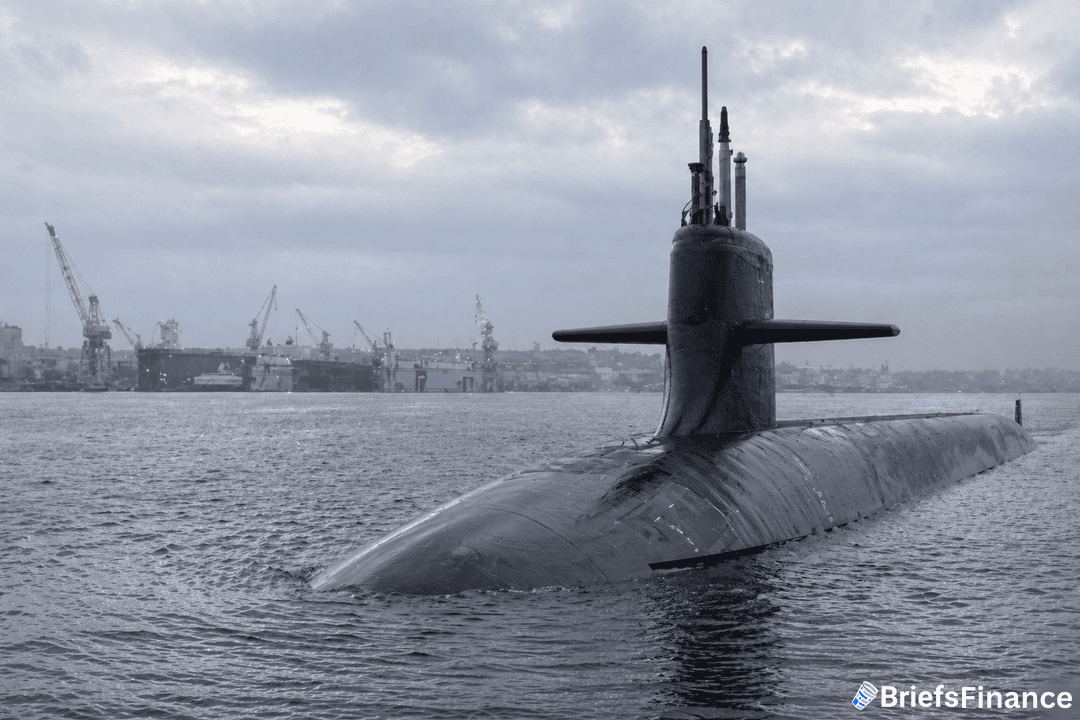
Every segment grew, but the submarine and shipbuilding business led the way as Marine Systems revenue climbed to $4.34 billion, a 21% jump from the year-ago period.
Marine Systems is the segment most directly tied to U.S. and allied naval expansion, which explains why it's been outpacing the rest of the portfolio.
The other three segments showed smaller, steady gains:
- Combat Systems: $2.28 billion, up 4.9%
- Aerospace (Gulfstream): $3.28 billion, up 8.4%, on 38 jets shipped
- Technologies: $3.58 billion, up 4.2%
The Backlog Story
Total estimated contract value - the sum of every order GD has on the books - rose to $188.4 billion, up from $178.9 billion at the end of 2025.
A 2-to-1 book-to-bill means orders came in twice as fast as work shipped out, while the defense segments alone ran at 2.2-to-1.
In plain English: GD is filling its order book faster than it can empty it, which is the multi-year visibility line investors look for in defense names.
The cash side held up too, with GD generating $2.2 billion from operations - reversing a $148 million outflow in Q1 2025 and helping push free cash flow to $1.95 billion positive.
Why The Backlog Matters Now
Defense contractors live and die on book-to-bill, since a number above 1 means tomorrow's revenue is rising and a number below 1 means it's falling.
GD spent $203 million on capital projects during the quarter and paid $405 million in dividends, ending the period with $3.65 billion in cash on hand. Those numbers tell investors the company can keep returning capital while it scales up to meet the order surge.
The contract pipeline is the longer-term story. Of the $188.4 billion in total estimated contract value, $130.8 billion sits in firm backlog - while another $57.6 billion is unfunded options and IDIQ ceilings.
That mix matters because firm backlog converts to revenue at near-100% rates, while options need to be exercised by customers before they count.
What To Watch
CEO Phebe Novakovic said the year is off to a "very good start" with strong cash conversion, and her note about being "positioned well to drive additional performance throughout the year" is the kind of guidance defense investors want to hear.
The next test is whether order flow stays this hot through the summer. Backlog only gets useful if customers keep signing - and so far, every signal out of the Pentagon and allied buyers points the same way.