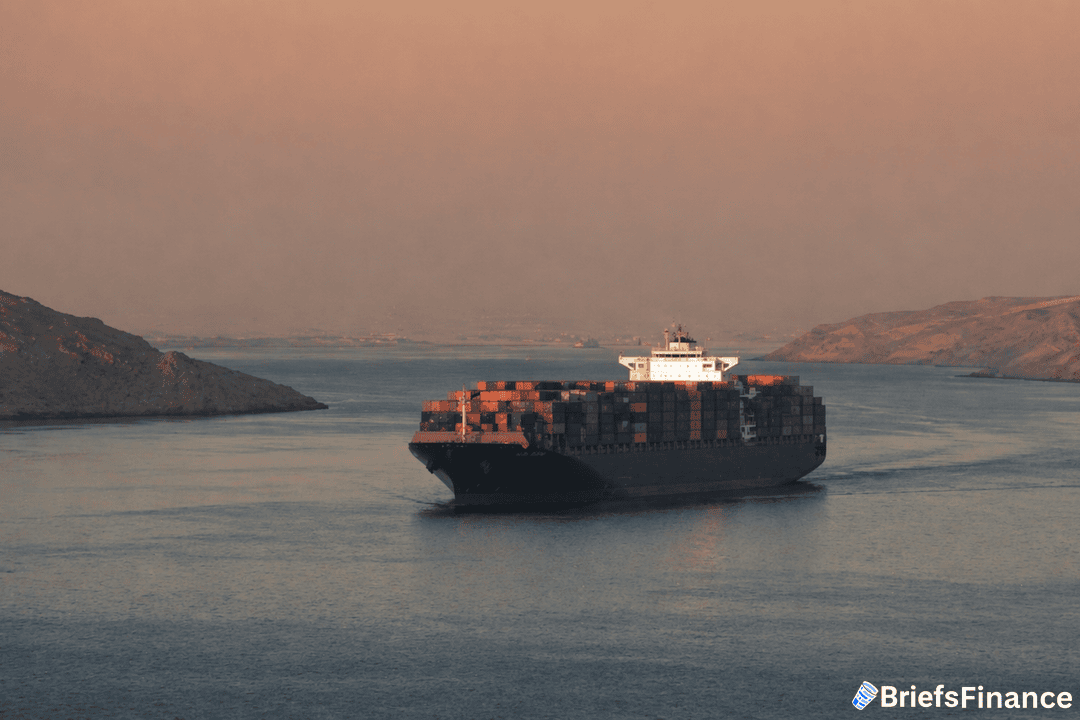
Iran seized two container ships in the Strait of Hormuz on Wednesday, just hours after President Trump said he was extending the ceasefire with Iran indefinitely. Iran also attacked at least one additional commercial ship in the strait the same day.
The back-to-back moves show how fragile the ceasefire framing is, even as Washington uses it for domestic political cover.
Trump's Position
Trump extended the ceasefire so Iran could "come up with a unified proposal," while keeping the U.S. naval blockade of the strait in place. The White House said Trump does not view Iran's seizing of non-U.S. ships as a ceasefire violation.
That is a narrow legal reading, which lets Trump hold the ceasefire framing with the U.S. domestic audience while still squeezing Iran on trade. It also lets the U.S. Navy continue intercepting vessels without triggering a fresh escalation cycle.
The Blockade Rules
U.S. Navy ships are preventing vessels from entering or exiting the Strait of Hormuz, and the Navy is also intercepting ships that have paid tolls to Iran. The U.S. seized an Iranian cargo ship in the strait on April 19, and Tehran vowed retaliation the next day.
U.S. operations against Iran have also expanded to the Indian Ocean, where a tanker was captured earlier this week. That broader footprint is why Iranian retaliation is not confined to the strait itself.
Why It Matters for Markets
The oil math:
- About 20% of the world's crude supplies passed through the Strait of Hormuz before the war.
- Brent crude is holding near $100 a barrel on renewed strike reports.
- Diesel prices are at record highs in West Coast U.S. cities.
With the strait mostly closed, that supply remains disrupted, which keeps the inflation story alive through the summer. Jet fuel shortages in Europe and record diesel prices in California are already showing up on the ground.
The Shipping Insurance Angle
Insurance rates for tankers and container ships transiting the Persian Gulf have climbed to multi-year highs, which adds hidden costs to every shipment. Those costs pass through to commodity prices within weeks, which is part of why global freight rates are also spiking.
Major operators like Maersk and Hapag-Lloyd have rerouted part of their Asia-Europe traffic around the region entirely, adding days to delivery timelines. That logistics drag is a second-order inflation driver most consumers never see directly.
What to Watch
Until the strait reopens to normal traffic, every downstream market stays on edge, including mortgage rates, airline margins, and consumer prices. Watch insurance rates on tanker traffic for an early read on whether shipping companies think a real ceasefire is close.
Those rates moved first in every prior de-escalation, and they are the cleanest signal available outside official statements.
Also watch whether any Gulf ally publicly breaks with the U.S. blockade posture, because that would shift the diplomatic balance fast. For investors, the playbook stays the same: short-duration energy exposure, watch the dollar, and expect headline-driven volatility in oil markets through the summer.