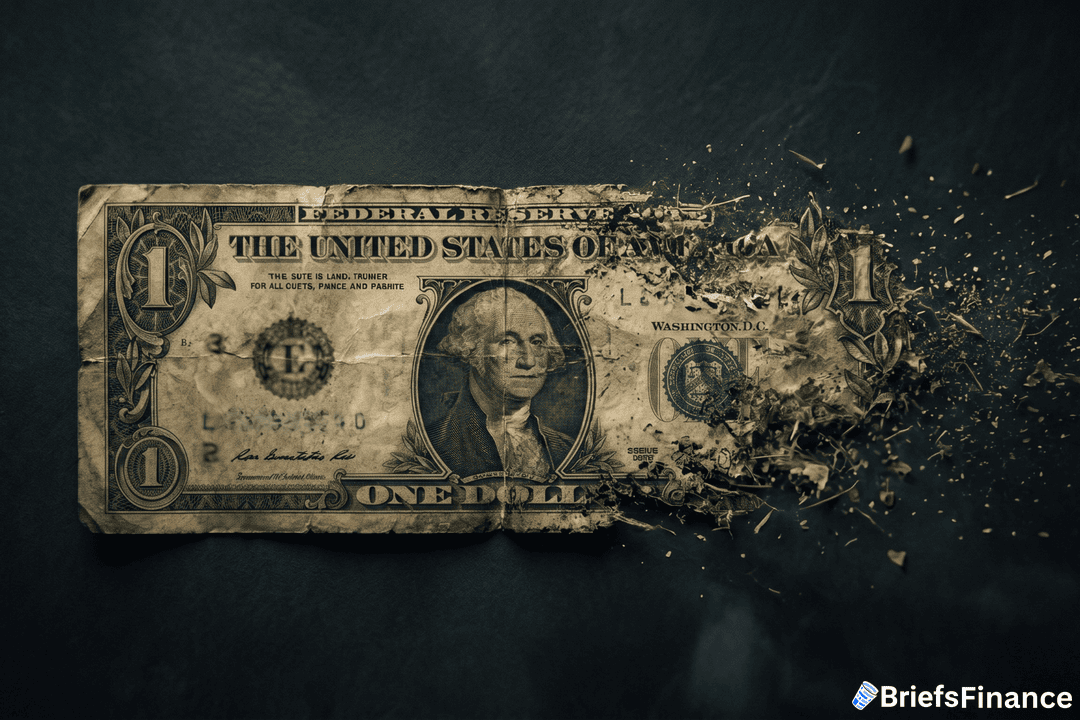
A dollar in 1913 bought what takes about $31 today. That's a loss of 97% of its buying power over the past century.
With $39 trillion in debt, the government has a reason to keep that trend going. The drop isn't a side effect - it's by design.
How Dollars Lose Buying Power
The short answer is the government makes more of them. When the supply grows faster than output, each dollar buys less.
That sped up after 1971, when Nixon cut the dollar's last link to gold. With no cap on new money, the government had a free hand.
The pace picked up again during COVID. The government added about 20% to the supply in one year.
That money came through stimulus checks, PPP loans, and extra jobless aid. Trillions of new dollars hit the system in just a few months.
By 2022, that flood pushed prices up 9.1%, the worst in 40 years. Things that cost $100 in 2020 now cost closer to $125.
The buying power lost in that stretch is not coming back. The dollar still sits at the center of about 80% of global trades.
It also makes up roughly 58% of central bank reserves. But both of those numbers keep falling year by year.
Central banks have shifted into gold and yuan as a result. The dollar's share dropped from 71% in 1999 to under 58% now.
That trend has held for over two decades. The pace picked up after 2022, when the U.S. froze $300 billion in Russian assets.
Why a Weaker Dollar Helps the Biggest Borrower
When you owe $39 trillion, a falling dollar works in your favor. It shrinks the real size of the debt over time.
Say the government took on $1 trillion ten years ago. If the dollar lost 25% since then, the real cost of paying it back fell by a quarter.
The number on the bill stays the same. But the weight of it gets lighter every year.
Experts call this "fiscal dominance." The term means the debt drives choices about rates and money.
In plain terms, the budget tells the Fed what to do. The Fed doesn't tell the budget.
It's showing up now. The Fed cut rates even as prices stayed above 2%. It also held rates steady in March while gas prices spiked.
The government can't handle higher rates on $39 trillion. That limit keeps the push toward lower rates going, even as prices keep rising.
What to Watch
Holding cash costs money in this setup. A 3% drop in value plus a 2% savings rate puts the saver behind every year.
A $100,000 savings account loses close to $1,000 a year in real terms. The government - the biggest borrower - comes out ahead with every point of price growth.
The dollar has lost 97% of its value since 1913. Nothing in the budget math points to that trend turning around.
The only question is how fast it keeps going. The answer depends on how much the government keeps borrowing.