Oil just cracked $100 a barrel again - and this time it is because the U.S. Navy is blocking ships from entering or leaving Iran's ports in the Strait of Hormuz.
Peace talks between the U.S. and Iran fell apart over the weekend in Pakistan, with Vice President JD Vance calling the breakdown on Saturday before Trump ordered the blockade hours later. The talks had been seen as the best chance for a resolution after weeks of backdoor negotiations in Oman and Qatar produced no results.
What the Blockade Looks Like
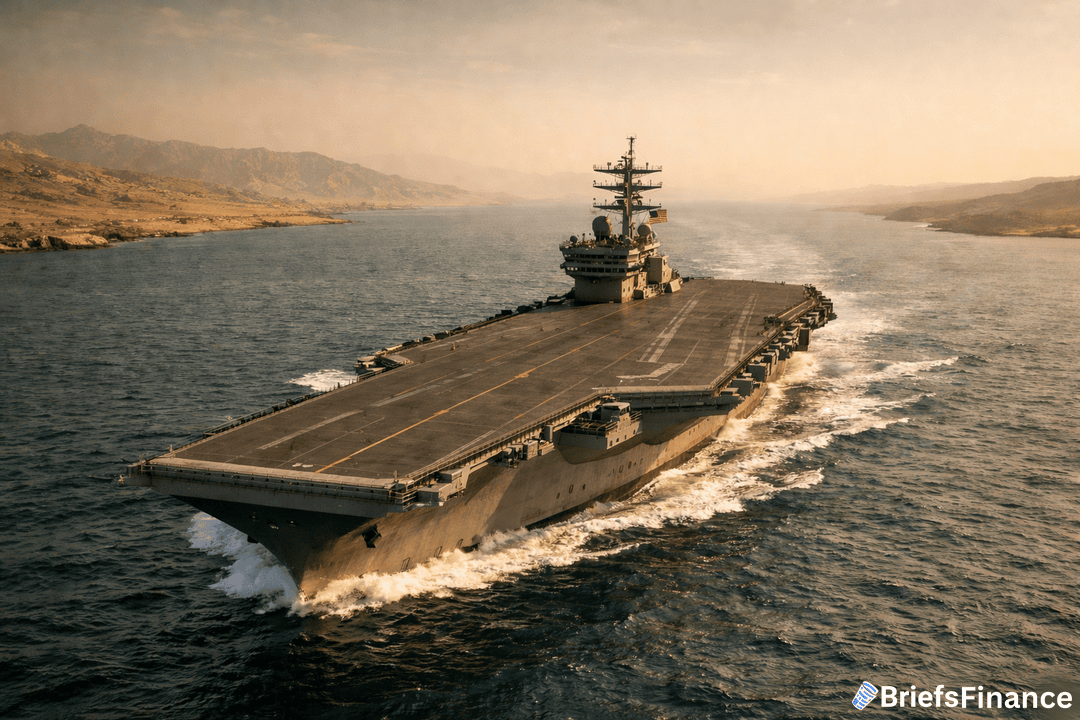
The Navy has the USS Abraham Lincoln carrier, 11 destroyers, and the USS Tripoli group in the region, all positioned to intercept vessels heading to or from Iran's coast. CENTCOM said ships going to non-Iranian ports can pass freely, though commercial carriers are avoiding the area out of caution.
Trump warned Iran's fast attack boats to stay away, writing on Truth Social that any approaching ships would be "immediately ELIMINATED." The warning came after Iranian boats made two close approaches to U.S. vessels last week.
The Strait of Hormuz normally handles about 20% of the world's daily oil supply, with roughly 20 million barrels of crude passing through the narrow waterway every day under normal conditions. It is the single most important chokepoint in global energy markets - and right now, traffic to and from Iran's coast is at zero.
Why Oil Is Moving
This is now the largest disruption to world energy supply since the 1970s oil crisis, with about 7 million barrels of crude and 4 million barrels of product stuck each day.
Brent rose 7% to $102, while WTI climbed 7.8% to $104 - more than 50% higher than before the war shut down the strait. Gas prices have jumped $1.20 per gallon since the conflict began, hitting a national average of $4.12 on Monday according to AAA.
Diesel prices have also spiked to a national average of $4.89 per gallon, squeezing trucking companies and shipping firms that pass those costs straight to consumers. Airlines have started adding fuel surcharges on international routes as jet fuel costs climb.
The key date: JPMorgan analysts said the last tanker to clear Hormuz on February 28 should reach its final stop around April 20, after which the oil that was moving before the closure is fully gone. After that date, the world runs entirely on reserves and alternative routes.
What Iran Is Saying
Iran's military called the blockade "piracy," warning that no Gulf ports would be safe if its own were threatened. Former IRGC commander Mohsen Rezaee said the U.S. was "doomed to fail."
The two sides could not agree on terms - Iran wanted control of the strait, war payments, a ceasefire in Lebanon, and the release of its frozen assets, while the U.S. wanted Iran to give up its nuclear program. Neither side showed any willingness to move on its core demands.
What to Watch
Karen Young of Columbia University said oil prices could stay high well past the end of the war itself, with prices expected to remain elevated into late 2026 as damaged infrastructure and broken supply chains take months to repair. The pre-closure supply runs dry around April 20 - and after that, the real squeeze starts.
For investors, the ripple effects are already spreading beyond energy into airlines, shipping, retail, and consumer goods companies that depend on stable fuel costs.