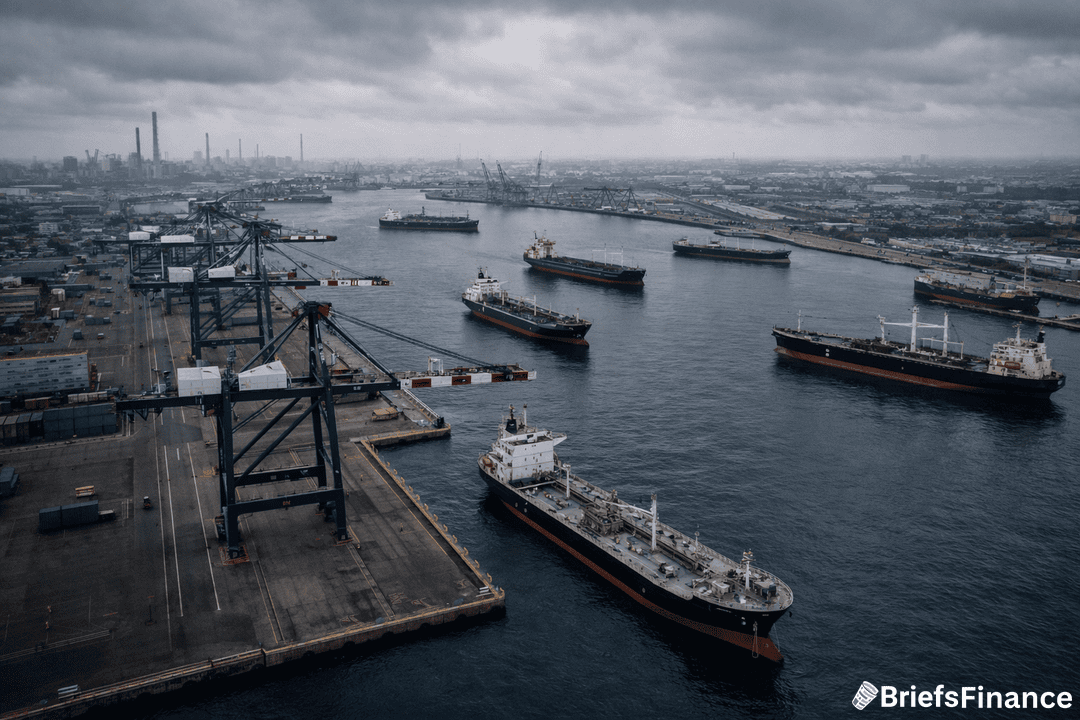
No big economy leans on the Strait of Hormuz more than Japan. And the market is showing it.
Japanese stocks have dropped about 16% from their recent peak since the Iran war cut off global energy flows. The reason is simple - Japan gets more than 90% of its oil from the Middle East. Most of it comes through the strait that's been closed since late February.
The Supply Crunch
Oil reaching Japan fell to 3.5 million barrels per day in the last week of March - the lowest on record going back to 2016.
Japan has tapped its stored oil twice now. Prime Minister Sanae Takaichi let go of 20 more days' worth of crude on April 10, after a first release in March.
Why U.S. Investors Should Care
Japan is the world's fourth-biggest economy and a major trade partner for U.S. firms. When its energy costs spike, the price of making cars, chips, and gadgets goes up - and that feeds into supply chains worldwide.
Some oil is now being shipped around the strait to reach Japan. But it costs more and takes longer.
What to Watch
If the strait reopens, Japanese stocks could snap back fast. If it doesn't, the stored oil buys time - but not a fix. Japan's slide looks a lot like what hit U.S. stocks in the 1973 oil crisis.