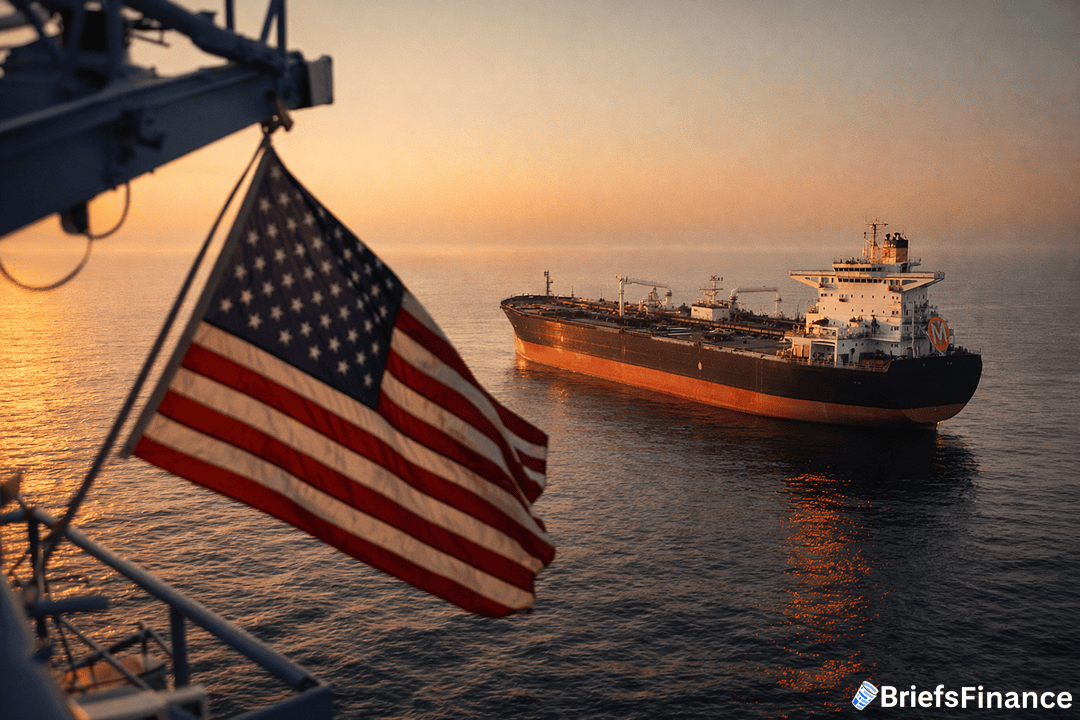
Oil was above $100 a barrel. The Strait of Hormuz was shut down. And the White House pulled out a tool it hasn't used in decades.
On March 18, Trump waived the Jones Act for 60 days. The law has been around since 1920. It says anything shipped between U.S. ports has to travel on ships built and crewed in America.
Lifting it lets foreign vessels move oil, gas, and coal between U.S. ports.
Why Now
The Iran war forced the issue. With the Strait of Hormuz closed to most ships, global oil supply got tight fast.
Brent crude sat above $107 a barrel the day the waiver dropped. U.S. oil was just under $97. The White House called it a crisis move to "allow vital resources like oil, gas, and coal to flow freely."
The Pushback
The shipping industry wasn't buying it. The American Maritime Partnership said the waiver "will not cut gas prices" and pegged the most it could save at under a penny per gallon.
Some energy experts say the waiver might help a little. But it can't make up for what a blocked Strait of Hormuz does to supply.
What to Watch
The waiver runs out in mid-May. If the Iran picture hasn't changed by then, the White House has to choose - extend it and anger domestic shippers, or let it lapse and watch gas prices climb.