Free NewsletterPro Login

Google Just Shrank the Quantum Threat Timeline for Bitcoin by 20x

Published Mar 31, 2026
Share:
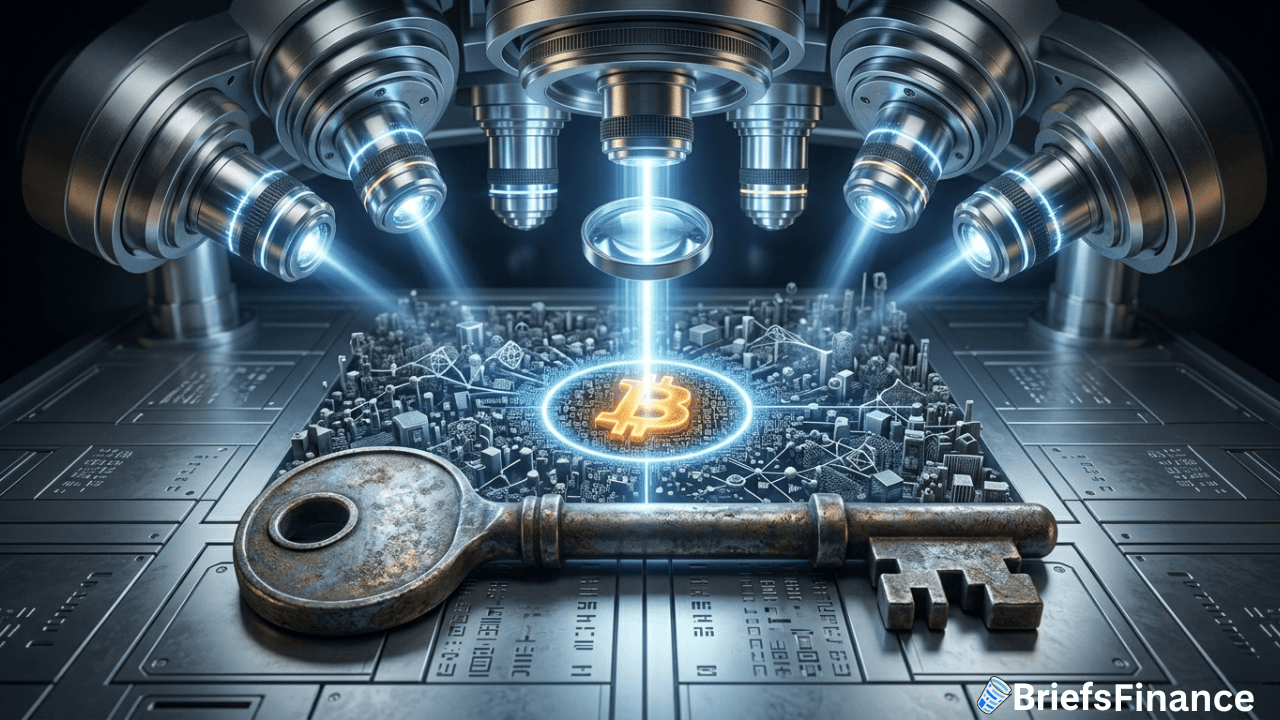
A large key and a Bitcoin symbol are surrounded by microscopes and circuit-like structures, highlighting blockchain technology, digital security, and the looming quantum threat.
Summary:
  • A new Google paper says cracking Bitcoin's security could take fewer than 500,000 quantum processing units - roughly 20 times less than older predictions.
  • One co-author estimates a 1-in-10 shot that quantum machines can steal private keys by 2032.
  • Ethereum has a detailed 2029 upgrade roadmap. Bitcoin is still in the early proposal stage.

Bitcoin investors just lost a big chunk of their comfort zone.

Google's quantum computing division dropped a paper on Monday that rewrites the math on how soon a quantum machine could break the code protecting every bitcoin wallet on Earth. The old estimate said it would take millions of quantum processing units - called qubits - to pull it off. The new number is under 500,000.

That's not a rounding error. That's a 20x cut in the hardware needed to crack the lock.

The Clock Is Running

No machine on the planet can do this right now. Google's fastest quantum chip runs on just 105 qubits - a tiny fraction of what's needed.

But the gap between "impossible" and "possible" just shrank faster than anyone expected.

Justin Drake, an Ethereum Foundation researcher and co-author of the paper, said his confidence in a near-term threat jumped after the findings. He puts 1-in-10 odds on a quantum machine extracting wallet keys from publicly visible data by 2032. Stanford's Dan Boneh and six Google scientists also contributed.

A second study from Caltech and a startup called Oratomic pushed the timeline even further - suggesting a machine running roughly 26,000 qubits could finish the job in under two weeks.

For investors, the risk boils down to one thing. Sending bitcoin means broadcasting your public key to the network. A strong enough quantum machine could work that data backward to the private key - and empty the wallet. Somewhere between a quarter and a third of all existing bitcoin sits in addresses where that key data is already out in the open.

Two Blockchains, Two Speeds

Ethereum's developers have spent the better part of a decade laying groundwork for this. The foundation runs a dedicated tracker for its quantum-readiness work, stress-tests new protection methods weekly, and has sketched a transition plan across four upcoming network upgrades - all targeting 2029.

Bitcoin is moving at a different pace. A proposal called BIP-360, merged in February, introduces a new structure that keeps public keys hidden and opens the door to future quantum-resistant signing methods. But it stops short of replacing the current security model. Getting from here to there means more proposals, more rounds of community review, and buy-in from a network that has always moved with caution.

Google's own goal is to shift its services to quantum-safe standards by 2029. The NSA wants federal systems protected by 2030.

Bitcoin doesn't have a central body capable of setting that kind of timeline.

One Token Is Already Cashing In

While most of the market dipped - bitcoin fell from above $68,000 to around $66,250 - one small project broke the other way.

QRL, short for Quantum Resistant Ledger, jumped 40% in a single day. Its market cap landed around $127 million. The project uses a signing method called XMSS - built from scratch to hold up against quantum-powered attacks.

Think of it like this: Bitcoin's lock was built to stop every tool that exists right now. XMSS was built to stop tools that haven't been invented yet.

What to Watch

Google's team took a rare step with this paper. Rather than release the full technical blueprints, they proved their results were legitimate using a cryptographic technique that lets outsiders check the math without ever seeing the underlying code. That alone tells you the researchers consider these findings sensitive.

If you hold bitcoin in a wallet that's ever sent a transaction, the most practical step right now is moving those coins to a brand-new address. It won't make them immune to future attacks, but it pulls them out of the easiest target group.

Google, Ethereum's developers, and the NSA are all racing toward 2029.

Bitcoin's decision-making process wasn't designed for that kind of speed.
Disclosure

Get Market Briefs delivered to your inbox every morning for free!

No fluff. No noise. No politics. Just finance news you can read in 5 minutes.

Blogs

May 5, 2026
How to Create Multiple Income Streams: A Beginner's Playbook
  • Most people rely on a single income stream from their job - which is also the most heavily taxed.
  • Multiple income streams come from a mix of cash flow, dividends, side businesses, real estate, and royalties.
  • The fastest path for most beginners is starting with one extra stream - usually dividends or a side hustle - and stacking from there.
Read More
May 5, 2026
The 60/40 Portfolio Explained: A Beginner's Guide
  • A 60/40 portfolio holds 60% in stocks and 40% in bonds (or other fixed income).
  • It's designed to balance growth from stocks with stability from bonds.
  • Your "right" mix depends on age, time horizon, income needs, and how well you sleep when markets drop.
Read More
May 5, 2026
How to Invest in Silver: A Beginner's Guide
  • Silver is both a precious metal and an industrial metal, used in solar panels, electronics, and medical tech.
  • Investors can buy silver four main ways: physical bars and coins, ETFs, mining stocks, or futures contracts.
  • Most beginners are best served by allocating a small slice of their portfolio to silver - usually between 1% and 3%.
Read More
May 1, 2026
Asset Allocation by Age: The Right Portfolio Mix at Every Stage of Life
  • Younger investors should hold mostly stocks because they have decades to recover from crashes and benefit from compounding.
  • Allocations gradually shift toward bonds and stable income as retirement approaches, but stocks remain important even past age 65 to outpace inflation.
  • Annual rebalancing is essential - it forces you to buy low and sell high while keeping your portfolio aligned with your actual life stage.
Read More
April 30, 2026
Stablecoin Explained: Why Some Cryptocurrencies Actually Aren't Volatile
  • Stablecoins are cryptocurrencies pegged to stable assets like the US dollar, giving crypto-style speed and access without the volatility of Bitcoin or Ethereum.
  • Fiat-backed stablecoins like USDC are the safest option, while algorithmic stablecoins have failed spectacularly and should generally be avoided.
  • Stablecoins fit a portfolio as cash reserves with better yields, a hedge against crypto volatility, and a fast, cheap rail for international transactions.
Read More
April 30, 2026
Buy Now, Pay Later Risks: Why This "Easy" Payment Method Is Dangerous to Your Wealth
  • Buy now, pay later services like Klarna, Affirm, and Sezzle are debt products designed to feel harmless while keeping users in a cycle of overspending.
  • BNPL exploits psychological debt blindness, triggers late fees, and damages credit scores without helping users build positive credit history.
  • Building real wealth means waiting 30 days, paying upfront when you have the cash, and avoiding systems built to extract money from your future income.
Read More
April 30, 2026
Dividend Payout Ratio: The Secret Metric That Shows If a Stock Is Safe or Risky
  • Dividend payout ratio is total dividends paid divided by net income, showing the percentage of earnings a company returns to shareholders.
  • A 20-50% payout ratio is generally safe and sustainable, while ratios above 75% often signal a dividend cut is coming.
  • High dividend yields can be warning signs, not opportunities - safety and dividend growth matter more than the headline yield number.
Read More
April 30, 2026
Ethereum for Beginners: What It Is and Why Smart Investors Are Paying Attention
  • Ethereum is a blockchain platform that runs smart contracts, while Ether (ETH) is the cryptocurrency that powers the network.
  • Use cases include decentralized finance, NFTs, gaming, supply chain tracking, and digital identity - many still experimental.
  • Most investors should treat Ethereum as a small allocation hedge using dollar-cost averaging, not a get-rich-quick lottery ticket.
Read More
April 30, 2026
Dollar Cost Averaging Strategy: How to Beat Emotion and Build Wealth Steadily
  • Dollar cost averaging means investing the same amount at regular intervals regardless of what the market is doing.
  • The strategy automatically buys more shares when prices are low and fewer when prices are high, lowering your average cost over time.
  • DCA removes emotion, eliminates the need to time the market, and turns volatility into a mathematical advantage for long-term investors.
Read More
April 30, 2026
The BRRRR Strategy: How to Build Real Estate Wealth Without Big Money Down
  • BRRRR stands for Buy, Rehab, Rent, Refinance, Repeat - a five-step framework for scaling real estate without saving for big down payments.
  • The strategy works by buying distressed properties below market value, adding value through smart renovations, and pulling out equity through refinancing.
  • Tax advantages like depreciation and mortgage interest deductions make BRRRR a powerful tool for owners willing to manage tenants and contractors.
Read More
1 2 3 20
Share via
Copy link













