Free NewsletterPro Login
S&P 500 6,287 +0.42%
DOW 44,521 -0.18%
NASDAQ 21,103 +0.71%
S&P 500 +12.4%
Briefs Finance Fund +24.8%
JOIN THE FUND →

Mercedes Just Bet $4 Billion on Alabama

Published Mar 31, 2026
[tts_player]
Share:
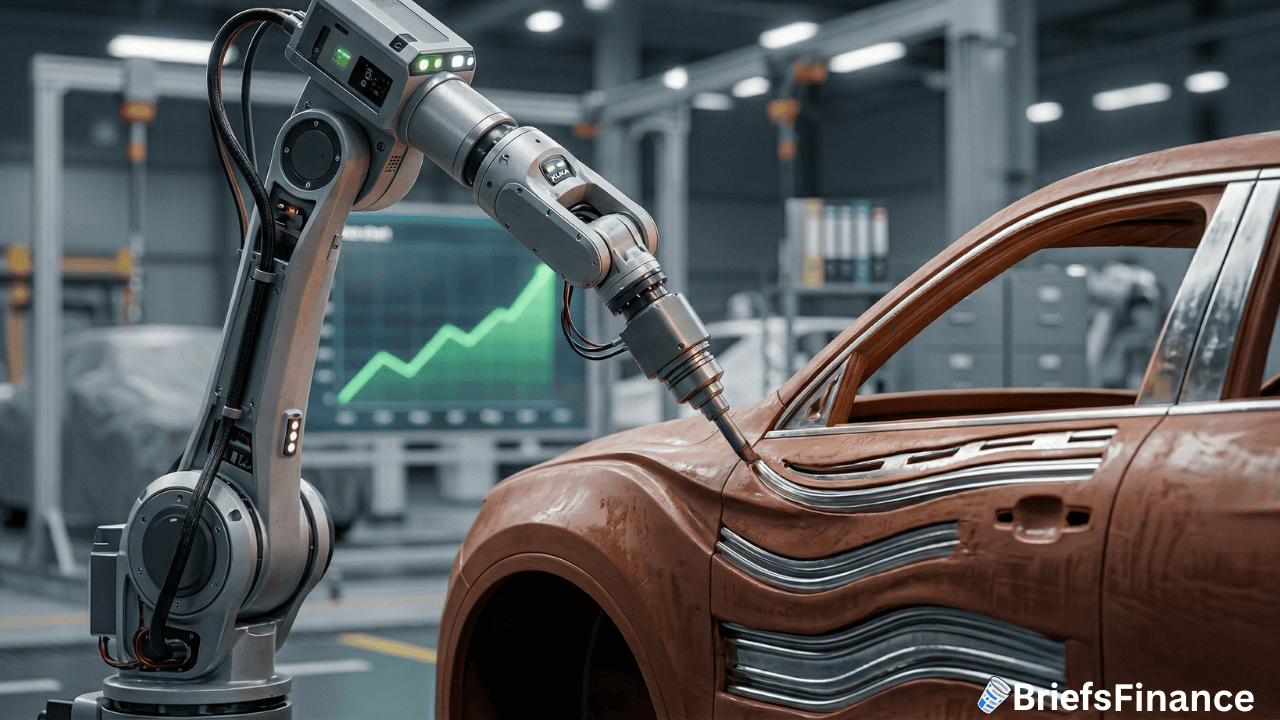
A robotic arm assembles a Mercedes in an Alabama factory; a computer screen in the background displays an upward-trending graph, highlighting the $4 billion investment in advanced automotive technology.
Summary:
  • Mercedes-Benz plans to pour $4 billion into its Alabama factory between now and 2030, aiming to grow U.S. sales from about 303,000 cars to 400,000.
  • The automaker's U.S. chief said the 2026 market is harder than the company expected, pointing to high car loan rates and rising fuel costs.
  • Mercedes rolled out redesigned versions of its GLE and GLS SUVs at the Vance, Alabama plant on Tuesday, along with a new hybrid model that will be put together in the U.S.

Auto loan rates are still high. Gas just crossed $4 a gallon. And Mercedes-Benz picked this moment to announce one of its biggest U.S. factory commitments in years.

The German luxury brand said Tuesday it will spend $4 billion upgrading its Tuscaloosa County, Alabama manufacturing hub between now and 2030. The goal - sell nearly 400,000 cars a year in the U.S. by the end of the decade, up from roughly 303,000 last year. That's about a 28% jump.

The Market Isn't Cooperating

Mercedes USA CEO Adam Chamberlain didn't sugarcoat things. He told CNBC the first few months of 2026 have been rougher than the company planned for.

Borrowing costs for car buyers remain steep. Fuel prices are climbing.

Broader worries about the economy and global politics are making some shoppers hesitate.

Chamberlain said higher pump prices haven't spooked Mercedes shoppers so far. But he flagged a breaking point - if fuel stays near $5 a gallon for three or four months, that starts to change the math for buyers.

Why Bet Big Now?

Most of what Mercedes sells in America still comes from factories outside the country. That leaves the company exposed to the import duties President Trump placed on foreign-built cars.

Building more cars in the U.S. is one way around that problem. Mercedes said it will start producing its popular GLC SUV at the Vance plant in the coming years, adding to the GLE, GLS, and several electric models already made there.

The company says it has kept price hikes to just 1.3% since tariffs kicked in - a fraction of the overall inflation rate over that stretch. That's a tight margin play, and local production helps protect it.

The Vance facility employs around 5,800 workers and sends about 60% of its production to international markets.

What Rolled Out Tuesday

The centerpiece of the event was a first look at redesigned GLE and GLS SUVs. Mercedes also showed off a new GLE 53 Hybrid that will be built in Alabama.

Ola Källenius, who chairs the Mercedes-Benz Group board, called his time leading the Tuscaloosa factory a defining stretch of his career. Former Alabama football coach Nick Saban added some star power, stepping out of one of the new models to cheers from the crowd.

Worth Noting

Mercedes is racing to shift more production stateside before tariff costs eat further into its margins. If the company hits its 400,000-car target, it will have grown U.S. sales by nearly a third in five years - during one of the trickiest stretches for car buyers in recent memory.

That's a bet on the brand, not the economy.
Disclosure

Recent News

1 2 3 30

Get Market Briefs delivered to your inbox every morning for free!

No fluff. No noise. No politics. Just finance news you can read in 5 minutes.

Blogs

June 29, 2026
Portfolio Diversification: Why Putting All Your Eggs in One Basket Destroys Wealth
  • Real diversification means spreading investments across all 11 economic sectors plus bonds, alternatives, and cash so no single bet can sink the portfolio.
  • Different sectors perform at different times, so a diversified portfolio captures upswings while smoothing the brutal drawdowns that wipe out concentrated bets.
  • Total market index funds offer the simplest path to diversification, and annual rebalancing is what keeps the structure working over time.
Read More
June 29, 2026
Non Taxable Income: What It Is and Why It Matters
  • Non taxable income is money you receive that you don't owe income tax on.
  • The tax code treats workers, investors, and business owners very differently, and investors often come out ahead.
  • Learning how income is taxed is a quiet superpower for keeping more of what you earn.
Read More
June 29, 2026
Semiconductor Stocks: A Simple Guide for Investors
  • Semiconductor stocks are companies that design and make computer chips, the brains inside nearly every modern device.
  • The AI boom has turned chips into one of the market's most important and most watched groups.
  • They offer big growth potential, but come with high valuations and a notoriously cyclical history.
Read More
June 25, 2026
How Stocks Work: A Simple Guide for Beginners
  • A stock is a slice of ownership in a company - buy one, and you own a piece of the business.
  • You make money two ways: the share price rising over time, and dividends paid to shareholders.
  • The simplest path for most beginners is buying into the whole market through a low-cost index fund.
Read More
June 25, 2026
Stop Loss vs Stop Limit: What's the Difference?
  • A stop loss order sells your stock once it hits a trigger price, prioritizing getting you out.
  • A stop limit order only sells within a price range you set, prioritizing price over a guaranteed exit.
  • The trade-off: a stop loss almost always executes; a stop limit might not if the price moves too fast.
Read More
June 25, 2026
Energy Stocks: A Simple Guide for Investors
  • Energy stocks are companies that produce and supply the power the world runs on, from oil and gas to newer sources.
  • They make up one of the 11 sectors of the market and tend to move with energy prices and big-picture shifts.
  • Like any sector, the key is diversification and understanding the forces driving demand.
Read More
June 18, 2026
What Is a Stop Loss Order? A Simple Guide
  • A stop loss order automatically sells a stock once it falls to a price you set.
  • It's a tool to cap losses or lock in gains without watching the market all day.
  • It works best for active strategies, and can backfire if used carelessly on long-term holdings.
Read More
June 18, 2026
Best S&P 500 Index Fund: How to Choose One
  • The best S&P 500 index fund for most investors is simply the cheapest, most established one that tracks the index well.
  • Funds like VOO, IVV, and SPY all hold the same 500 companies, so the biggest difference is the fee.
  • Pick one, automate your buys, and let time do the heavy lifting.
Read More
June 17, 2026
What Are Penny Stocks? Risks and Rewards Explained
  • Penny stocks are very low-priced shares of very small companies, often trading for just a few dollars or less.
  • They promise huge gains but carry huge risks: low liquidity, high failure rates, and wild price swings.
  • Most investors are better served by quality companies and funds than by chasing cheap shares.
Read More
June 17, 2026
Best Stocks for Beginners With Little Money
  • The best stocks for beginners with little money usually aren't individual stocks at all - they're low-cost index funds.
  • You can start with $100 or less and use small, regular investments to build wealth over time.
  • Focus on diversification and consistency, not on picking the next big winner.
Read More
1 2 3 24
Share via
Copy link













